
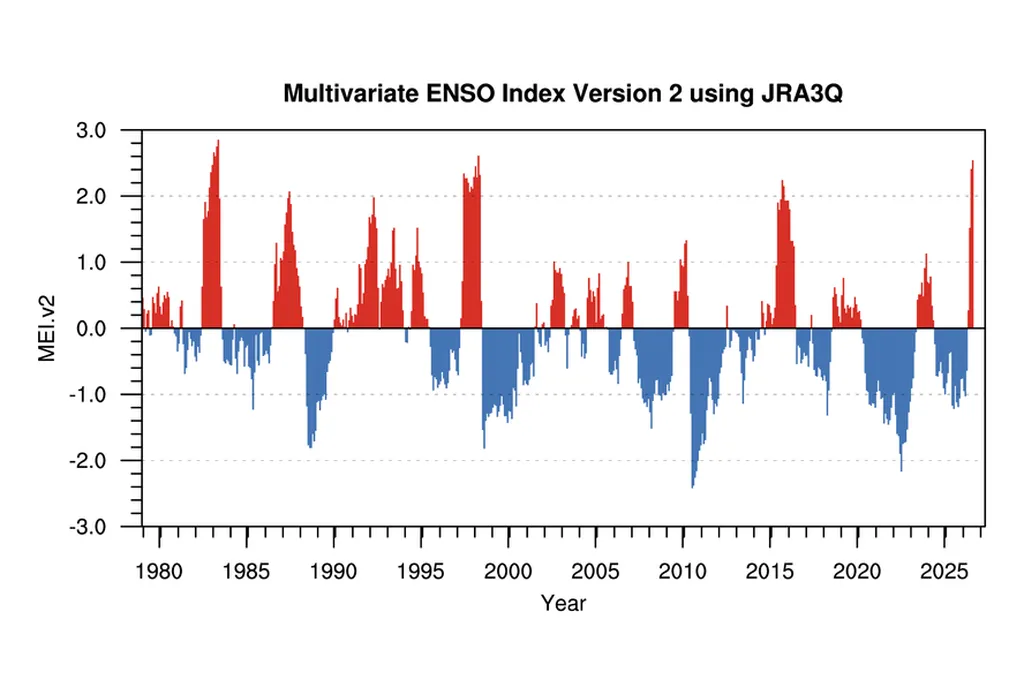
In the heart of Metro Manila, where millions depend on a single rainfall-fed water supply system, a quiet revolution in water management is unfolding—one that could redefine how cities prepare for drought. A new study by C. P. Libisch-Lehner of Pöyry Austria GmbH in Vienna, published in *Water Resources Research* (a translation of the Austrian journal *WasserRessourcen Forschung*), suggests that a better understanding of the El Niño Southern Oscillation (ENSO) could spare urban water systems—and the energy grids they support—from catastrophic shortages.
The research hinges on a simple but powerful insight: ENSO, the cyclical warming and cooling of Pacific waters, doesn’t just shift global weather patterns—it reshapes the reliability of water sources for cities. For Metro Manila, a megacity of over 13 million people, this means the difference between steady supply and crippling rationing. Libisch-Lehner and her team tested two approaches to reservoir management: one relying on traditional storage-based rules, and another that incorporates the Oceanic Niño Index (ONI), a key ENSO indicator.
The results were striking. ENSO-informed policies proved far more robust across a range of simulated scenarios, meaning they could maintain performance even under extreme conditions. “The primary cause of this behavior is the information on the ENSO state,” Libisch-Lehner notes, emphasizing how early awareness of an impending El Niño could allow operators to adjust water releases and storage strategies before shortages hit.
This isn’t just academic speculation. When the team compared the current operating rules against an ENSO-informed model over nearly 50 years of data (1968–2014), they found that severe restrictions—those abrupt, city-wide cutbacks that strain households and businesses alike—could have been softened into a series of smaller, more manageable adjustments. Imagine the energy sector implications: fewer emergency power outages triggered by water shortages, less pressure on desalination plants during peak demand, and a more predictable operating environment for utilities.
The study also hints at broader opportunities. ENSO forecasts are already used in agriculture and disaster preparedness, but their integration into urban water planning remains uneven. Libisch-Lehner’s work suggests that water utilities, especially in developing cities, could benefit from adopting climate-informed policies—not as a luxury, but as a necessity. The energy sector, closely tied to water use for cooling and hydropower, stands to gain from more stable water availability, reducing the need for costly backup systems during droughts.
What’s next? The research paves the way for adaptive management frameworks that blend real-time reservoir data with seasonal climate predictions. It challenges operators to move beyond reactive measures and embrace a proactive stance—one where the next El Niño isn’t a looming crisis, but a foreseeable event with a playbook already written.
For cities like Manila, and the energy providers that power them, the message is clear: the ocean’s whisper may hold the key to resilience.