
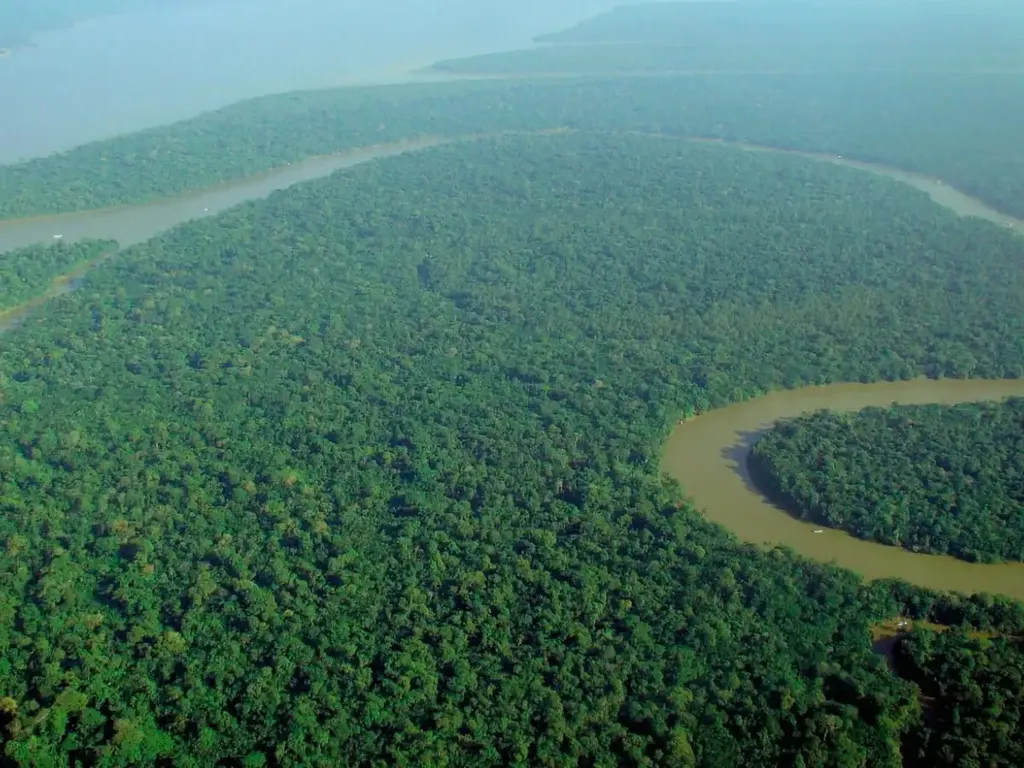
The world’s forests are under siege—not by chainsaws or wildfires alone, but by an invisible enemy: drought. As climate change intensifies, the frequency and severity of dry spells are rising, threatening not just trees but the ecosystems and industries that depend on them. Now, a groundbreaking study led by Xu Zhang from China University of Geosciences (Wuhan) and Shenzhen Research Institute is shedding new light on how different layers of forests respond to drought, using a technology that peers beneath the canopy with unprecedented clarity.
Using multi-frequency microwave remote sensing—specifically, X-, C-, and L-band vegetation optical depth (VOD) data—the research team has, for the first time, mapped how moisture loss unfolds across forest strata: from the sunlit canopy down to the woody tissues of trunks and branches. This isn’t just academic curiosity. It’s a game-changer for industries like energy, where forests play a critical role in cooling power plants, supporting biodiversity corridors, and maintaining watershed health.
“What we found is a clear vertical hierarchy in drought response,” says Zhang. “The canopy reacts fastest and most strongly—losing up to 44.5% of its moisture during droughts—while deeper layers like the woody tissues respond more slowly but persist longer, with lags of over two months.” This lagged response in wood tissues, the study reveals, is particularly pronounced in savannas and cold regions, suggesting that some forests may “remember” drought long after the rain returns.
The implications are significant. For energy companies operating in forested regions, understanding these stratified responses can inform better forest management strategies, especially in regions vulnerable to prolonged dry spells. Power plants relying on biomass or hydropower need accurate models of forest health to predict water availability and cooling capacity. Similarly, renewable energy projects in temperate and tropical zones—where evergreen broadleaf forests dominate—may face heightened risks as canopy stress intensifies.
The study also reveals global patterns: tropical and temperate forests show strong canopy responses, while woody tissues in arid and cold zones are more vulnerable over time. This nuanced view, captured through microwave remote sensing, contrasts sharply with traditional optical methods that often miss sub-canopy dynamics.
Published in the *International Journal of Applied Earth Observations and Geoinformation* (《国际地球观测与地理信息学报》), this research demonstrates how advanced remote sensing can transform our understanding of forest ecosystems under stress. For industries intertwined with land use, from energy to agriculture, the message is clear: the forest is not a monolith—and drought doesn’t affect all its layers equally. The next step? Turning these insights into actionable resilience strategies.