
Bhavnagar-based researcher Bipin G. Vyas has spent the last three years dissecting how salt becomes pure enough for the factories that keep the modern world running. “Every time you turn on a light, chances are a chlor-alkali plant has just split brine into chlorine and sodium hydroxide,” says Vyas, who leads the Salt and Marine Chemicals Division at CSIR–Central Salt & Marine Chemicals Research Institute. “But that chlorine can only be as clean as the salt you feed it.”
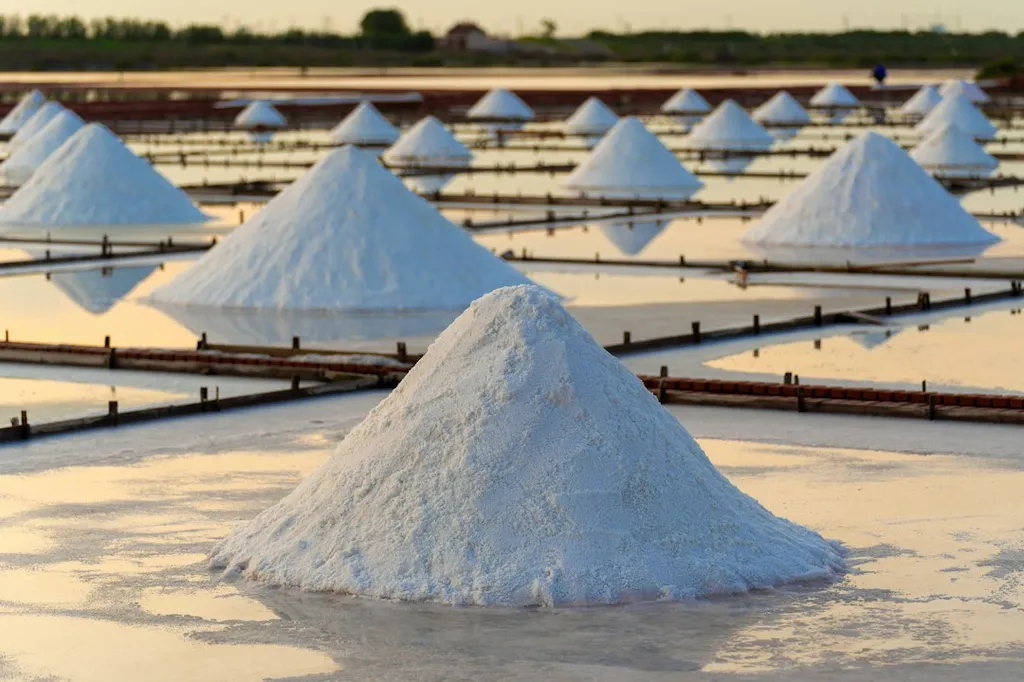
Vyas’s team has just published the first global review that maps every major salt-purification route—solar pans in Gujarat, vacuum evaporators in Germany, rock-salt mines in Poland—against five hard metrics: final purity, energy use, water demand, scalability, and environmental footprint. The paper, appearing in *Desalination and Water Treatment* (formerly known as *Desalination and Water Treatment Science and Engineering*), shows that even the best unwashed solar salt tops out at 94–97 % NaCl, a ceiling set by the way impurities co-precipitate as seawater evaporates. “It’s not a process flaw,” Vyas explains. “It’s physics—Usiglio’s evaporation sequence written into every crystal.”
Three technologies are now competing to break that ceiling. Mechanical washing, the oldest trick in the book, sluices away surface dirt but leaves microscopic brine inclusions untouched. Hydro-extraction (commercialized as the HYDROSAL process) squeezes out trapped brine with pressures up to 300 bar, lifting purity to 99 %. Vacuum recrystallization, the most energy-intensive route, can push salt to 99.99 %, but at the cost of roughly 150 kWh per tonne of steam and fresh water for condensing.
For the energy sector, the commercial stakes are immediate. Chlor-alkali plants, which consume more electricity than the entire UK manufacturing base, are locked into long-term contracts that price salt at 30–40 USD per tonne. Yet a switch to 99.9 % salt could cut cell-voltage losses by 30–50 mV, trimming 1.5–2 % off an average chlor-alkali plant’s power bill—enough to shave tens of millions of dollars annually from a single mega-site. “One tenth of a per cent purity gain can be worth 5–7 million rupees a year in electricity savings,” Vyas calculates.
The paper also flags a hidden externality: water. Mechanical washing can demand 2–3 m³ of water per tonne of salt, while hydro-extraction reuses 80 % of its brine, and vacuum recrystallization is essentially closed-loop. With desalination capacity expanding by 10 % a year, salt producers in water-scarce regions are quietly eyeing zero-liquid-discharge designs.
Looking ahead, Vyas sees three inflection points. First, AI-driven inline sensors that adjust washing cycles in real time, already piloted at CSMCRI’s pilot plant. Second, integration of surplus renewable electricity—especially solar thermal—into vacuum recrystallization trains, turning what is now a daytime-only process into a 24-hour operation. Third, circular-economy loops that turn spent brine into magnesium hydroxide or lithium carbonate, turning a waste stream into a co-product worth 200–300 USD per tonne.
“Salt is no longer just a cheap commodity,” Vyas says. “It’s a strategic input whose purification pathway dictates the energy intensity of chlorine, the cleanliness of our drugs, and the water we drink. The next decade will decide whether we treat it as such.”