
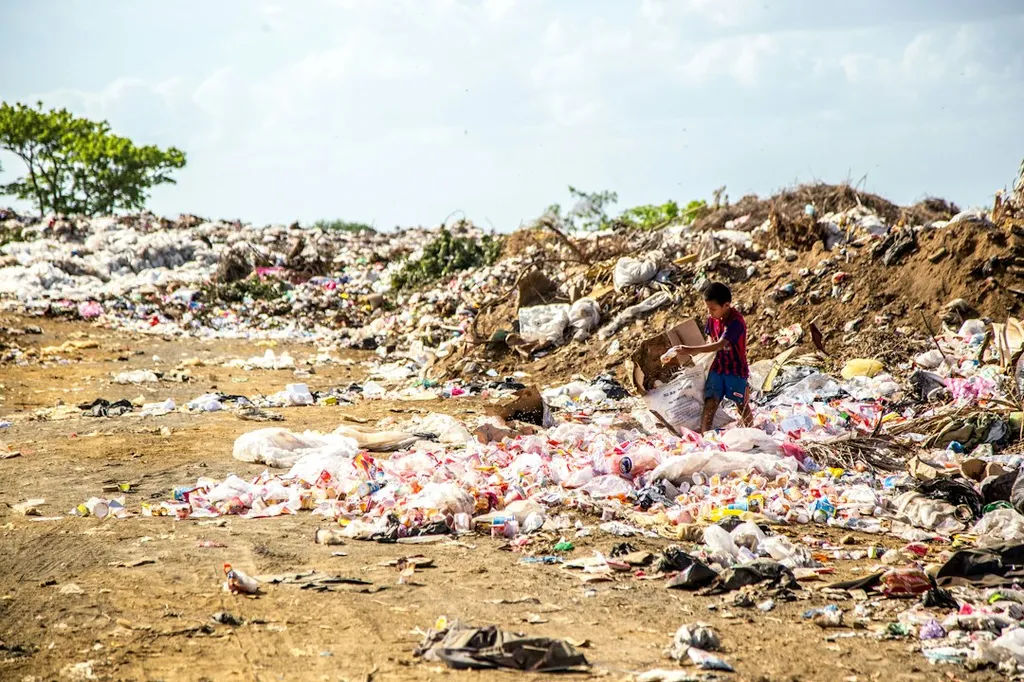
The United States’ hazardous waste management sector is quietly underwriting economic stability, yet its capacity constraints risk choking industrial growth. A new independent analysis by Charles River Associates (CRAI), commissioned by Veolia, quantifies how deeply hazardous waste management integrates into the national economy—far beyond most policymakers and industry leaders realize. The report, “Hazardous Waste Management: A Hidden Input to US Economic Growth,” reveals that virtually every sector, from pharmaceutical manufacturing to agriculture and semiconductor fabrication, depends on safe disposal and treatment of hazardous byproducts. These inputs aren’t optional—they’re foundational.
The data underscores a looming bottleneck. The US generates over 30 million tons of hazardous waste annually—nearly 200 pounds per person. Without intervention, that volume is projected to climb by 5 million tons per year by 2033, driven by reshoring initiatives, semiconductor expansion, and the rapid scaling of electric vehicle battery production. The report warns that even a 1 to 3 percent shortfall in hazardous waste management capacity could erode between $27 and $82 billion in US economic output over the next decade. The message is clear: hazardous waste is not a peripheral issue—it’s a core input to economic resilience.
“Hazardous waste management plays a far more important role in our economies than many people realize,” said Estelle Brachlianoff, CEO of Veolia. “This analysis helps put that role into perspective and underscores why ensuring an expert, cutting-edge, reliable management capacity is so important to economic strength and resilience. The question is not whether demands on hazardous waste management capacity will increase as the economy grows, but what needs to be done for the capacity to keep up.”
Veolia, now the second-largest hazardous waste management player in the US following the 2026 acquisition of Clean Earth, operates a sprawling network of 100 service centers, 33 treatment and disposal facilities, and six high-temperature incineration units across the country. Its operations span states with heavy industrial demand—Arkansas, Texas, Arizona, New Jersey, and California—where specialized treatment technologies like Veolia’s Beyond PFAS offering are critical to handling legacy and emerging contaminants. With 5,500 employees and over 700 operating permits, the company is positioning itself not just as a service provider, but as a strategic partner in industrial expansion.
“Proper treatment and disposal of hazardous waste helps protect public health while advancing the economy,” said Bob Cappadona, President and CEO at Veolia North America. “During National Pollution Prevention Week, we’re particularly proud to highlight the role we play in protecting people and the planet through our treatment processes, helping recover valuable resources while preventing pollution from entering the environment.”
Alan Jaske, Associate Principal in CRA’s Antitrust and Competition Practice and lead author of the report, emphasizes the systemic nature of this dependency: “One of the clearest findings of the report is just how ubiquitous hazardous waste management is across the economy, with a large number of everyday products depending on it somewhere in their production. The ability to effectively manage hazardous waste is therefore a material consideration not only for environmental policy and public health, but also for industrial activity and economic growth.”
As US industrial policy accelerates, hazardous waste infrastructure must evolve from a compliance burden into a strategic enabler. The report signals a paradigm shift: hazardous waste management is not a cost sink—it’s a productivity lever. Without scaled investment in treatment capacity, permitting efficiency, and innovation in hazardous waste recovery, the US risks trading short-term industrial gains for long-term economic fragility. The question is no longer whether hazardous waste management matters—it’s whether the country will act before the system becomes a bottleneck.