
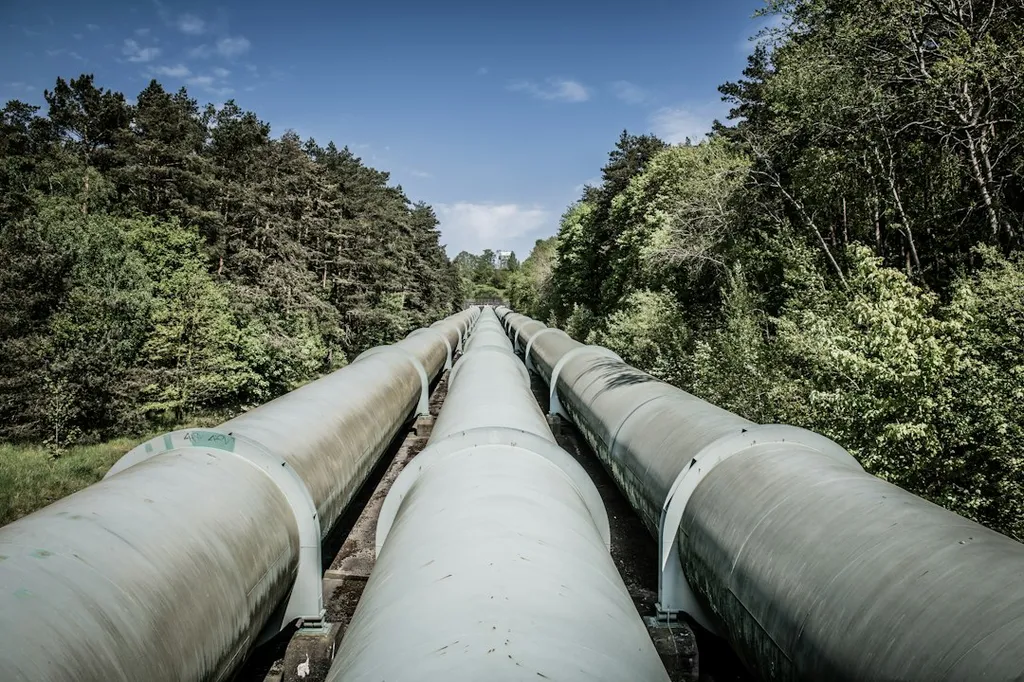
In the heart of Belgrade, Serbia, a quiet revolution is unfolding beneath the city’s expanding suburbs. A team led by Zaga Trišović of The Academy of Applied Technical Studies has successfully revitalized a dormant 12-kilometer stretch of pipeline—once idle due to urban sprawl—into a fully functional artery of the city’s water supply. The challenge wasn’t just technical; it was about ensuring clean, safe water flows to a growing population without disrupting existing infrastructure or risking public health.
Trišović and his team faced a classic urban paradox: how to integrate new pipeline sections into an aging network without compromising water quality. The idle pipeline, with its 1,200-millimeter diameter, had become a breeding ground for biofilm and microbial contamination during its dormancy. Simply reactivating it without proper disinfection would have risked spreading contaminated water across the city.
The solution lay in a carefully orchestrated sequence of hyperchlorination, neutralization, and gravity-driven flushing. “We didn’t just flush the pipes,” Trišović explains. “We treated it like a surgical operation—cleaning, disinfecting, and then restoring balance.” The process began with pre-cleaning to remove sediment and biofilm, followed by hyperchlorination to eliminate pathogens. But here’s where the science gets interesting: the team didn’t stop at disinfection. They designed a neutralization strategy that included sodium bisulfite dosing, aeration, and a gravity cascade system to safely reduce residual chlorine levels before water entered the active network.
The results were striking. Residual chlorine stabilized between 0.15 and 0.35 mg/L—well within safety limits—while turbidity dropped to just 1 NTU, meeting stringent potable water standards. Microbiological safety was confirmed, and the pipeline was reinstated without major disruptions to the broader water supply.
For the energy sector, this research offers more than just a case study in water treatment. It highlights a scalable model for integrating new infrastructure into existing networks without energy-intensive interventions. Gravity-driven systems, like the cascade neutralization Trišović’s team employed, reduce reliance on pumps and chemical inputs, lowering operational costs and carbon footprints. In an era where utilities face pressure to decarbonize while expanding services, such strategies could prove transformative.
Trišović’s work, published in *Discover Water* (translated from Serbian: *Otkriće Vode*), also underscores the importance of adaptive design in urban water management. As cities grow faster than their infrastructure can adapt, solutions that leverage natural forces—like gravity and aeration—offer a sustainable path forward.
The implications extend beyond Belgrade. Rapid urbanization is straining water systems worldwide, and the need for efficient, low-energy reactivation of dormant assets will only grow. This study doesn’t just solve a local problem; it provides a blueprint for balancing growth, safety, and sustainability in water networks everywhere.