
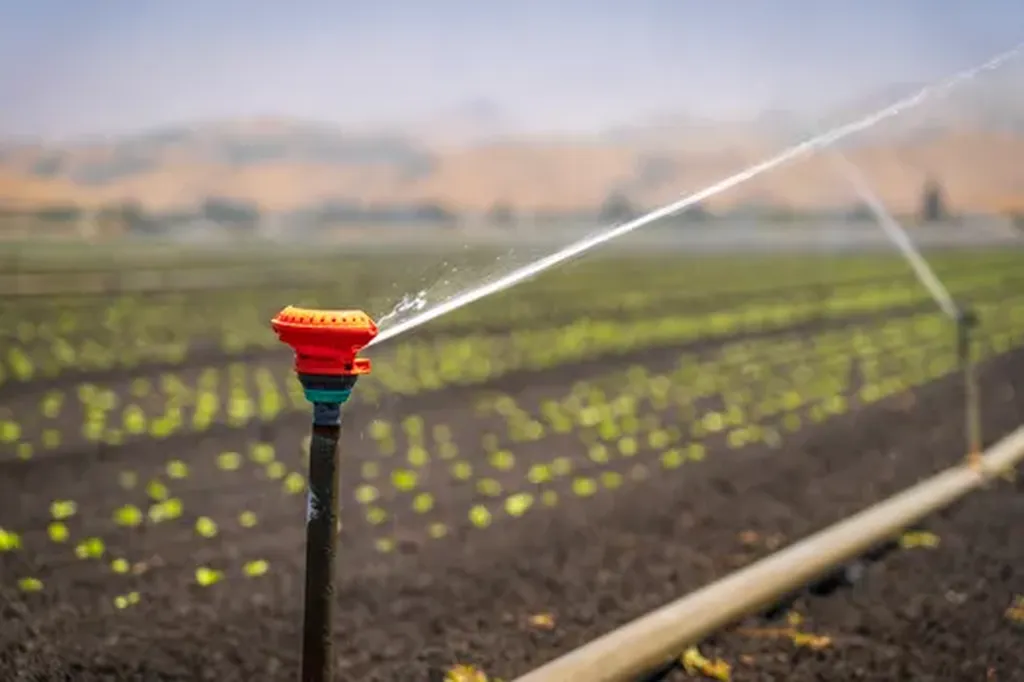
Huifang Shu, a researcher at Huaihua Vocational and Technical College’s School of Commerce and Tourism, has developed an intelligent irrigation control model that could reshape how agricultural water management integrates with smart technologies. Her work, published in *Discover Applied Sciences*, addresses longstanding inefficiencies in traditional irrigation methods, which often struggle with environmental adaptability and rely too heavily on expert intuition rather than data-driven precision.
The core of Shu’s innovation lies in its fusion of multiple advanced techniques: neural networks for predictive modeling, fuzzy logic for adaptive decision-making, real-time forecasting to adjust irrigation schedules, and a dynamic water distribution system for canal networks. This multi-layered approach aims to reduce water waste while maximizing crop yield—a balance that has eluded many previous attempts at “smart” irrigation.
Speaking to the practical implications of her research, Shu highlights the model’s performance metrics: “With a control accuracy of 98.65% and water use efficiency reaching 91.23%, we’re seeing a system that doesn’t just react to conditions but anticipates them.” The model’s ability to predict water demand with just a 4.32% error margin suggests a level of reliability that could make large-scale deployment feasible.
For the energy sector, where water-intensive cooling and processing systems often face scrutiny over sustainability, Shu’s work offers a compelling case study in efficiency. If similar principles could be adapted for industrial water management—where dynamic demand forecasting and real-time adjustments are already in demand—could this model become a blueprint for reducing both water and energy consumption?
The research was tested using a multimodal dataset collected from facility agriculture, a controlled environment where data consistency is easier to maintain. But the scalability of this approach raises questions: Could it one day integrate with broader smart grid systems, where water and energy usage are optimized in tandem? The paper’s publication in *Discover Applied Sciences* (Discover Yingyong Kexue in Chinese) signals its relevance to applied research communities, but its real-world impact may depend on how well it bridges the gap between experimental success and commercial deployment.
One thing is clear: as climate pressures intensify and resource constraints tighten, the kind of precision Shu’s model delivers won’t remain confined to agriculture for long. The next frontier may well be industrial and municipal systems, where the same principles of big data-driven control could redefine efficiency standards.