
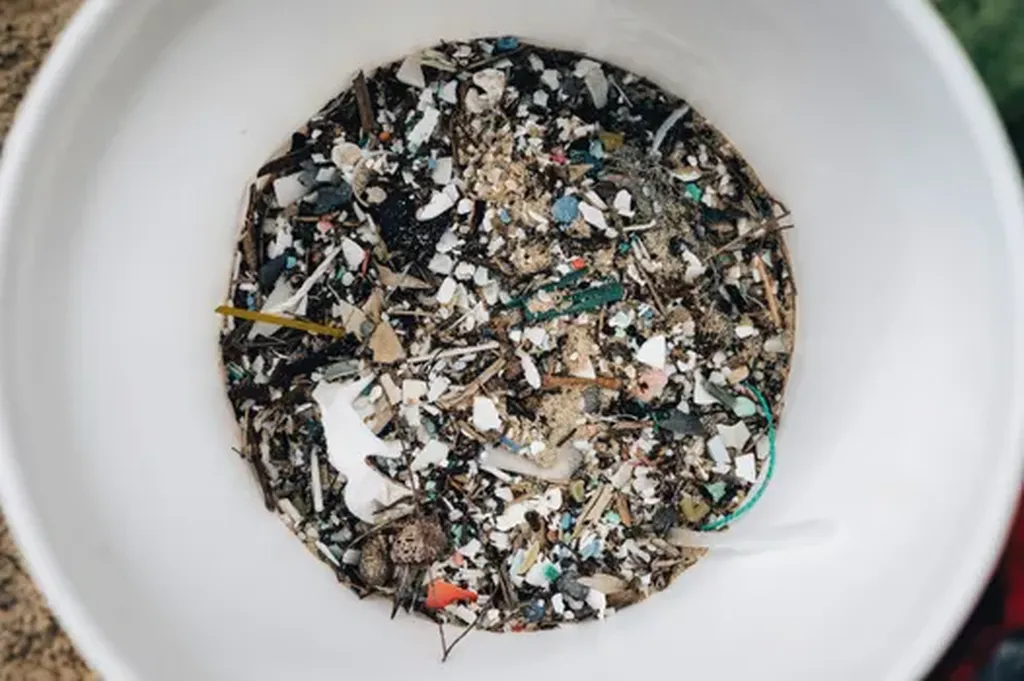
In the quiet corners of laboratories across Southeast Asia, a breakthrough is emerging that could redefine how industries tackle one of the most pervasive environmental challenges of our time: microplastic pollution in water. Francina Phiri, a researcher at the Faculty of Engineering at Universiti Malaysia Sarawak, has led a comprehensive review that explores a novel solution—nanocellulose and nano zero-valent iron (nZVI) composite membranes—offering a potential leap forward in water purification technology.
Phiri’s review, published in *Discover Applied Sciences* (translated as *Temuan Sains Teraplikasi*), synthesizes data from 142 studies and 1,327 screened publications, presenting a critical evaluation of how these composite membranes could outperform conventional water treatment methods. “The real innovation here isn’t just in the materials themselves but in how they work together,” Phiri notes. “Nanocellulose provides a highly porous, biodegradable scaffold that physically traps microplastics, while nZVI adds reactive sites to address dissolved contaminants that often accompany microplastics in wastewater.”
What makes this research particularly compelling for industries like energy is its potential to address a dual challenge: treating industrial wastewater while aligning with sustainability goals. Microplastics, often invisible to the naked eye, are now known to infiltrate water systems from sources as varied as synthetic textiles to industrial runoff. Traditional methods like coagulation or sand filtration struggle to capture particles at the nanoscale, leaving a gap that these composite membranes could fill.
The synergy between nanocellulose and nZVI isn’t just theoretical. Phiri’s analysis highlights experimental removal efficiencies that surpass standalone materials, though she is quick to clarify the current limitations. “We’re seeing strong evidence for particle capture, but not yet for breaking down the polymer chains of microplastics themselves,” she explains. “This means the technology is highly effective for filtration but may need supplementary processes for complete degradation.”
For the energy sector, where water is a critical resource in operations ranging from cooling to extraction, the implications are significant. Wastewater treatment plants could integrate these composite membranes to meet stricter regulatory standards or even to reclaim water for reuse. The biodegradable nature of nanocellulose also aligns with growing demands for sustainable materials in industrial processes.
Yet, the road from lab to field is not without hurdles. Phiri’s review flags critical gaps, including the need for real-world trials, potential ecotoxicological risks from nanomaterial release, and scalability challenges. “We’re at a pivotal moment,” she says. “The science is promising, but the next step is proving it works outside the controlled environment of a lab.”
As industries grapple with tightening environmental regulations and the urgent need for sustainable practices, Phiri’s work offers a glimpse into a future where water purification isn’t just about meeting standards—it’s about reimagining how we interact with one of our most vital resources. The energy sector, in particular, stands to benefit from innovations that not only clean water but do so in a way that’s economically and environmentally sustainable. The question now isn’t whether this technology will shape the future, but how soon it can be harnessed at scale.