
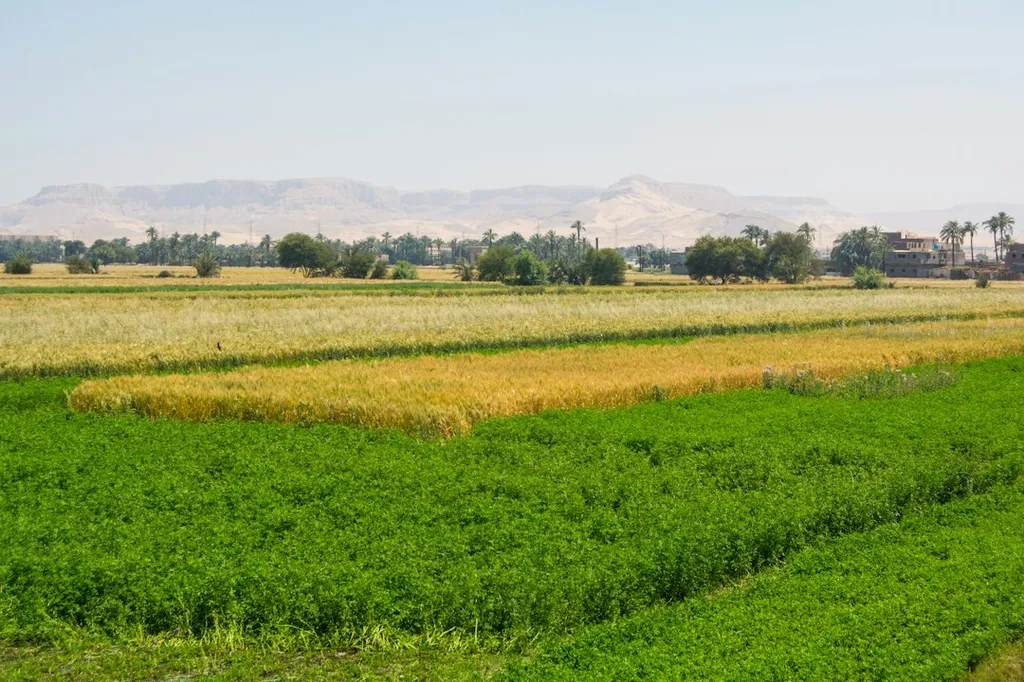
In the sun-baked fields of Egypt’s North Sinai, where water is scarcer than rainfall and every drop counts, a quiet revolution is brewing—not in the fields of wheat or maize, but in the leftover sludge of olive oil production. Mawaddh El-Hussiny, a researcher at Arish University’s Environmental Protection Department, has spent years studying how to turn a problem into a solution. The problem? Olive mill wastewater (OMW), a thick, dark byproduct of olive oil extraction that’s notoriously difficult to dispose of. The solution? A carefully treated version of that same wastewater, repurposed as a soil amendment in semi-arid agriculture.
“Olive mill wastewater is often seen as waste, but it’s rich in organic matter and nutrients,” says El-Hussiny. “With the right treatment, it can do more than just irrigate crops—it can restore soil health.” His latest study, published in *Catrina: The International Journal of Environmental Sciences* (translated from Arabic as “Catrina,” meaning “fertile land”), challenges the notion that waste must always be wasted.
El-Hussiny and his team compared two farming systems: one using conventional irrigation without fertilization, and another using treated OMW on crops like fava beans and barley. The results were striking. Soil treated with OMW showed improved structure, higher nutrient content, and better water retention—critical factors in semi-arid regions where soil degradation and water scarcity are growing concerns. “We’re not just talking about better yields,” El-Hussiny explains. “We’re talking about a closed-loop system where waste becomes a resource.”
For the energy sector, this research carries implications beyond agriculture. Olive oil production generates vast quantities of OMW—globally, the industry produces an estimated 30 million cubic meters annually, much of which is dumped untreated into waterways or left to evaporate, creating environmental hazards. But if OMW can be transformed into a soil amendment, it could reduce disposal costs, lower synthetic fertilizer use, and even open new revenue streams for olive mills through waste-to-value models.
The study also highlights the broader potential of circular economy principles in agri-food systems. As climate change intensifies pressure on water and soil resources, industries that once saw waste as a liability may soon view it as an untapped asset. El-Hussiny’s work suggests that with the right treatment technologies—physical, physicochemical, and advanced methods—OMW could play a role in sustainable soil management, particularly in regions like the Mediterranean and North Africa, where olive oil production is a cornerstone of rural economies.
Still, challenges remain. OMW’s high organic load and toxicity mean treatment is non-negotiable. And while this study shows promise in controlled conditions, scaling up will require investment in treatment infrastructure and careful monitoring to avoid unintended environmental consequences. But for El-Hussiny, the direction is clear: “We’re at a point where managing waste isn’t just about compliance—it’s about innovation. The energy sector, especially in regions with strong agri-food industries, should take note. What was once a problem could become part of the solution.”