
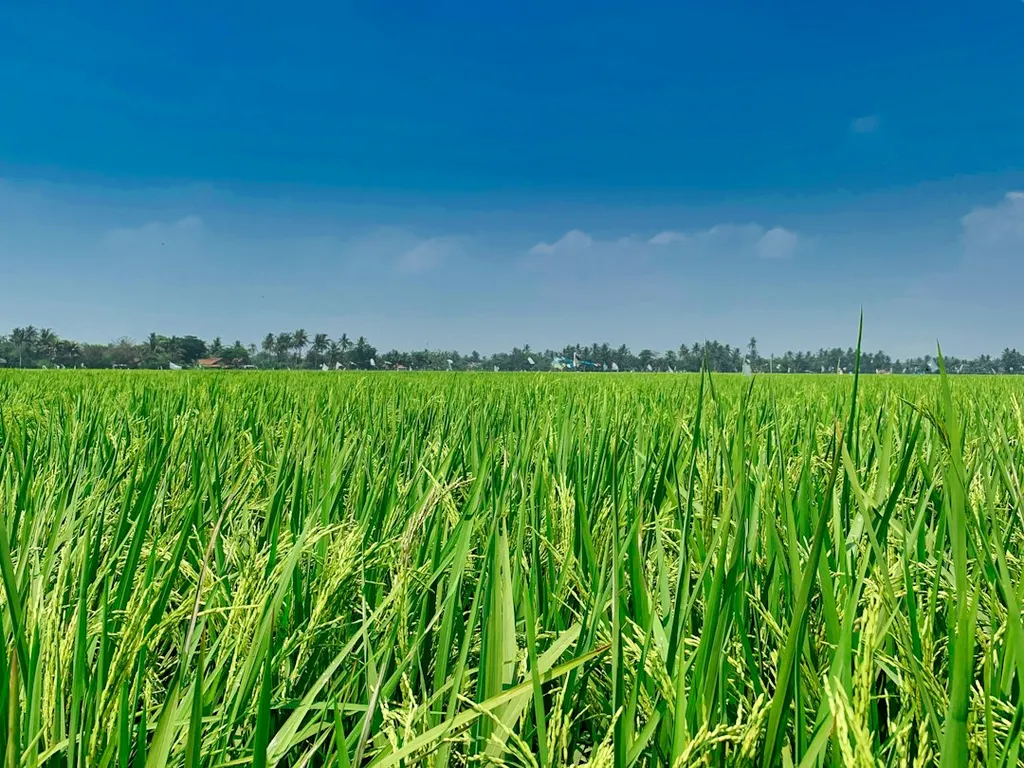
S.M. Mofijul Islam has spent years walking the same rice paddies in Bangladesh that his father did before him, watching the soil lose its dark richness with each passing season. Now, as lead author of a sweeping new review in *Discover Soil*, he and a team of researchers have mapped a path forward—one that could reshape how 3.5 billion people feed themselves while curbing greenhouse gases.
Their findings, drawn from 109 studies across South and Southeast Asia, show that small tweaks in how farmers manage soil and water can deliver more rice with less nitrogen fertilizer—and significantly lower methane emissions. “We’re not talking about futuristic tech here,” Islam says. “We’re talking about practices that are already working in fields today, but need better support to scale up.”
One of the most striking results comes from site-specific nutrient management (SSNM), where farmers use tools like the Nutrient Expert® software to apply nitrogen precisely when and where the crop needs it. Across trials, this approach boosted rice yields by 6–18% and nitrogen use efficiency by up to 117% compared to traditional methods. In a region where nitrogen fertilizer is often overapplied—washing away or volatilizing into the air—this isn’t just about saving money. It’s about reducing the energy footprint of fertilizer production, which accounts for roughly 1.4% of global greenhouse gas emissions.
Then there’s alternate wetting and drying (AWD), a water-saving irrigation technique that cuts methane emissions by 20–36% without hurting yields. Methane, a potent greenhouse gas with over 28 times the warming power of CO₂ over 100 years, is particularly high in flooded rice fields. By letting fields dry intermittently, farmers can slash emissions while also reducing pumping costs—a direct energy saving at a time when diesel prices remain volatile.
Controlled-release urea, another key technology highlighted in the review, reduces ammonia losses by 23–62%, keeping more nitrogen in the soil and out of the atmosphere. That means less need for synthetic nitrogen, which is energy-intensive to produce. “Every kilogram of nitrogen we don’t have to import or produce is a kilogram that doesn’t require natural gas or coal,” Islam notes.
The commercial implications for the energy sector are clear: as global fertilizer demand rises, so does the carbon cost of production. But if these soil-smart strategies spread, they could ease pressure on energy systems while improving food security. The challenge, as the authors point out, is context. What works in a high-rainfall zone in Vietnam may not suit the drought-prone plains of India. Scaling these practices will require coordinated policy, better extension services, and—critically—financing models that make smart soil health accessible to smallholder farmers.
For Islam, the message is both urgent and hopeful. “We’ve spent decades mining the soil,” he says. “Now, with the right tools and incentives, we can restore it—and feed the planet at the same time.”