
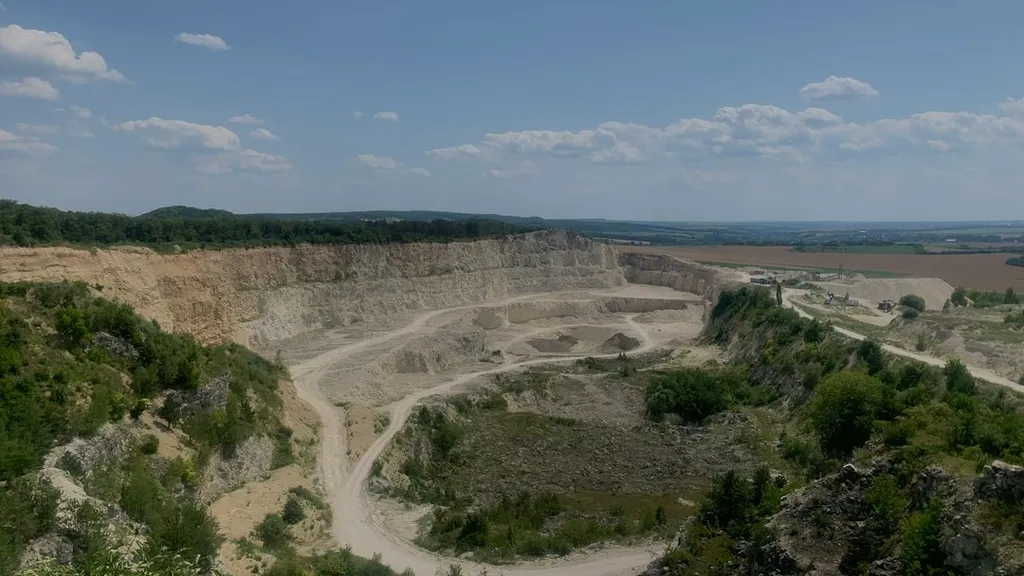
The January 2022 dam failure at ArcelorMittal Kryvyi Rih’s tailings storage facility in Ukraine wasn’t just an industrial accident—it was an environmental wake-up call. Within hours, millions of cubic meters of water-saturated mining waste surged through the Hrushuvata gully system, burying fertile chernozem soils under a layer of fine, quartz-rich technogenic sediment. The scale of the disruption was immediate: natural landscapes transformed overnight, local ecosystems strained under the weight of iron oxides, manganese, and other contaminants, and the Inhulets River became an unintended conveyor belt, carrying pollutants toward the Dnipro River basin and ultimately the Black Sea.
N. O. Hlebenko, lead author of the study and a researcher at the State Scientific Institution “Center for Problems of Marine Geology, Geoecology and Sedimentary Ore Formation of the NAS of Ukraine,” emphasizes the severity of the transformation. “Natural soils in the region are rich in organic matter, with a complex structure that supports agriculture and biodiversity,” Hlebenko explains. “What we saw after the breach was a stark contrast—fine, dust-like material dominated by quartz, stripped of organic content, and laced with elevated concentrations of Fe, Mn, Cr, and other elements. This isn’t just soil degradation; it’s a fundamental shift in the geochemical balance of the area.”
The commercial implications for the energy and industrial sectors are significant. Fertile chernozem soils, some of the most productive in Europe, now lie buried under sterile, contaminated sediment. Agricultural productivity in the region has plummeted, and the cost of reclamation—if even feasible—will be substantial. Yet, the study doesn’t just highlight damage; it points to opportunity. Hlebenko notes that the same mineral composition that makes these sediments hazardous also makes them potentially valuable. “These technogenic deposits are not just waste,” she says. “With the right processing, they could be repurposed into construction materials, glass, or ceramics. This aligns with circular economy principles and could be a lifeline for Ukraine’s post-war industrial recovery.”
The environmental risks, however, extend beyond local soil degradation. The fine-grained nature of the technogenic sediment creates a dual threat: wind erosion could disperse toxic particles into the air, posing health risks to nearby communities, while surface runoff continues to transport contaminants into the Inhulets River. The study’s findings suggest that the ecological footprint of such tailings dam failures isn’t confined to a single region—it’s a domino effect that can impact entire river basins.
For industries reliant on mining and heavy industry, this research underscores the urgent need for improved tailings management. The dam failure at Kryvyi Rih wasn’t an isolated incident; it’s a case study in how quickly environmental liabilities can escalate into financial and operational crises. Investing in real-time monitoring, robust containment strategies, and sustainable repurposing of mining waste isn’t just an environmental imperative—it’s a commercial one.
Published in *Mineral Resources of Ukraine* (translated from *Мінеральні ресурси України*), this study serves as both a cautionary tale and a roadmap for the future. As Ukraine rebuilds its industrial capacity in the wake of war, the lessons from Kryvyi Rih could shape how tailings storage facilities are designed, managed, and ultimately transformed from liabilities into resources.