
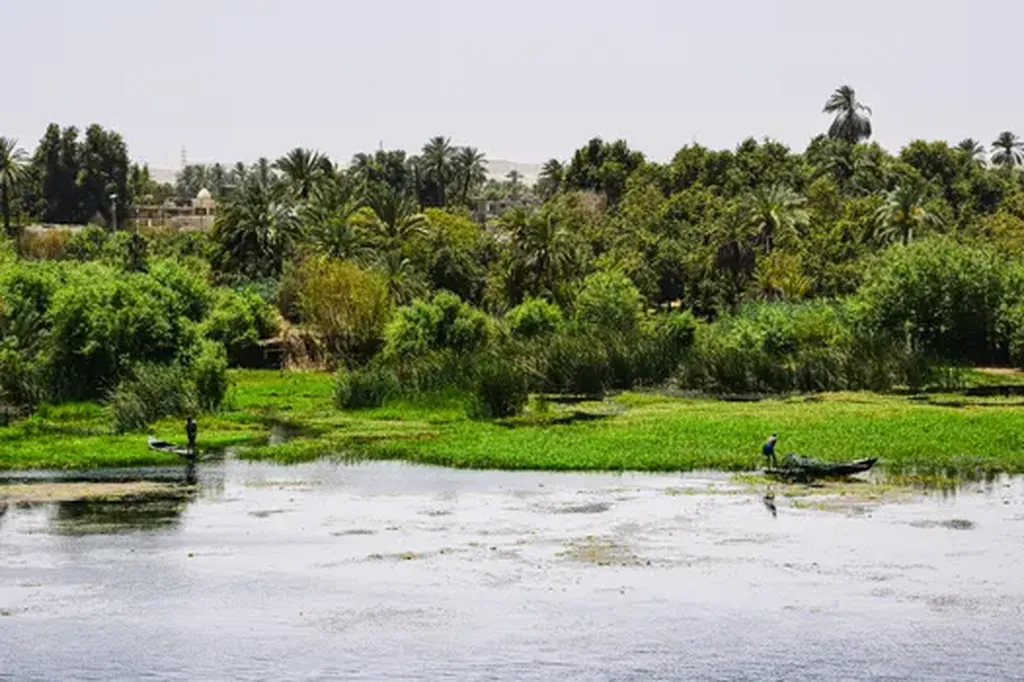
Amare G. Worku, a researcher affiliated with Bahir Dar University and Injibara University in Ethiopia, has developed a model that could significantly improve water resource management in data-scarce regions like the Upper Blue Nile Basin. His study, published in *Environmental Research Communications* (የአካባቢ ጥናት ሰጪ ሪፖርቶች), introduces a Variable Source Area (VSA) hydrological model tailored for watersheds where runoff is dominated by saturation-excess processes—common in humid tropical regions.
Worku’s approach combines Monte Carlo-based Latin hypercube sampling (LHS) with Differential Evolution optimization (DEoptim) to refine parameter estimation, a method that outperformed traditional models in simulating streamflow dynamics in the Upper Gilgel Abay watershed. “The VSA framework, when combined with advanced calibration techniques, provides a physically meaningful and computationally efficient way to represent saturation-excess runoff,” Worku explains. This is particularly crucial for regions like the Upper Blue Nile Basin, where water management decisions often lack reliable data.
The model achieved strong performance metrics, with Nash-Sutcliffe Efficiency (NSE) values of 0.81 during calibration and 0.69 during validation, alongside low bias percentages. However, peak flows were occasionally overestimated, and low flows underestimated, highlighting areas for further refinement. Worku’s analysis also identified groundwater recession coefficients as the most influential parameter, while storage-related parameters remained less constrained—a challenge in data-limited watersheds.
For the energy sector, this research is particularly relevant. Hydropower and irrigation projects in the Upper Blue Nile Basin rely heavily on accurate streamflow predictions. Improved modeling could enhance dam operations, optimize water allocation for agriculture, and mitigate flood risks, ultimately supporting more sustainable energy and water management strategies. As climate variability intensifies, tools like the VSA model could become indispensable for policymakers and engineers working in water-scarce regions.