
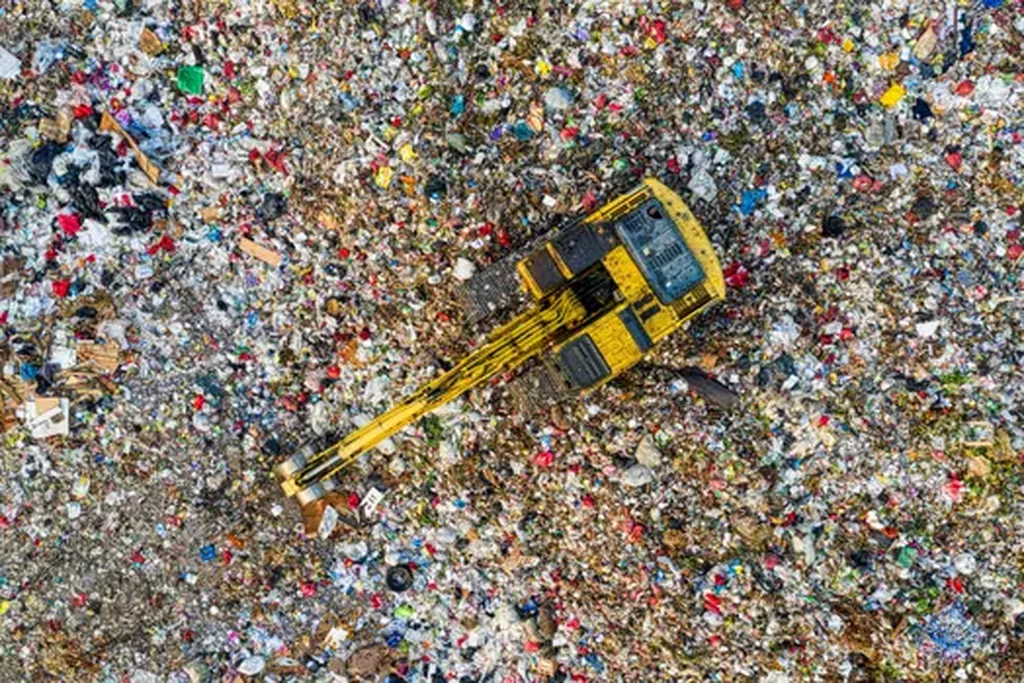
California Waste Solutions isn’t just exporting waste-management practices to Vietnam—it’s bringing the future of environmental control with it. The Oakland-based company’s subsidiary, Vietnam Waste Solutions (VWS), is preparing to launch Vietnam’s first large-scale industrial drone program for odor suppression and disinfection at the Da Phuoc Integrated Waste Management Facility in Ho Chi Minh City, with operations slated to begin in October 2026 pending regulatory approval.
The move reflects a deliberate shift from reactive to proactive environmental management. VWS will deploy DJI Agras T100 drones to spray biological treatment agents over active waste zones, landfill cells, and leachate surfaces—areas where manual spraying not only slows operations but exposes workers to chemical and biological hazards. Trial flights have already demonstrated a 50 to 70-fold increase in spraying efficiency, with full coverage of tens of thousands of square meters achievable in minutes. The system’s fine atomized spray neutralizes odors and pathogens in the air column before they disperse, offering a level of precision unattainable with ground-based methods.
“Just as in California, where we’ve introduced AI into optical scanners to support employees, here in Vietnam we are adding another layer of technology to assist our workers,” said David Duong, Founder & Owner of California Waste Solutions. “This isn’t just about speed—it’s about protecting people and the environment in a way that hasn’t been done before in this country.” He emphasized that the drones will replace high-risk manual spraying, reducing the need for crews to operate in close proximity to waste and treatment chemicals.
The initiative aligns with Vietnam’s National Strategy on Digital Transformation and Innovation, which encourages businesses to adopt automation and AI in environmental protection. Regulatory hurdles remain—flight permits, operator certification, and airspace coordination are still in progress—but VWS has conducted multiple trial flights to validate coverage quality and operational efficiency. Once approved, the program will make VWS the first waste-treatment company in Vietnam to integrate intelligent aerial equipment into routine environmental control at a large-scale facility.
Employee safety is a cornerstone of the project. Earlier trials showed that tasks typically requiring six workers could be completed by a single trained operator using a drone, significantly reducing chemical exposure. “Our employees are the heart and soul of Vietnam Waste Solutions,” Duong said. “Investing in their safety isn’t an expense—it’s a driver of long-term productivity and business performance.” The company frames worker health as both a moral and economic priority, positioning the UAV initiative as an extension of its long-standing commitment to U.S.-style environmental standards in Vietnam.
Michael Duong, President of California Waste Solutions, framed the initiative as a continuation of the company’s history in Ho Chi Minh City. “When we started in the mid-2000s, we built the only U.S.-type Subtitle D-standard landfill in Vietnam,” he said. “Now, we’re taking the lead again with drone technology that sets a new benchmark for environmental control.” He added that the company anticipates competitors will soon follow its lead, reinforcing its role as an innovator in the region.
The DJI Agras T100, chosen for its high-volume spraying capacity, will operate under strict safety and coordination protocols, including weather limits, obstacle clearance, and real-time ground crew communication. Automated flight mapping ensures repeatable coverage, shifting from operator-dependent patterns to intelligent, data-driven spraying. The system can also be adapted for insect control where needed.
Local authorities have already signaled support for the program, seeing it as a model for urban environmental management. By reducing reliance on manual labor for hazardous tasks, the initiative supports Ho Chi Minh City’s broader goals of modernizing environmental control and improving public health outcomes.
“This is a major part of our community-relations efforts, which we like to say are continuous and always improving,” Michael Duong said. “It’s exciting technology, and one we think many competitors will want to copy.” The message is clear: California Waste Solutions isn’t just adapting to Vietnam’s regulatory and operational landscape—it’s shaping it, with drones as the new standard-bearers of industrial environmental stewardship.