
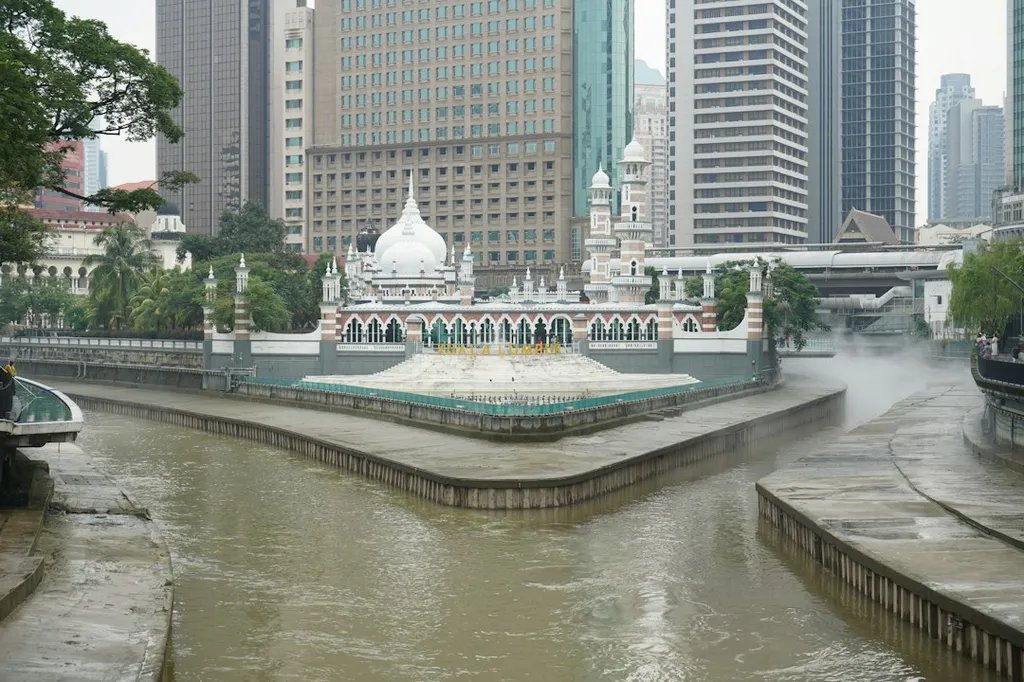
Floods don’t wait for planning permission. In George Town, Penang—where centuries-old shophouses share the streets with modern high-rises—water rises faster than policy can adapt. But a new study led by Dr. Haslinda Mohamad Hamran from the Disaster Preparedness and Prevention Center (DPPC) at Universiti Teknologi Malaysia, in collaboration with Malaysia’s Department of Irrigation and Drainage, offers a practical way forward. Published in *Progress in Disaster Science* (known in Malay as *Kemajuan dalam Sains Bencana*), the research combines advanced hydrodynamic modelling with nature-based solutions (NbS) to retrofit urban spaces for flood resilience—without demolishing heritage or displacing communities.
Using rainfall data from Penang Island, Hamran and her team simulated flood events under 5-, 10-, 20-, 50-, and 100-year Average Recurrence Interval (ARI) scenarios. As expected, higher-intensity storms expanded flood extents and depths. But the breakthrough came in how they responded—not by building bigger drains, but by reimagining existing spaces.
“We didn’t need to create new land,” Hamran explains. “We used what was already there—football fields—as integrated retention storage.” By retrofitting these open spaces with bioswales, infiltration wells, and subsurface storage, the team introduced a decentralised system capable of holding about 5,000 cubic meters of water during peak events. The result? Under a 100-year ARI storm, flood extent dropped by 96.2%, and peak flows were reduced by 11% to 23%.
What makes this approach commercially and culturally significant is its scalability and community integration. Hamran emphasizes participatory planning: “Residents helped shape where the bioswales went, ensuring they weren’t just functional but also accessible and maintained.” This isn’t just engineering—it’s social infrastructure.
For the energy sector, the implications are substantial. Urban flood resilience directly influences energy infrastructure reliability—substations, transformers, and transmission lines are all vulnerable to inundation. By reducing flood risk through decentralised, nature-based systems, cities can lower operational disruptions and maintenance costs. Retrofitting open spaces like sports fields with dual-purpose water storage could become a cost-effective resilience strategy, especially in dense, heritage-rich urban cores where land is scarce and expensive.
Hamran’s framework offers a transferable model. UNESCO World Heritage Sites across Southeast Asia—from Melaka to Vigan—face similar pressures: balancing conservation with climate adaptation. This study demonstrates that resilience doesn’t always require concrete megaprojects. Sometimes, it’s about planting the right grasses, digging the right wells, and listening to the community.
As cities worldwide race to adapt, Hamran’s work suggests a quieter revolution: one where nature and infrastructure co-exist, where every football field becomes a flood buffer, and where heritage and resilience are not opposing forces, but partners in progress.