
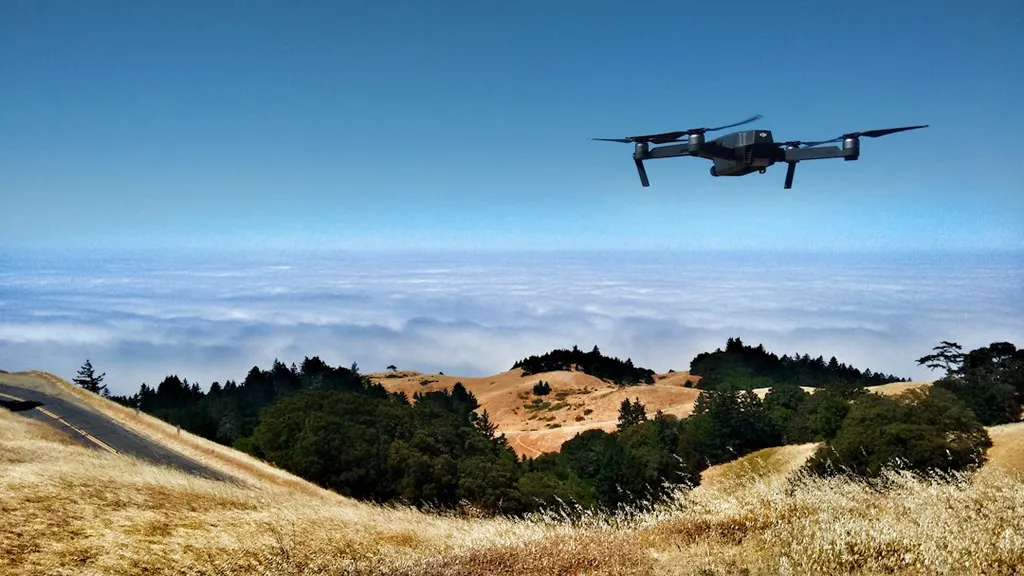
In the quiet revolution reshaping environmental monitoring, drones and digital twins are emerging as unlikely allies—one soaring above waterways to capture real-time data, the other simulating future scenarios in a virtual sandbox. A new systematic review, led by Abdulmughni Hamzah of the Center for Human Systems Engineering at the University of Louisville in Kentucky, USA, maps this intersection with unprecedented clarity. Published in *Digital Twins and Applications* (formerly translated from *双子座应用*), the study doesn’t just chart the current landscape; it signals where water quality monitoring could head next—especially for industries like energy, where water is both a critical resource and a potential liability.
Hamzah and his team combed through hundreds of peer-reviewed studies, following PRISMA guidelines to ensure rigor. Their conclusion? The fusion of aerial drones and digital twin modeling is not just promising—it’s already delivering measurable value in water quality assessment. “Drones give us the eyes in the sky,” Hamzah explains, “but digital twins give us the brain to interpret what we see and predict what might come next.” This dual capability—real-time sensing paired with predictive simulation—could transform how energy companies manage everything from cooling water intake to wastewater discharge.
For the energy sector, where water is central to operations—from hydraulic fracturing to thermal power generation—the implications are tangible. Conventional water monitoring often relies on fixed sensors and periodic sampling, leaving gaps in spatial and temporal coverage. Drones, equipped with multispectral and thermal sensors, can now fly over reservoirs, effluent channels, and spill sites, collecting high-resolution data that static systems miss. When this data feeds into a digital twin—a dynamic, virtual replica of a water system—the result is a living model that can simulate pollution dispersion, detect anomalies, and even forecast contamination events before they escalate.
“This isn’t just about compliance,” says Hamzah. “It’s about resilience. If a coal plant can simulate how a sudden algae bloom might disrupt cooling water intake, it can adjust operations proactively. That saves downtime, reduces costs, and protects ecosystems.” The review highlights case studies where energy firms have piloted drone-based monitoring to track thermal plumes in rivers or map sediment build-up in intake basins—data that feeds directly into digital twin models for scenario planning.
Yet the study also sounds a cautionary note. While integration is advancing, it remains fragmented. Many systems operate in silos—drones collect data, digital twins simulate scenarios, but the handoff isn’t seamless. “We’re still in the early days of true convergence,” Hamzah notes. “The next leap will come when we can automate data ingestion, apply AI-driven anomaly detection, and close the loop between observation and action.”
For energy companies eyeing sustainability and regulatory preparedness, the message is clear: investing in drone-digital twin ecosystems isn’t just about keeping pace—it’s about gaining a strategic advantage. Those who build interoperable platforms today will be the ones predicting tomorrow’s water risks with confidence. And as the review underscores, the technology is not just viable—it’s already here, waiting to be scaled.