
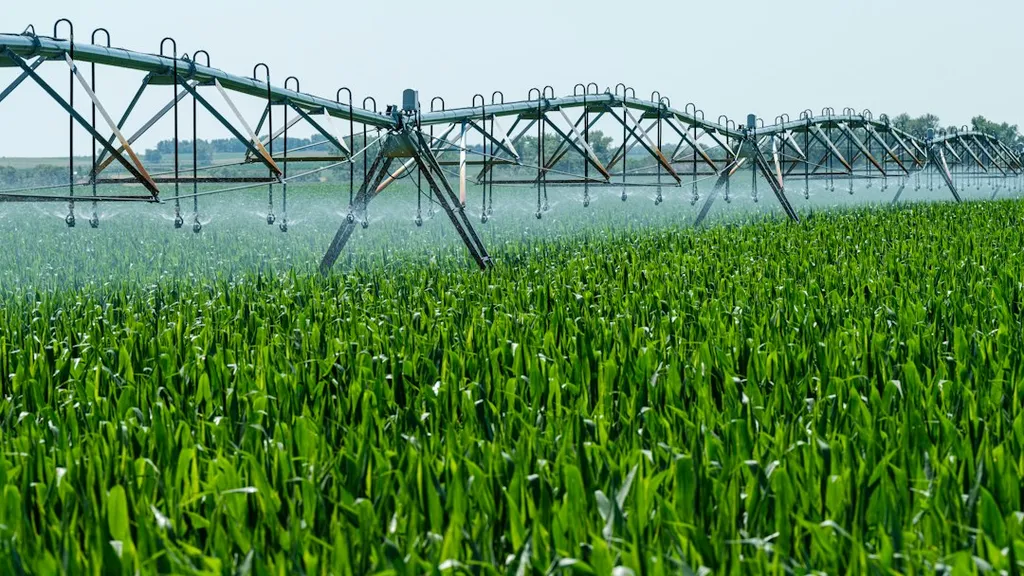
A quiet revolution is unfolding in the fields where water, energy, and food intersect. Sachin Ghanghas, a researcher at Amity University in Noida, India, and his team have published a comprehensive review in *Frontiers in Water* that challenges the way we think about irrigation—not just as a means of delivering water, but as a finely tuned system where data, technology, and precision converge to save resources and boost productivity.
The problem is stark: traditional irrigation methods often operate on assumptions rather than real-time conditions. Fixed schedules and uniform water application don’t account for the nuanced needs of crops, which vary with soil type, weather, and growth stage. The result? Water waste through runoff, evaporation, and deep percolation—essentially, pouring money and energy down the drain. Ghanghas and his co-authors argue that this inefficiency isn’t just a farming issue; it’s an energy issue. Pumping, treating, and distributing water consumes significant energy, and every drop lost represents wasted fossil fuels and higher operational costs.
“Conventional systems treat fields like a monolith,” says Ghanghas. “But crops don’t grow uniformly, and neither should irrigation.” His review highlights how integrating sensors, imaging, AI, and robotics can transform irrigation from a blunt tool into a responsive, data-driven process. For example, IoT-enabled soil moisture sensors and drones equipped with multispectral imaging can monitor crop stress in real time, feeding data into AI models that predict water needs with far greater accuracy than traditional methods. This isn’t futuristic speculation—studies cited in the review show water savings of up to 30% in some crops, with no yield penalty.
The commercial implications for the energy sector are clear. Less water wasted means less energy spent pumping, treating, and transporting it. For utilities and agribusinesses, this could translate into lower operational costs and a smaller carbon footprint. Precision irrigation also aligns with growing demands for sustainability reporting and regulatory compliance, offering a way to meet water-use targets without sacrificing productivity.
Yet challenges remain. The review doesn’t shy away from the hurdles: sensor reliability in harsh field conditions, the cost of deploying large-scale systems, and the need for seamless integration across platforms. Cybersecurity risks in connected systems also loom large, as irrigation networks become potential targets for digital intrusion. “These aren’t just technical problems,” Ghanghas notes. “They’re business problems. Investors need confidence that these systems will deliver returns, not just data.”
What’s most compelling about this research is its potential to bridge the gap between agriculture and energy efficiency. As climate variability increases and water scarcity becomes more pressing, the ability to optimize irrigation could become a competitive advantage for early adopters. The review suggests that the future of farming—and by extension, energy management—lies in systems that learn, adapt, and respond in real time.
For industries tied to water and energy, Ghanghas’ work isn’t just academic. It’s a roadmap. Published in *Frontiers in Water* (translated from Chinese: *Shuǐyuán yánjiū*), the study underscores that the next leap in agricultural productivity won’t come from bigger pumps or more water, but from smarter decisions. And those decisions, increasingly, will be made by machines—not just for the sake of efficiency, but for the survival of the systems that depend on water in the first place.