
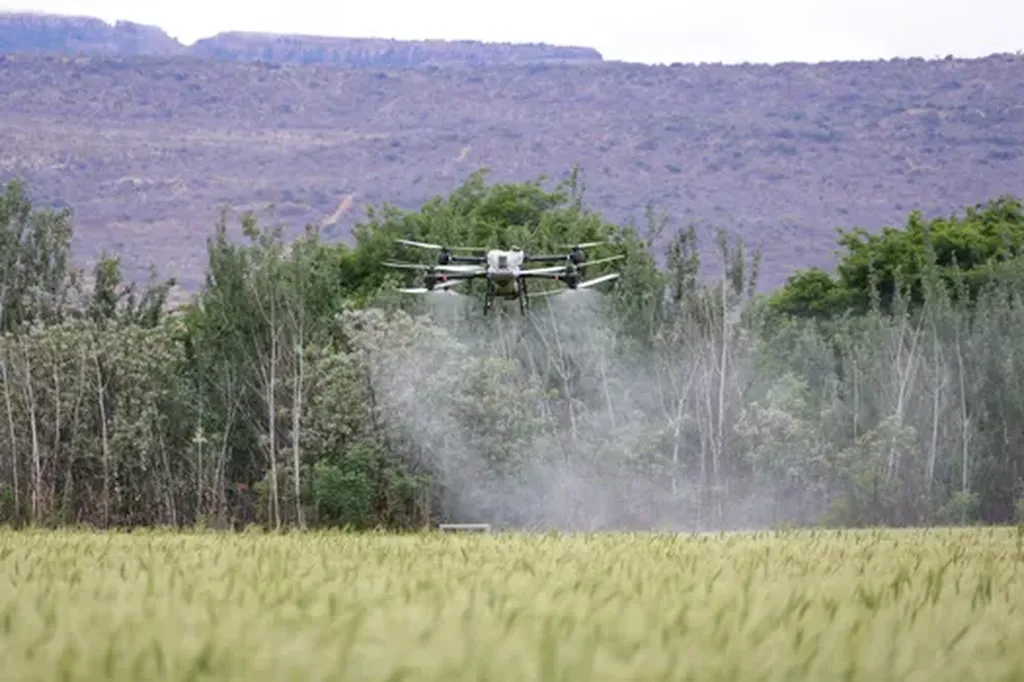
Emmanuel Abayomi Rotimi, a researcher whose affiliation remains undisclosed, has uncovered how artificial intelligence and machine learning could reshape Africa’s agricultural landscape—with implications that ripple far beyond the farm. In a comprehensive review published in the *Journal of Applied Life Sciences and Environment* (translated from Romanian as *Revista de Științe ale Vieții și Mediu Aplicat*), Rotimi synthesizes 72 peer-reviewed studies from 2000 to 2024, revealing how AI-driven tools are not just improving crop yields but also transforming how water, energy, and information flow through African food systems.
“AI is not a magic bullet,” Rotimi cautions, “but it is one of the most powerful levers we have to close the gap between food demand and environmental sustainability.” His analysis shows how machine learning models are being used to predict droughts, optimize irrigation schedules, and detect crop diseases in real time—critical functions that reduce waste and energy consumption in water-scarce regions. For example, AI-powered soil sensors linked to automated drip irrigation systems can cut water use by up to 30% while maintaining productivity, a finding supported by multiple field trials across Kenya, Ghana, and South Africa.
What makes this research particularly compelling for energy and infrastructure stakeholders is its focus on the hidden energy costs of agriculture. Precision irrigation, drone-based monitoring, and AI-driven logistics all require reliable electricity and digital connectivity—sectors where Africa still faces major deficits. Yet Rotimi highlights a paradox: where energy infrastructure is weak, AI tools can actually *reduce* overall energy demand by preventing over-irrigation, fuel waste in transport, and inefficient use of fertilizers. In Senegal, pilot programs using solar-powered AI soil analyzers have slashed diesel consumption in irrigation pumps by 22% in just two growing seasons.
The commercial angle is clear: companies investing in off-grid solar, IoT-enabled pumps, and edge-computing devices are poised to capture a growing market for “smart agriculture” services. But the adoption gap remains wide. “Infrastructure, data, and skills are the real bottlenecks,” Rotimi notes. “Without reliable internet and training, even the most advanced AI model becomes a paperweight.”
He points to emerging public-private partnerships—such as AI-powered extension services delivered via SMS or USSD in areas with low smartphone penetration—as models for inclusive growth. Governments in Rwanda and Nigeria are already piloting AI-driven soil mapping platforms that feed into national fertilizer subsidy programs, linking data directly to energy-efficient distribution networks.
For energy companies, the message is dual: agriculture is both a major energy consumer and a key opportunity for demand optimization. As AI systems become more localized and affordable, they could help stabilize rural energy grids by shifting irrigation to off-peak hours and integrating small-scale renewable energy with agricultural data platforms.
Rotimi’s work doesn’t offer a silver solution, but it does map a path forward—one where data, energy, and water converge to make African farming more resilient, less wasteful, and more commercially viable. The next frontier, he suggests, lies in bridging the digital divide—not just with technology, but with the infrastructure and institutions to support it.