
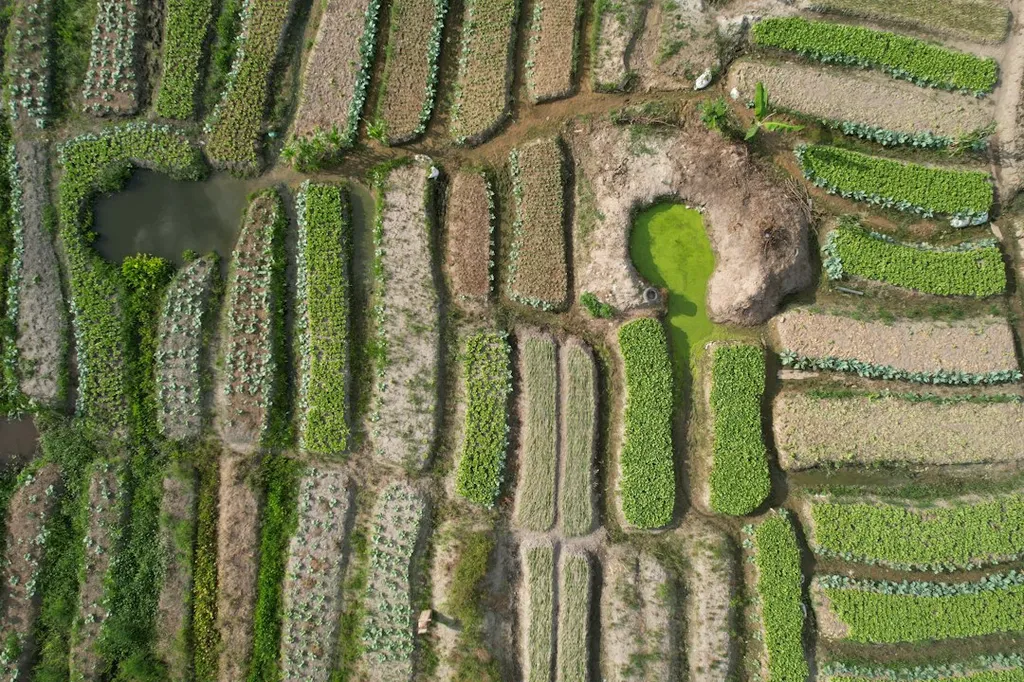
In the sun-scorched Upper East Region of Ghana, where the Harmattan wind carries dust from the Sahara and water is scarcer than gold, farmers like those in Gorogo and Sepaat communities have long relied on intuition to decide when to irrigate their crops. But a recent study led by Henry E. Igbadun suggests that intuition alone may not be enough to maximize yield—or conserve precious water. Published in the *Journal of Applied Life Sciences and Environment* (translated from Romanian as *Revista de Științe ale Vieții și Mediu Aplicate*), the research explores how precision irrigation could transform tomato and onion farming in one of Ghana’s most water-stressed regions.
The study tested Bhungroo irrigation technology—a system that captures and stores excess rainwater in underground aquifers for later use—paired with varying levels of deficit irrigation. Farmers applied water at 65%, 85%, and 100% of the crops’ water requirements, as well as using their own discretion. The results were clear: over-irrigation, as often practiced by farmers, led to wasted water, while deficit irrigation reduced both yield and water productivity.
“Farmers’ discretion led to over-irrigation in both study locations,” Igbadun noted, highlighting a common challenge in smallholder agriculture: balancing tradition with technology. The data showed that while reducing water use by 15-35% decreased yields, pushing beyond those thresholds led to diminishing returns. For tomato, yields dropped from 17.5 tons per hectare at full irrigation to just 6.0 tons at the lowest water level. Onion yields followed a similar pattern, ranging from 25.4 to 15.2 tons per hectare.
The implications go beyond the farm. Water productivity—the ratio of crop yield to water used—peaked at 3.61 kg/m³ for tomato and 4.51 kg/m³ for onion when crops received their full water requirement. These metrics matter not just for food security but for energy efficiency. Drip irrigation systems, like Bhungroo, require electricity or fuel for pumping, and every liter of water saved translates to lower energy costs. In regions where water and power are scarce, optimizing irrigation could free up resources for other critical needs.
What’s next? Igbadun’s findings suggest that full irrigation may be the most viable path for farmers in Upper East Ghana, but the study also underscores the need for better training. Farmers’ current practices often lead to overuse, which not only wastes water but also increases energy demand. As climate change intensifies droughts in sub-Saharan Africa, precision irrigation could become a cornerstone of sustainable agriculture—if paired with education and affordable technology.
For energy planners, this research is a reminder that water and power are inextricably linked. Investing in efficient irrigation isn’t just about growing more food; it’s about reducing the energy footprint of farming. The question now is whether policymakers and agribusinesses will take notice—and act before the next dry season arrives.