
The challenge of removing heavy metals from wastewater isn’t just an environmental issue—it’s a commercial one. For industries like energy production, where water is a critical resource, the efficiency of treatment systems directly impacts operational costs and regulatory compliance. A new study published in *Cleaner Water* (a peer-reviewed journal whose name translates to *Eau Plus Propre* in French) offers fresh insights into how vegetative biofiltration systems could revolutionize heavy metal removal, but with a twist: the way these systems are studied may have been holding back progress.
Lead author Cossi Irénée Amenoudji, corresponding author for the research, and his team set out to untangle the complex web of factors influencing heavy metal removal in biofiltration systems—plants, substrates, pH levels, and hydraulic retention times (HRT). What they found wasn’t just another set of variables to tweak, but a fundamental flaw in how these systems have been studied for years.
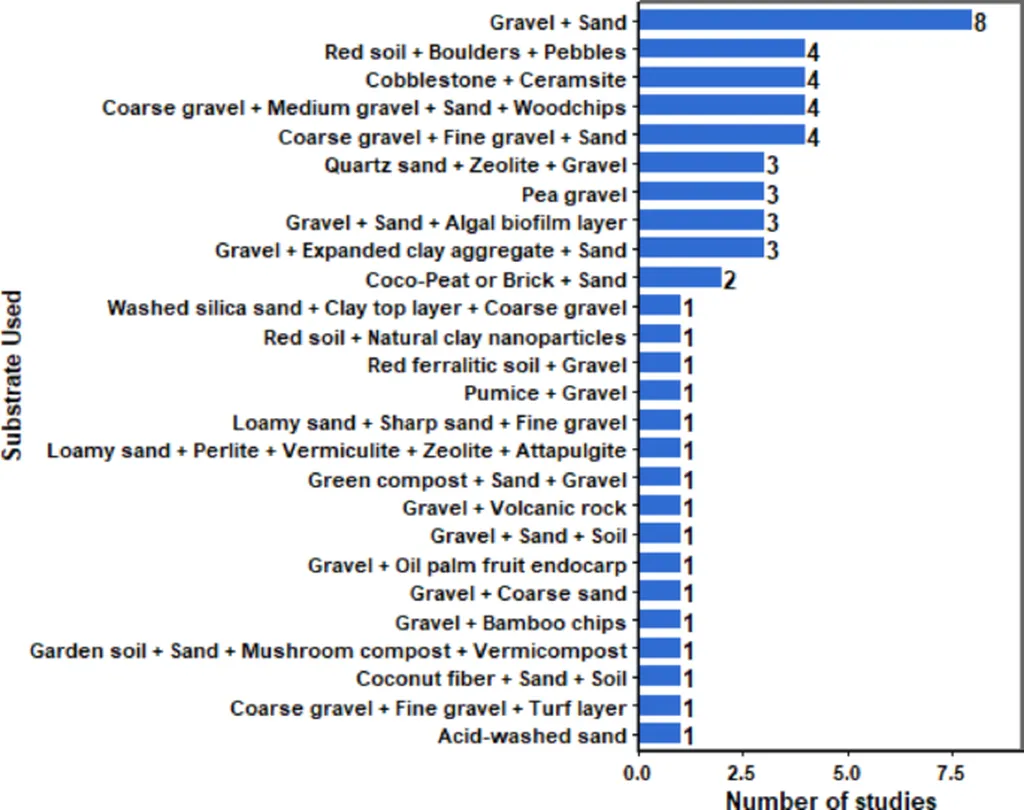
“For decades, researchers have been testing combinations of plants and substrates together, assuming they could isolate their individual effects,” Amenoudji explains. “But in reality, these combinations are often deployed as fixed packages across studies, making it nearly impossible to statistically separate their contributions.”
The team used advanced statistical methods—including a D-vine copula stepwise regression framework—to model dependencies without requiring independent variation of predictors. The results were striking: metal identity emerged as the strongest marginal determinant of removal efficiency, while HRT and pH acted as conditional regulators, their effects varying depending on the contaminant.
What makes this study particularly compelling is its practical implications. By identifying substrate composition as the most influential predictor—contrary to the initial assumption that metal type was the dominant factor—the research introduces a two-level control framework. This suggests that while the type of metal sets the performance ceiling, the substrate composition determines how close a system can get to that ceiling.
Amenoudji puts it succinctly: “Think of it like setting a thermostat. The metal type tells you the temperature range you’re working with, but the substrate is what actually gets you to the desired temperature.”
The study also uncovered a non-linear relationship between HRT and efficiency, with an empirically optimal retention time of 3.45 days and a critical pH threshold of 8.5. These findings translate into six design-oriented prioritization rules, offering evidence-based guidance for substrate selection, HRT targeting, and pH management.
For industries like energy, where water treatment is both a necessity and a cost center, these insights could lead to more efficient, predictable systems. Instead of trial-and-error configurations, engineers could use data-driven rules to optimize biofiltration systems for specific contaminants, reducing both capital and operational expenditures.
The research doesn’t claim to have all the answers—transferability for some metals like nickel and chromium was limited—but it does provide a robust framework for future experimentation. As Amenoudji notes, the findings are “hypotheses for experimental validation,” not universal prescriptions. Yet, they represent a significant leap toward making vegetative biofiltration a reliable, scalable solution for heavy metal removal in industrial wastewater treatment.
In a field where progress has often been incremental, this study offers a fresh perspective—one that challenges long-held assumptions and points toward a more data-driven future. For industries grappling with water quality challenges, that’s not just progress. It’s a game-changer.