
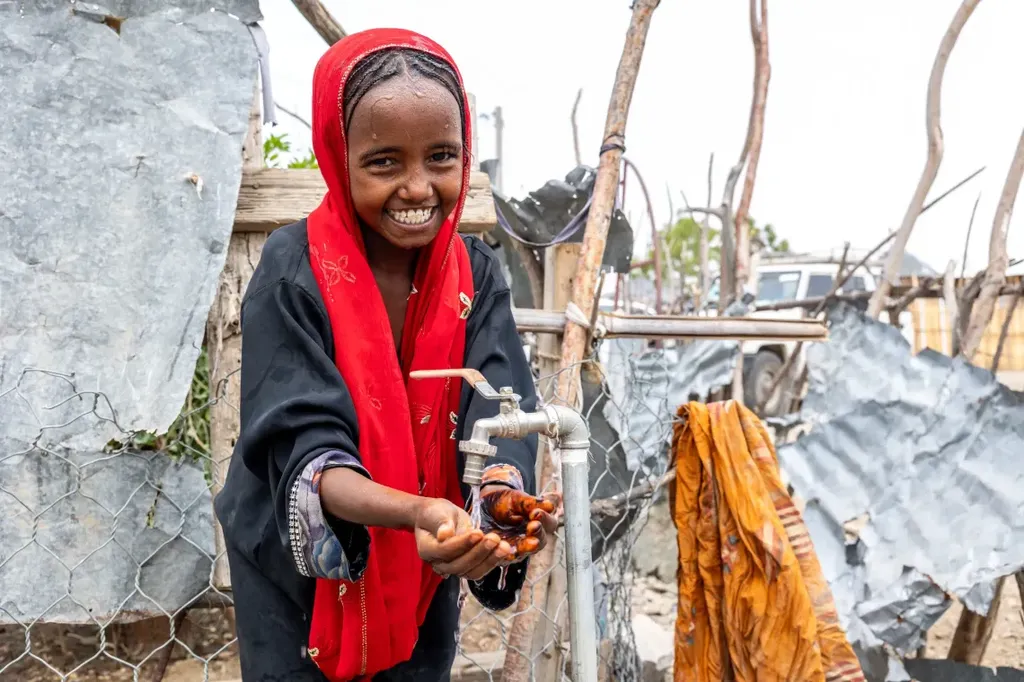
In the highlands of northwest Ethiopia, where Dabat Town sits at an elevation of over 2,600 meters, access to clean drinking water is not just a public health issue—it’s an economic one. A recent study led by Birhan Getie Assega from the University of Gondar’s Institute of Biotechnology has exposed critical vulnerabilities in the region’s water supply chain, revealing how contamination creeps in from treatment plants to household storage. The findings, published in *Cleaner Water* (ከፍተኛ ውሃ in Amharic), underscore the urgent need for infrastructure resilience, not just in Ethiopia but in water-scarce regions worldwide where energy and water systems intersect.
The research tracked 54 water samples across nine points—from treatment reservoirs to public standpipes and household storage—during both dry and wet seasons. What it found was alarming: while chlorination at the treatment stage initially reduced bacterial contamination, water quality steadily declined as it traveled through the distribution network. By the time it reached households, the situation was dire. Total coliforms were detected in every sample, far exceeding the World Health Organization’s safety threshold of zero detectable coliforms per 100 milliliters.
“Even after treatment, the water is getting recontaminated,” Assega explains. “The wet season makes it worse—heavy rains likely wash contaminants into the system, and older infrastructure struggles to keep up.” The study recorded fecal coliform levels peaking in household storage at 15.3 MPN/100 mL, a clear sign of post-treatment contamination, likely from poor handling or unhygienic storage conditions.
Physicochemical parameters like pH and conductivity mostly met safety standards, but turbidity—a measure of water cloudiness—remained high in some areas, and residual chlorine, the last line of defense against pathogens, dropped sharply along the distribution chain. “Without consistent chlorine monitoring, the system becomes vulnerable,” Assega notes. “And where water quality fails, public health and economic productivity suffer.”
For the energy sector, the implications are significant. Water is the lifeblood of industrial operations, from cooling power plants to supporting mining and agriculture. In regions like Dabat, where water infrastructure is fragile, energy projects face heightened risks—delays, increased operational costs, and reputational damage if water-dependent processes are compromised. The study suggests that investing in distribution system maintenance, real-time chlorine monitoring, and community education on safe storage could prevent costly disruptions.
Assega’s team also surveyed 364 households, finding that many lacked knowledge of proper water handling. Simple interventions—like covering storage containers and regular cleaning—could drastically reduce contamination.
The research doesn’t just highlight a problem; it points to a path forward. In an era where water scarcity and energy demands are colliding globally, studies like this one remind us that clean water isn’t just a health issue—it’s an economic imperative. And in places like Dabat, where the mountains meet the sky, the stakes couldn’t be higher.