
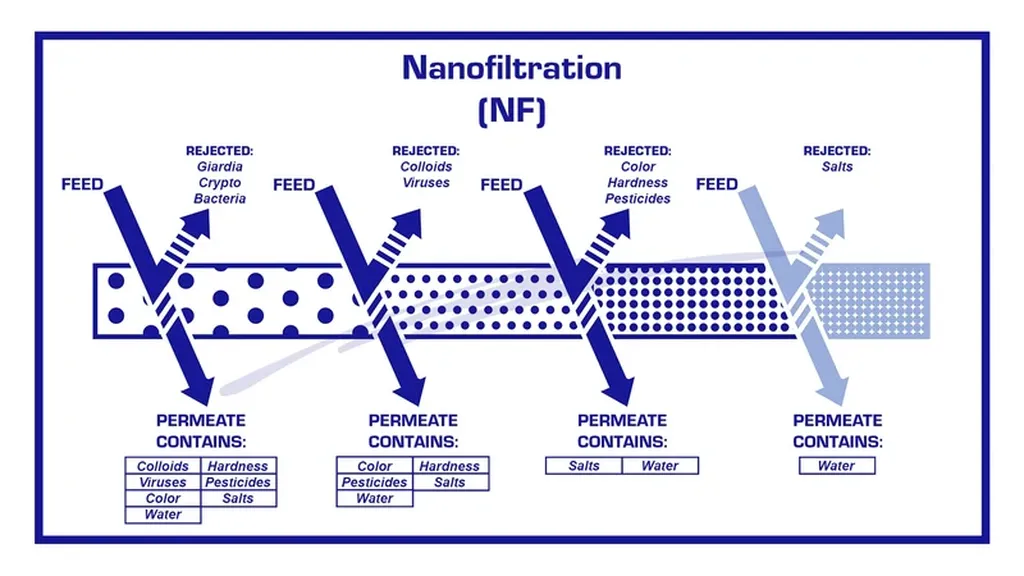
A breakthrough in wastewater treatment could transform how the mining and metal industries handle tailings—a persistent environmental challenge. Researchers at the Helmholtz Institute Freiberg for Resource Technology, led by Dr. K. Rama Swami, have demonstrated that nanofiltration can effectively remove toxic metal ions from flotation residue wastewater while simultaneously concentrating valuable metals for recovery.
The study, published in *Desalination and Water Treatment* (translated from *Entsalzung und Wasserbehandlung*), focused on wastewater laden with zinc, iron, copper, aluminum, and cadmium—metals commonly found in mining effluents. Using flat-sheet polyamide membranes with a molecular weight cutoff of 100–300 Daltons, Swami’s team achieved 85–95% rejection of multivalent metal ions under varying conditions of pH, pressure, and temperature. “We were able to reduce metal concentrations from hundreds of milligrams per liter down to just 1–20 mg/L in a single pass,” Swami explained. “And with just two filtration cycles at 20 bar, we reached complete decontamination—less than 1 mg/L for all target metals.”
The implications are significant for the energy and mining sectors, where tailings management remains a costly and environmentally sensitive issue. Traditional methods like chemical precipitation or reverse osmosis often struggle with high metal loads or produce large volumes of sludge. Nanofiltration, by contrast, offers a dual benefit: clean water output that meets WHO and German regulatory standards, and a concentrated metal-rich retentate suitable for further recovery.
“This isn’t just about compliance—it’s about resource efficiency,” Swami noted. “We concentrated zinc in the retentate to 4 g/L, a fivefold increase in just two cycles. That kind of enrichment could make metal recovery economically viable where it wasn’t before.”
As global pressure mounts to reduce water use and improve sustainability in mining, such closed-loop solutions could redefine tailings management. The Helmholtz team’s work suggests that nanofiltration may soon move from laboratory curiosity to industrial standard—a shift that could lower treatment costs, reduce freshwater intake, and even create new revenue streams from previously discarded metals. With further scale-up and membrane optimization, the technology may soon help mining operations transition from linear waste streams to circular resource systems.