
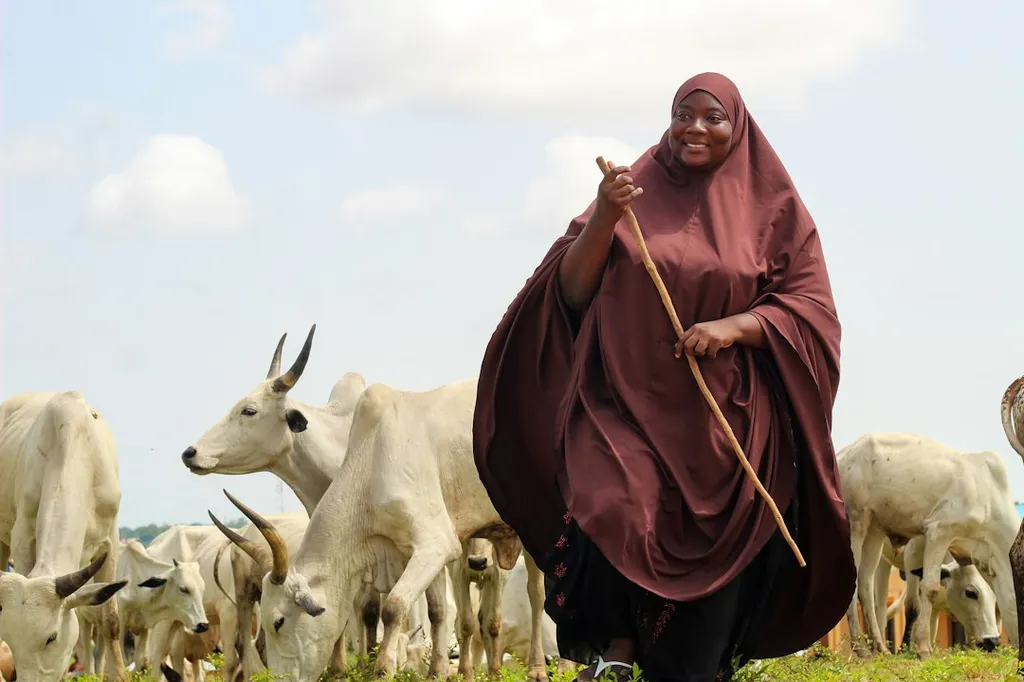
In the heart of Nigeria’s agricultural belt, where smallholder farmers toil under the weight of unpredictable rains and soaring temperatures, a quiet revolution is brewing—not in the fields, but in the circuits of data and algorithms. Olumayowa Iyanda, a researcher at Afe Babalola University in Ado-Ekiti, has spent years dissecting the intersection of agriculture and technology, and his latest work, published in the *ABUAD Journal of Engineering Research and Development* (formerly known as the *Afe Babalola University Journal of Engineering Research and Development*), offers a glimpse into how intelligent systems could redefine farming in emerging economies.
Iyanda’s research hinges on the idea that data, not just soil and seeds, can be the most critical input for sustainable crop productivity. “We’re not just talking about farming smarter,” he explains. “We’re talking about farming with precision, where every drop of water, every gram of fertilizer, and every hour of sunlight is accounted for in real time.” His team’s work centers on Intelligent Decision-Support Systems (IDSS), which blend Internet of Things (IoT) sensors, cloud computing, and machine learning to transform raw data into actionable insights for farmers.
The commercial implications for the energy sector are particularly striking. Agriculture accounts for roughly 30% of global energy consumption, largely due to irrigation, fertilizer production, and mechanized farming. By optimizing water and nutrient use—potentially cutting waste by up to 40%—IDSS could significantly reduce the energy footprint of farming. Imagine solar-powered IoT networks in rural fields, transmitting soil moisture and weather data to a cloud-based analytics platform. Machine learning models then predict the exact irrigation needs of a crop, triggering pumps only when necessary, rather than on a rigid schedule. The result? Less energy wasted on over-irrigation, fewer diesel generators running at full tilt, and a smaller carbon footprint for farms that rely on fossil fuels.
But the challenges are formidable. In many developing economies, connectivity is spotty, data sources are fragmented, and cybersecurity threats loom large. “You can’t just drop a high-tech system into a village and expect it to work,” Iyanda notes. “You need modular, scalable solutions that can adapt to local conditions—whether that’s a lack of reliable internet or farmers who may not be tech-savvy.” His team proposes a reference framework that combines edge intelligence (processing data locally to reduce latency) with user-friendly dashboards, ensuring that even smallholder farmers can make informed decisions without needing a degree in data science.
The potential payoff is substantial. Beyond energy savings, IDSS could slash crop losses from pests, diseases, and drought—biotic and abiotic stresses that currently shave billions off agricultural output in emerging markets. For energy companies, this could translate into new markets for smart irrigation technologies, data-driven agribusiness services, and even partnerships with telecom providers to deploy low-power IoT networks in rural areas.
As Iyanda’s research suggests, the future of agriculture may not lie in bigger tractors or more fertilizer, but in the invisible threads of data weaving through the fields. For the energy sector, that future could mean less strain on grids, lower fuel consumption, and a chance to align with the growing demand for sustainable farming practices. The question isn’t whether technology can transform agriculture—it’s whether the sector is ready to embrace it.