
In the heart of northern Bangladesh, where the Ganges and Brahmaputra rivers carve through fertile plains, farmers are locked in a daily struggle against a shifting climate. A new study by Md. Abu Shahen, a researcher at the University of Rajshahi’s Department of Social Work, reveals how these farmers are adapting—sometimes successfully, sometimes not—to the growing unpredictability of crop yields. The findings, published in *Environmental Challenges*, offer more than just a snapshot of rural resilience; they provide a roadmap for industries, including energy, to understand where investment and innovation could make a real difference.
Shahen’s team spent years gathering data from 385 farmers across seven districts, blending hard numbers with personal stories. What they found is a paradox: while many farmers reported higher current production thanks to modern techniques—better seeds, fertilizers, irrigation—climate change is making every harvest a gamble. “Farmers are working harder and spending more, but the weather is making it harder to predict what will grow and when,” Shahen explains. “It’s not just about producing more; it’s about producing *reliably*.”
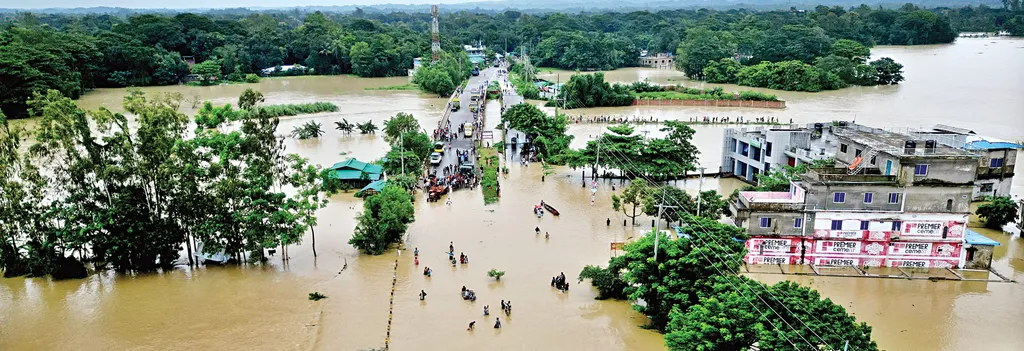
The study highlights stark differences in adaptation strategies depending on the type of climate stress. In flood-prone areas, farmers are adjusting their crop calendars, harvesting early before waters rise, and replanting quickly after disasters. One farmer in Gaibandha district told researchers, “Last year, the floods came so fast we lost half our aman rice. Now we plant early and keep seedlings ready to replant if the river rises.” In contrast, communities facing drought and extreme heat are turning to water-saving irrigation, shifting to less thirsty crops like millet, and even adopting solar-powered pumps where grid electricity is unreliable.
These adaptations aren’t just about survival—they’re reshaping local economies and energy demands. The surge in irrigation, for instance, is driving up electricity and diesel use, creating new opportunities for renewable energy providers. “Where farmers are switching to solar pumps, we’re seeing a direct link to energy access projects,” says Shahen. “It’s a market signal: if you want to support climate-resilient agriculture, you also need to support off-grid energy solutions.”
The study also used satellite data—comparing Landsat-based NDVI (Normalized Difference Vegetation Index) images from 2010 and 2020—to map vegetation changes. While the data doesn’t prove causation, it paints a spatial picture of where agricultural land is expanding or retreating, offering clues for policymakers and investors. For example, in Kazipur and Godagari, vegetation actually increased, possibly due to better water management or new crop varieties, while five other sites showed declines.
What makes Shahen’s work stand out is its granularity. It doesn’t just say “climate change is bad for farming”—it shows *how* bad, *where*, and *what farmers are doing about it*. For the energy sector, that’s critical intelligence. If drought-prone areas are adopting solar irrigation, energy companies could see a rising demand for decentralized power systems. If flood-prone regions need early-warning systems tied to weather forecasts, tech providers might find new niches in rural climate services.
As Shahen puts it, “Adaptation isn’t one-size-fits-all. It’s about matching solutions to local risks—and that requires listening to farmers, not just satellite data.” For industries looking to invest in resilience, that’s a lesson worth heeding. Published in *Environmental Challenges*, the study doesn’t just document a crisis—it maps a path forward, one where agriculture, energy, and adaptation intersect.