
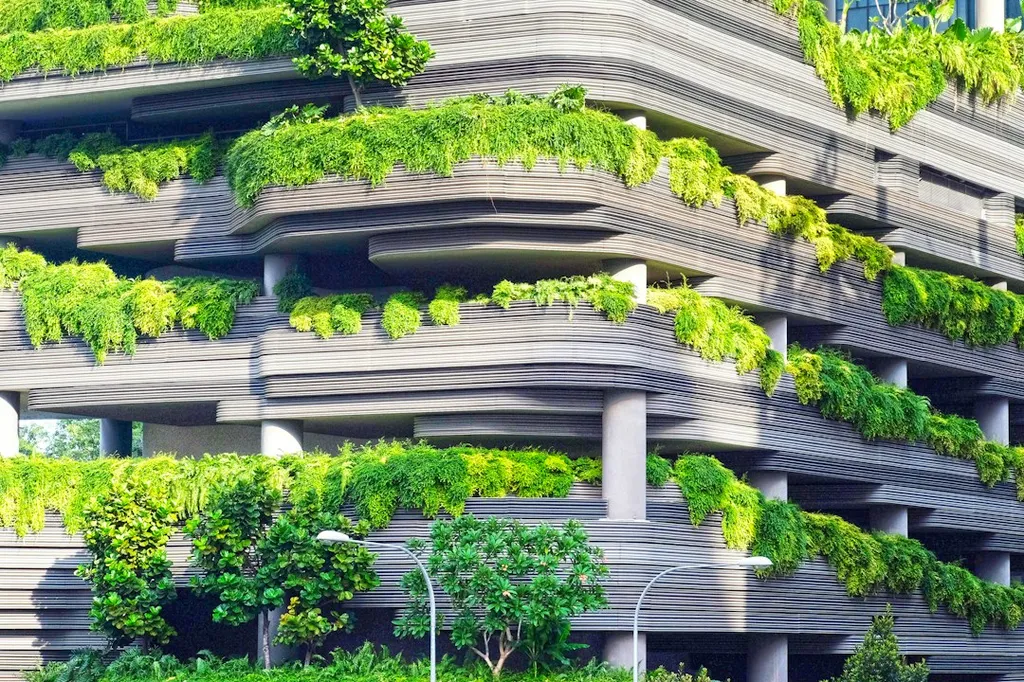
In the evolving landscape of urban development, a new systematic review is setting the stage for how service complexes—those bustling hubs of commercial, residential, and recreational activity—can be designed with sustainability at their core. The research, led by Batoul Hasanin, a BIMM Master student at the Syrian Virtual University, examines how mixed-use developments can integrate renewable energy, energy-efficient technologies, and sustainable materials to create environments that are not just functional but forward-thinking.
Hasanin’s work, published in the *International Journal of BIM and Engineering Science* (*Dār al-Handasah al-‘Ilmiyyah wa-al-Taqniyyah lil-Takhtīt wa-al-‘Umrān*), stands out for its holistic approach. Unlike piecemeal sustainability efforts, the study advocates for a unified framework where renewable energy adoption, water conservation, waste management, and smart transportation systems work in tandem. “The key isn’t just adopting green technologies in isolation,” Hasanin notes, “but weaving them into the very fabric of urban design so they reinforce each other.”
The commercial implications for the energy sector are particularly striking. The review highlights a global surge in renewable energy integration within mixed-use developments, from solar-powered communal spaces to geothermal heating systems. For energy companies, this signals a growing market for decentralized energy solutions tailored to high-density urban environments. “Developers are no longer just consumers of energy; they’re becoming active participants in its generation and distribution,” Hasanin explains. This shift could redefine demand forecasts, grid interactions, and even utility business models as buildings transform into micro-energy hubs.
Water conservation strategies also emerge as a critical focus, with innovations like greywater recycling and rainwater harvesting gaining traction. For industries reliant on water efficiency—such as real estate and municipal services—these findings underscore the need to prioritize water-smart designs in planning phases. Meanwhile, the emphasis on green spaces isn’t just ecological; it’s economic. Studies cited in the review link urban biodiversity to increased property values and tenant satisfaction, a compelling argument for investors eyeing long-term ROI.
But the research doesn’t stop at environmental metrics. Hasanin’s framework places equal weight on social cohesion, waste management, and intelligent transportation networks. “Sustainability isn’t just about kilowatt-hours or carbon footprints,” she argues. “It’s about creating places where people want to live, work, and thrive.” For urban planners and policymakers, this means rethinking zoning laws, incentive structures, and public-private partnerships to align with these integrated goals.
So, what does this mean for the future? For energy firms, it’s a call to innovate beyond traditional supply chains. For architects and developers, it’s a blueprint for designing complexes that are not just buildings but ecosystems. And for Hasanin, it’s a reminder that the most sustainable designs are those that balance efficiency with human-centric values. As the review suggests, the next wave of urban development won’t be defined by siloed solutions but by systems that are as interconnected as the cities they serve.