
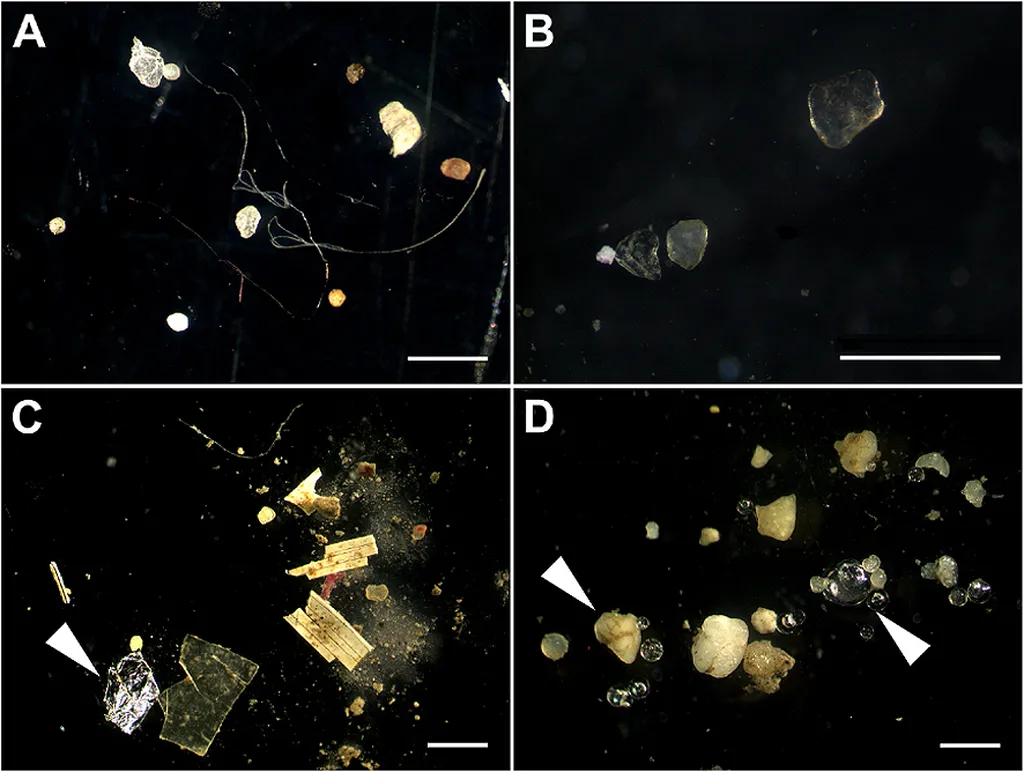
In the foothills of the Himalayas, where the Central University of Himachal Pradesh stands as a beacon of scientific inquiry, researcher Yogita Thakur has cast a spotlight on an emerging environmental crisis—one that flows invisibly through our wastewater systems and into the world’s waterways. Her comprehensive review, published in *Discover Water* (formerly *Discover Water* in English), examines how microplastics—those persistent, near-invisible fragments of synthetic polymers—are both captured and released by wastewater treatment plants (WWTPs) around the globe.
Thakur’s analysis reveals a paradox at the heart of modern sanitation: while WWTPs are designed to clean our water, they are also becoming sources of microplastic pollution. “Wastewater treatment plants act as both sinks and generators of microplastics,” she explains. “They remove a large portion of these particles, but in doing so, they concentrate and transform them—ultimately releasing them back into the environment through effluent discharges and sludge applications.”
The scale of the issue is daunting. Microplastics originate from everyday products—synthetic textiles, personal care items, and tire wear—and enter sewage systems in vast quantities. Once inside WWTPs, conventional processes like primary sedimentation and activated sludge treatment can remove up to 90% of larger particles. But the remaining fraction, often too small to be captured, slips through and re-enters rivers, lakes, and oceans. Even the sludge, often repurposed as agricultural fertilizer, becomes a Trojan horse, spreading microplastics onto farmland.
Thakur’s review critically evaluates a range of advanced treatment technologies being explored to close this gap. Coagulation/flocculation, photocatalysis, and advanced oxidation processes (AOPs) show promise, but come with significant energy and operational costs. Membrane technologies, while highly effective, demand high-pressure systems and frequent maintenance. “The challenge isn’t just removing microplastics,” Thakur notes. “It’s doing so without creating new problems—like generating secondary microplastics during treatment or consuming vast amounts of energy in the process.”
Biological approaches, particularly microbial degradation, offer a more sustainable pathway. Certain bacteria and fungi have demonstrated the ability to break down plastic polymers through enzymatic action, converting them into CO₂, water, and biomass. “This is where biology meets innovation,” Thakur says. “Nature has already evolved mechanisms to degrade organic matter. We’re now learning how to harness those processes for synthetic polymers.”
Yet even these biological solutions face hurdles. Enzyme stability, treatment time, and scalability remain major concerns. The dream of a fully integrated, low-energy, microplastic-specific treatment module within existing WWTPs remains just that—a dream.
For the energy sector, the implications are profound. As utilities and municipalities seek to meet tightening environmental standards, the demand for advanced water treatment will surge. Technologies that integrate renewable energy, reduce carbon footprints, and minimize operational complexity will rise to the top. The commercial opportunity isn’t just in selling equipment—it’s in offering end-to-end solutions that align with circular economy principles and regulatory compliance.
Thakur’s work underscores a critical truth: the future of wastewater treatment won’t be defined by incremental improvements alone. It will require a paradigm shift—one that embraces interdisciplinary innovation, sustainable design, and a deep understanding of ecological systems. As *Discover Water* highlights in its pages, the journey to clean water is no longer just about removing contaminants. It’s about reimagining how we treat, recycle, and return every drop—without leaving behind a legacy of plastic.