
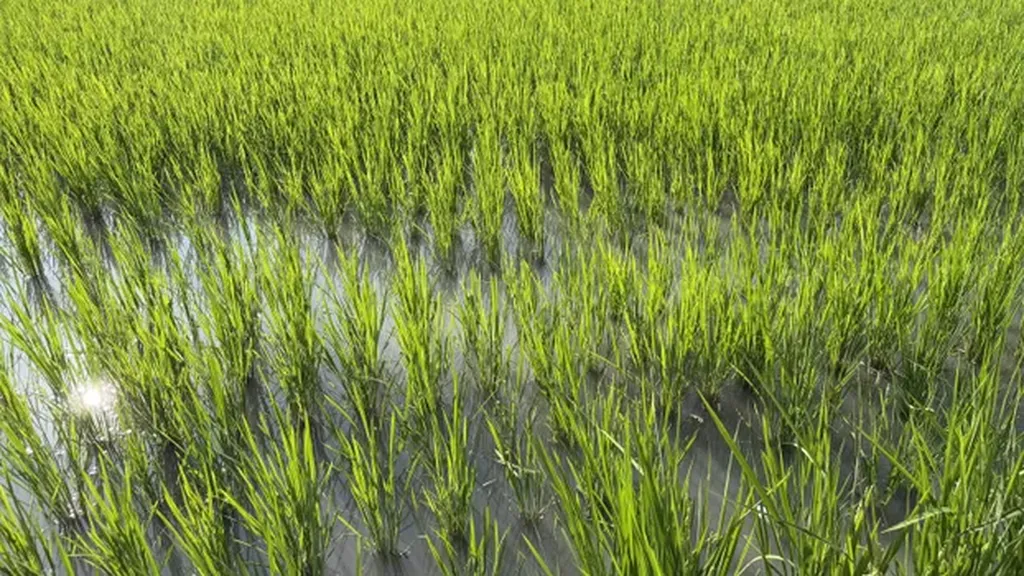
In the heart of Côte d’Ivoire, where the sun beats down on vast rice paddies, Junias Léandre Kra and his team at the Université Jean Lorougnon Guédé are turning to artificial intelligence to solve one of agriculture’s oldest challenges: how to grow more rice with less water. Their recent systematic review, published in *AgriEngineering* (translated from *AgriIngénierie*), examines how AI is being used to optimize irrigation in rice farming—a crop notoriously thirsty, consuming up to 50% of the world’s freshwater withdrawals for irrigation.
The findings suggest that AI isn’t just a futuristic concept; it’s already reshaping how farmers manage water. Machine learning and deep learning models, particularly Long Short-Term Memory (LSTM) networks and Random Forest (RF) algorithms, are proving highly effective in predicting crop water needs, estimating soil moisture, and even forecasting yields. As Kra notes, “These models are not just academic exercises—they’re practical tools that can help farmers make data-driven decisions in real time.”
The commercial implications are significant, especially for the energy sector. Rice irrigation is energy-intensive, relying heavily on diesel pumps or electricity to move water across fields. By reducing water waste through AI-driven precision irrigation, farmers could lower their energy consumption, cutting operational costs and carbon footprints simultaneously. In regions where water scarcity is already straining power grids, this could mean more sustainable energy use and fewer blackouts during peak irrigation seasons.
Yet, the research also highlights a critical bottleneck: data. Half of the datasets used in these studies are locked behind academic paywalls or available only upon request, while just 7.1% are publicly accessible. Without open data, scaling these AI solutions remains a challenge. Kra emphasizes the need for greater collaboration: “If we want AI to transform agriculture at scale, we need shared datasets, standardized protocols, and partnerships between researchers, governments, and agribusinesses.”
The review also points to a geographic imbalance—64.3% of the studies focus on Asia, where rice is a dietary staple. But with climate change tightening water supplies worldwide, the lessons from these AI-driven approaches could be invaluable for rice-growing regions in Africa and the Americas. The integration of remote sensing and IoT technologies, Kra suggests, could soon enable fully adaptive irrigation systems that respond to real-time conditions, further boosting efficiency.
For the energy sector, this research signals a shift toward smarter, data-informed infrastructure. Utilities and irrigation cooperatives could leverage AI models to anticipate water demand peaks, optimize pump schedules, and reduce energy waste—all while supporting food security. The question now is whether the industry will invest in the data infrastructure needed to make these innovations a reality. As Kra’s work shows, the technology is ready. The challenge is making sure it’s accessible to those who need it most.