
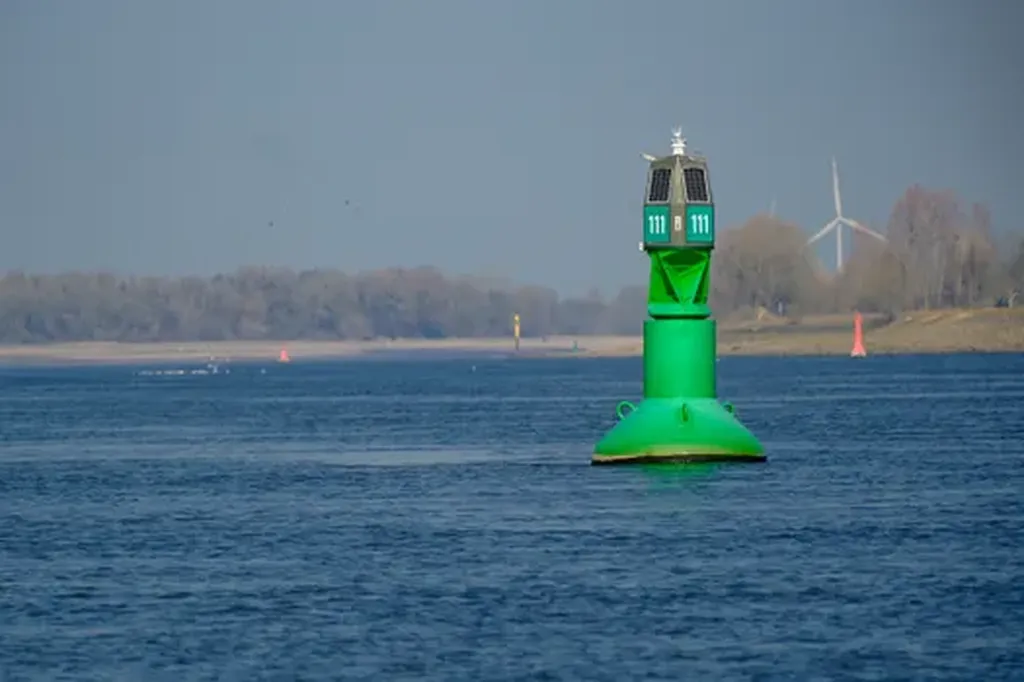
In the bustling agricultural canals of Bangkok, where freshwater meets the encroaching tide, a team of engineers led by Wirote Ritthong of Shinawatra University has developed a solution that could redefine how farmers and water managers confront saltwater intrusion. Their solar-powered smart buoy, a floating sentinel of conductivity and water levels, is now offering real-time vigilance over the creeping threat of saline water seeping into irrigation systems.
The stakes are high. As sea levels rise and freshwater flows dwindle, coastal farming communities face increasing losses—salt-damaged crops, disrupted aquaculture, and degraded soil. Traditional monitoring methods, often manual and sporadic, leave gaps in understanding where and when intrusion occurs. Ritthong’s team set out to change that by creating a system that not only tracks salinity but also communicates alerts instantaneously.
At the heart of the buoy is a multi-parameter sensor that measures electrical conductivity—a proxy for salinity—alongside water levels, all powered by a compact photovoltaic array. The device’s ESP32 microcontroller processes the data and relays it via IoT to a cloud platform, where thresholds can trigger smartphone notifications. “The goal was to make this as autonomous as possible,” Ritthong explains. “Farmers shouldn’t have to guess when saltwater is intruding—they need to know the moment it happens.”
Field trials along the Khlong Bang Mot canal tested the buoy’s mettle under real-world conditions. The system held its own: salinity measurements stayed within ±2% accuracy, even as temperatures fluctuated, thanks to built-in compensation. The photovoltaic system delivered roughly 60 hours of continuous operation per charge, a critical feature for remote deployments. And when waves rocked the canal at heights up to 20 centimeters, the buoy’s reinforced design kept it stable, tilting no more than 20.7 degrees before righting itself.
Perhaps most compelling was the buoy’s ability to detect localized intrusion events and send alerts within 10 seconds—fast enough to trigger interventions like adjusting sluice gates or diverting freshwater flows. “We saw cases where salinity spiked in one section of the canal, and the system caught it before it spread,” Ritthong notes. “That kind of real-time insight could save entire harvests.”
For the energy sector, the implications extend beyond agriculture. The buoy’s solar-powered, IoT-enabled design aligns with the growing demand for decentralized, sustainable monitoring solutions. As coastal regions brace for climate-driven water challenges, technologies like this could become linchpins in broader resilience strategies—integrating renewable energy with critical infrastructure.
Published in *Solar*, the research underscores how agrivoltaics isn’t just about co-locating solar panels with crops; it’s about leveraging solar energy to power the tools that protect those crops. The smart buoy is a case study in how clean energy can underpin precision agriculture, offering a model for other vulnerable regions grappling with similar threats.
As Ritthong and his team refine the design, the question lingers: Could this floating sentinel become as ubiquitous as weather stations along coastlines? If the trials in Bangkok are any indication, the answer may soon be yes.