
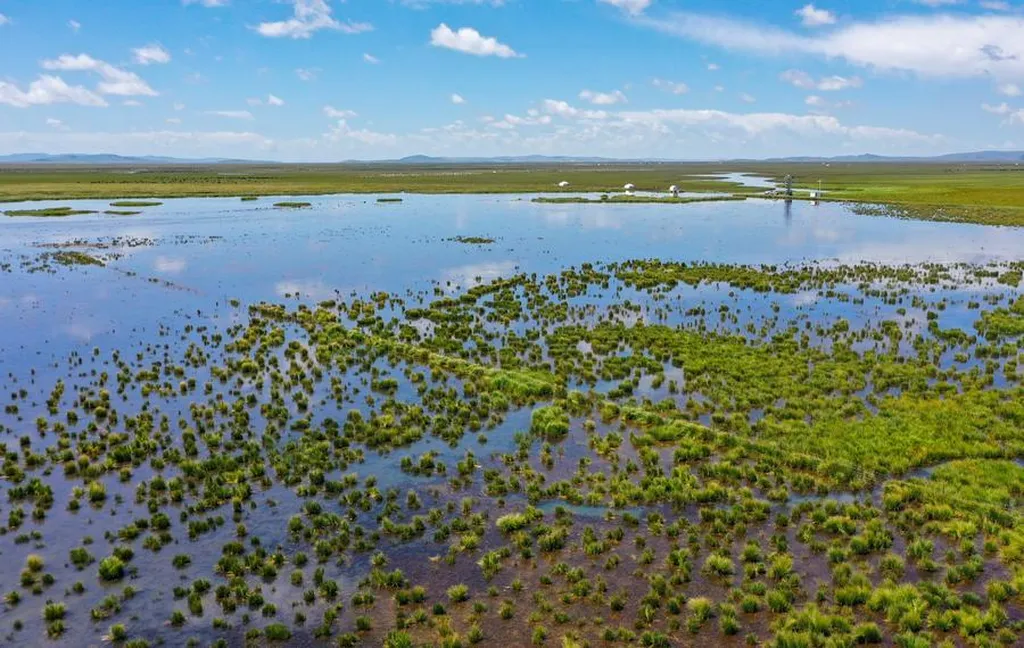
In the high-altitude grasslands of Zoige, where the Tibetan Plateau meets the sky, a quiet crisis is unfolding. The alpine wetlands—vital for water conservation, carbon storage, and biodiversity—are shrinking, their delicate balance threatened by desertification and ecological strain. But a new study led by Xu Xiangning, whose affiliation remains undisclosed, offers a roadmap for restoration that could reshape how we approach ecological challenges in some of the world’s most fragile ecosystems.
The research, published in the *Journal of Geomechanics* (translated from *Dizhi lixue xuebao*), doesn’t just diagnose the problem—it provides a technical framework to address it. By analyzing the surface water–groundwater cycle in Zoige’s alpine ecological zones, Xu and his team have identified key geological and environmental issues driving the decline. Their findings suggest that restoring these wetlands isn’t just an environmental imperative but a strategic one, particularly for industries like energy that rely on stable water resources and carbon mitigation strategies.
“Understanding the evolution of these geo-ecosystems is the first step,” Xu explains. “But translating that knowledge into actionable restoration techniques—that’s where the real impact lies.” The study introduces a life-cycle monitoring system for high-altitude wetlands, a tool that could help industries assess ecological risks in real time, ensuring that development doesn’t come at the cost of irreparable damage.
The Shan–Shui Initiative, which frames this work, emphasizes the interconnectedness of mountains, rivers, forests, and grasslands—a philosophy that could influence how energy projects are planned and permitted in sensitive regions. For sectors like hydropower or mining, which often operate in or near these ecosystems, the research underscores the need for adaptive strategies that align with natural cycles rather than exploit them.
One of the most compelling aspects of the study is its focus on the *Two Mountains Theory*—the idea that ecological protection and economic growth aren’t mutually exclusive. By leveraging Zoige’s unique geo-ecological resources, the research suggests, restoration efforts can enhance their value rather than just preserve them. For energy companies, this could mean new opportunities for carbon offset programs or sustainable water management in high-altitude regions.
The implications extend beyond Zoige. As climate change accelerates, alpine wetlands worldwide face similar pressures. The technical paradigms developed here could serve as a blueprint for restoration in other fragile ecosystems, from the Andes to the Himalayas. For industries dependent on water and land stability, this isn’t just about compliance—it’s about resilience.
The study’s publication in the *Journal of Geomechanics* adds credibility to its findings, ensuring that policymakers and industry leaders take notice. But the real test will be in how these recommendations are applied. Will energy companies adopt these monitoring systems? Will governments integrate them into land-use policies?
One thing is clear: the future of ecological restoration in alpine regions won’t be shaped by guesswork. It will be guided by science—and Xu Xiangning’s work is a critical piece of that puzzle.