
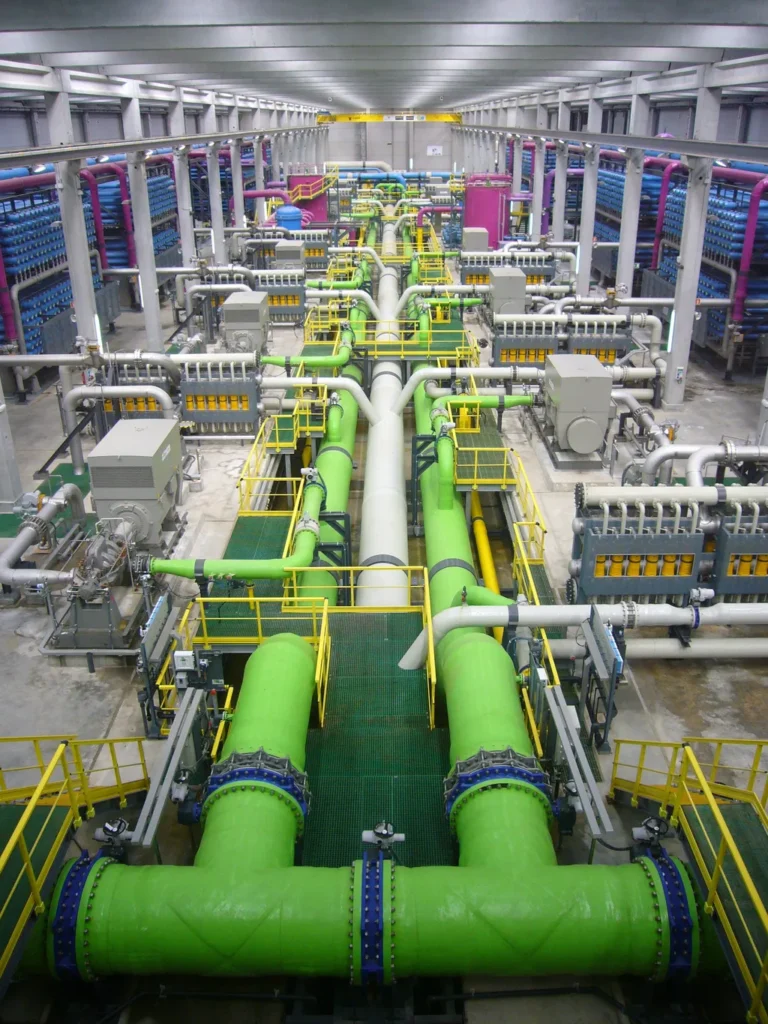
The global desalination industry faces a persistent challenge: what to do with the brine it generates. For every liter of fresh water produced, desalination plants discard roughly 1.5 liters of concentrated saltwater—a byproduct that, until recently, has been treated as waste. But a new review published in *Desalination and Water Treatment* (translated from *Desalinaasiya va Suvni Tretment*) by lead author M.A. Barakat, a professor at King Abdulaziz University and the Central Metallurgical Research and Development Institute in Egypt, suggests that this “waste” could instead become a valuable resource. The implications aren’t just environmental; they could reshape the economics of desalination and even influence energy markets.
Barakat’s review, which synthesizes recent advances in brine treatment and resource recovery, highlights a shift from linear waste disposal to circular resource valorization. Traditional desalination methods like reverse osmosis produce brine streams rich in dissolved salts—sodium chloride, magnesium, calcium, and even trace metals like lithium. Historically, these streams have been discharged into oceans or evaporation ponds, contributing to ecological harm through salinity spikes and chemical imbalances. But now, researchers are exploring ways to extract these dissolved minerals before discharge, turning a liability into an asset.
“Instead of seeing brine as a problem, we’re starting to treat it as a treasure chest,” says Barakat. His team’s analysis reveals that advanced technologies—such as membrane distillation-crystallization, electrodialysis, and zero-liquid discharge (ZLD) systems—can recover not only common salts but also high-value industrial minerals like magnesium hydroxide and lithium-rich compounds. These recovered materials can be sold for use in pharmaceuticals, batteries, and construction, creating new revenue streams for desalination operators.
The commercial implications are particularly compelling for the energy sector. Lithium, for instance, is a critical input for electric vehicle batteries. With global demand surging, brine from desalination plants—especially in regions like the Middle East and North Africa—could become a secondary source of this strategic metal. “Desalination brine could supply a significant portion of future lithium needs without new mining,” Barakat notes. This could ease pressure on traditional lithium extraction, which is water-intensive and environmentally contentious.
Yet the path to large-scale implementation is not without hurdles. High energy consumption remains a major barrier, particularly for ZLD systems that require significant thermal and electrical inputs. Membrane fouling and scaling also pose operational challenges, increasing maintenance costs. Barakat emphasizes that future progress will depend on integrating renewable energy sources, such as solar or geothermal, to power these processes sustainably.
“Energy is the elephant in the room,” he admits. “But if we can couple brine valorization with solar desalination, we could create a system that’s not just water-neutral, but resource-positive.”
The review also points to emerging innovations like photothermal membrane distillation and AI-driven process optimization as potential game-changers. These could reduce energy demand while improving recovery rates and product purity. For energy companies investing in desalination for water security or industrial use, integrating resource recovery could improve project economics and even create new business models—selling water, minerals, and energy in a single integrated system.
As the world seeks to balance water supply with sustainability, Barakat’s work suggests that the future of desalination may lie not in disposing of brine, but in mining it. The shift from waste to resource could redefine the industry’s role in the global economy—one drop of brine at a time.