
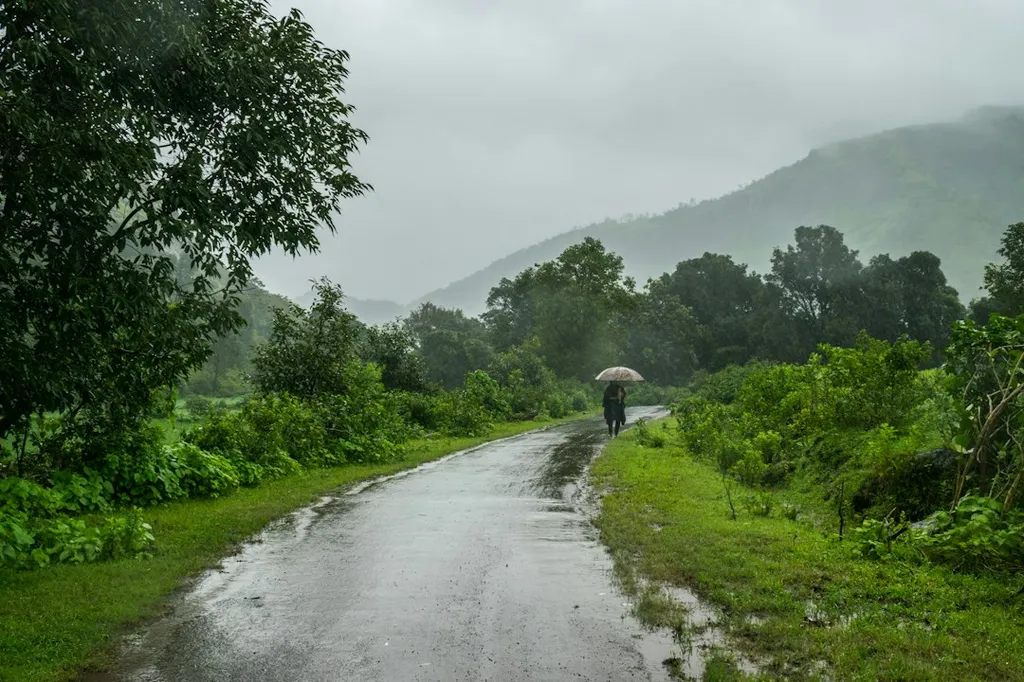
Pragnaditya Malakar has spent years staring at hydrological data, but what he and his team at the Indian Institute of Science Education and Research Berhampur have uncovered isn’t just another dataset—it’s a quiet revolution in how India—and the world—might manage its most precious invisible resource: groundwater.
Their study, published in *Frontiers in Water* (previously *Frontiers in Environmental Science* section on Water), uses daily groundwater recharge estimates across India at a 0.25° resolution—about 25 kilometers by 25 kilometers—to reveal that 74.1% of all groundwater replenishment happens during the four months of the June-to-September monsoon. That’s not just a seasonal pattern; it’s a structural reality. “We found that the ten wettest days of the year deliver 44.1% of all precipitation,” Malakar explains, “but the ten largest recharge days only account for 21% of annual recharge.” In other words, the ground acts like a giant sponge, soaking up heavy downpours but releasing water more steadily over time.
This buffering effect—where intense rainfall doesn’t immediately translate into immediate groundwater rise—has major implications for energy and water infrastructure planning. For power plants, especially those relying on groundwater for cooling or process water, understanding *when* recharge occurs could mean the difference between planned abstraction and emergency rationing during heatwaves. If the monsoon weakens or shifts slightly earlier or later, the timing of peak recharge could drift, leaving thermal plants exposed during peak demand.
The study also identifies four distinct recharge regimes across India:
– Strongly monsoon-pulsed regions (like parts of the Indo-Gangetic Plain)
– Delayed post-monsoon recharge zones (common in central peninsular India)
– Diffuse low-recharge areas (arid northwest)
– Highly responsive recharge regions (coastal and alluvial zones)
Crucially, Malakar and his team found that land-cover change—deforestation, urbanization, agriculture—has only weak and inconsistent effects on recharge compared to the dominant force of monsoon precipitation. “We expected land-use to play a bigger role,” Malakar admits, “but the signal was drowned out by monsoon variability.” That doesn’t mean urban sprawl or farmland expansion are harmless, but it does suggest that managing groundwater sustainably in India may hinge more on adapting to monsoon rhythms than on changing land practices alone.
For the energy sector, this research offers a new lens through which to align water and power planning. Thermal power plants, which account for about 70% of India’s electricity, are highly water-intensive. If monsoon-driven recharge is becoming slightly less concentrated during peak monsoon months, utilities may need to invest in storage infrastructure—like check dams, farm ponds, or aquifer recharge schemes—during the core recharge period to capture surplus water for later use.
“What we’ve shown is that groundwater replenishment can be reorganized within the year without a significant change in total volume,” says Malakar. In practical terms, that means a plant might still get the same annual water supply, but it could arrive in fewer, more intense pulses—or spread out over a longer season. Either scenario demands flexibility: either building storage to hold surplus water, or adjusting operations to match the timing of recharge.
The study’s daily resolution is a game-changer. Most groundwater models operate at monthly or annual scales, missing the pulse-like nature of monsoon-driven recharge. By resolving recharge at daily timescales, Malakar’s team has given water managers a tool to pinpoint critical replenishment windows—days or weeks when targeted recharge interventions could have maximum impact.
As climate change intensifies monsoon variability, this kind of granular insight becomes vital. Thermal plants sited near aquifers with buffered recharge may fare better than those in regions where recharge is tightly coupled to extreme rainfall events. Energy planners can now use these regime maps to site new facilities, design cooling water systems, or negotiate water rights with greater hydrological precision.
In a country where over 80% of irrigation and a significant share of domestic and industrial water comes from groundwater, the stakes are enormous. But Malakar’s work suggests that the solution isn’t just about pumping less or recharging more—it’s about *timing*. And timing, as any power plant operator knows, is everything.