
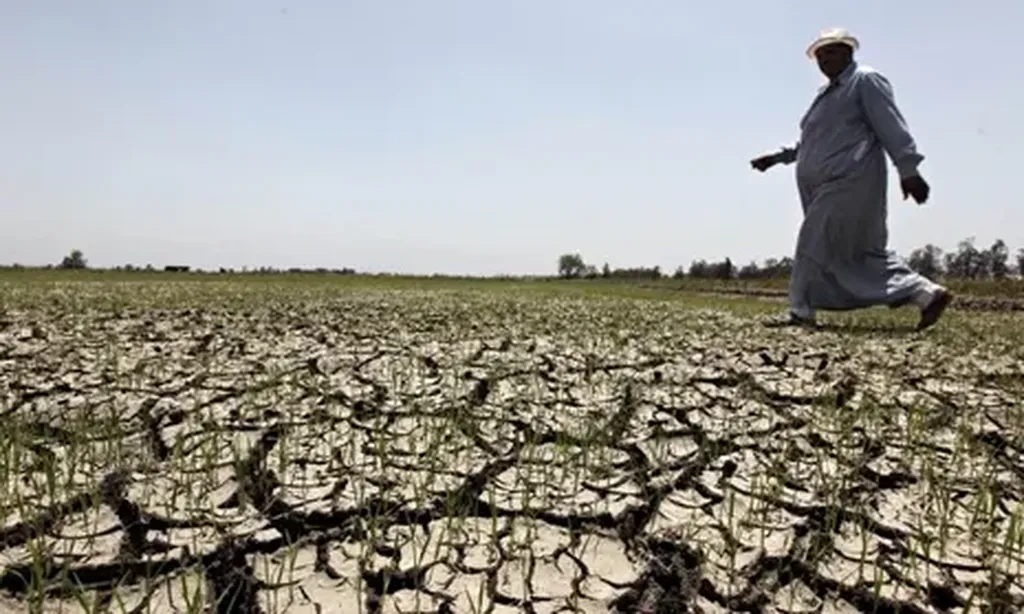
In the parched expanses of the Aral Sea region, where water scarcity has long been a harsh reality, a quiet revolution is taking root—not in the soil, but in the digital fields of dehkan farms. Mambetnazarov Bakhit, a researcher at the University of Innovation Technologies, has uncovered compelling evidence that digital tools could be the key to unlocking greater efficiency in one of the world’s most water-stressed agricultural zones.
The study, published in the *E3S Web of Conferences* (translated as the *E3S Web of Conferences* from Russian), analyzed 214 dehkan farms in the Republic of Karakalpakstan, a region deeply affected by the ecological collapse of the Aral Sea. Using metrics like the Digital Water Management Index (DWMI) and Data Envelopment Analysis (DEA), Bakhit’s team found that farms leveraging digital water management technologies dramatically outperformed their less-digitized counterparts.
Farms with high digital adoption achieved a technical efficiency score of 0.86, compared to just 0.69 for those with low digitalization. The numbers tell a striking story: irrigation water consumption dropped by nearly 20%—from 8,620 to 6,940 cubic meters per hectare—while water use efficiency soared from 0.59 to 0.84 kilograms per unit of water. Yields and farm incomes followed suit, signaling not just survival, but growth in an otherwise precarious landscape.
“Digital transformation isn’t just about saving water—it’s about making every drop work harder,” Bakhit notes. “In regions where water is as scarce as capital, these tools can turn scarcity into opportunity.”
For the energy sector, the implications are profound. Water and energy are inextricably linked; every kilowatt-hour of electricity used in pumping, treatment, or distribution carries a water footprint. If digital irrigation systems can reduce water demand by nearly a fifth, they also ease the burden on power grids straining to meet agricultural needs—especially in remote, off-grid regions where diesel generators or aging infrastructure dominate.
The study suggests a future where smart sensors, real-time monitoring, and data-driven decision-making could become standard in water-scarce agriculture. As climate pressures intensify, the question isn’t whether digital tools will reshape water management, but how quickly they can scale—and who will lead the charge.
For policymakers and investors eyeing Central Asia’s energy-water nexus, Bakhit’s research offers a clear signal: the digital farm of tomorrow may well be the most resilient one today.