
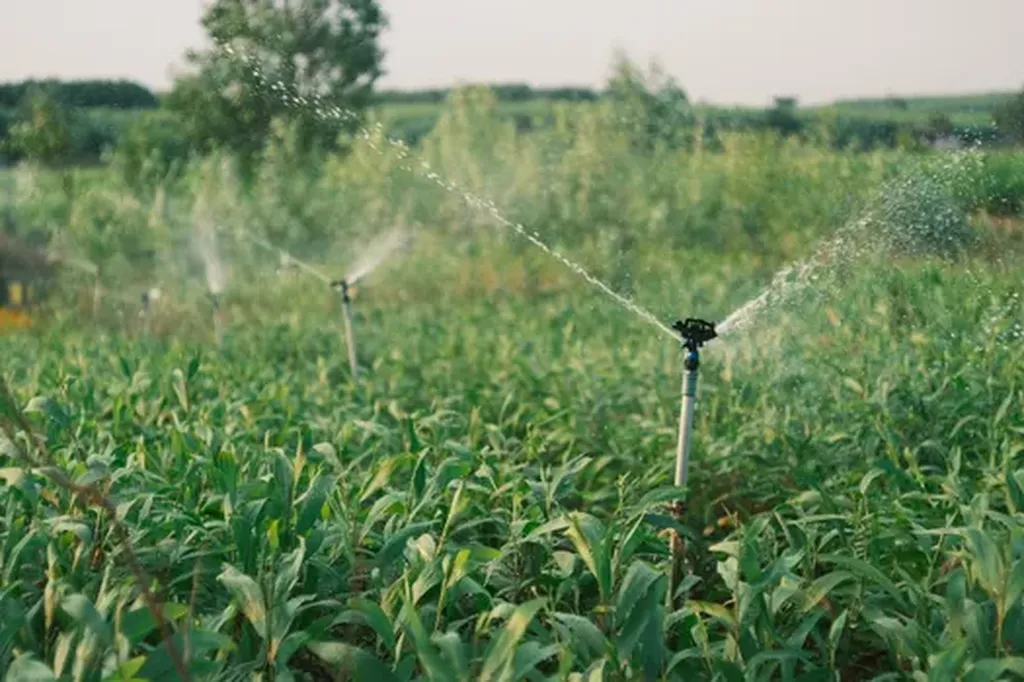
In the arid expanses of Karakalpakstan, a region in Uzbekistan where water is scarcer than opportunity, a quiet revolution is brewing—not in the fields themselves, but in how those fields are managed. Mambetnazarov Bakhit, a researcher at the University of Innovation Technologies, has just put a spotlight on an issue that could redefine agricultural economics in water-stressed regions worldwide. His study, published in the *E3S Web of Conferences* (translated from Russian as the *Web of Conferences in Ecology, Engineering, and Sustainability*), doesn’t just highlight the problem; it offers a roadmap for turning scarcity into efficiency.
Using the Data Envelopment Analysis (DEA) method, Bakhit and his team scrutinized 18 farms across Karakalpakstan, a region where the Amu Darya River—once a lifeline—now struggles to meet the demands of agriculture and local communities. The findings are stark: on average, farms are operating at just 81% of their technical efficiency. In plain terms, that’s a 21% gap in resource use, with irrigation water being the most glaring inefficiency. “Farms that are efficient in their water use aren’t just saving water—they’re achieving higher economic returns,” Bakhit notes. “It’s not about doing more with less; it’s about doing more with the same.”
The commercial implications ripple far beyond Karakalpakstan’s borders. For energy sectors reliant on water-intensive agriculture—think irrigation pumps, desalination plants, or even hydroelectric power—this study underscores a critical insight: water scarcity isn’t just an environmental challenge; it’s an economic one. Efficient farms in the study used 17.8% less irrigation water while outperforming their peers economically. That’s a metric that could sway investors and policymakers alike, especially as climate change tightens its grip on water supplies.
What makes this research particularly compelling is its focus on actionable solutions. Bakhit’s team isn’t just diagnosing the problem; they’re pointing to water-saving technologies and digital farm management tools as key levers for change. For energy companies, this could translate into new markets for precision irrigation systems, soil moisture sensors, or even AI-driven farm management platforms. The message is clear: the future of agriculture under water scarcity won’t belong to those who resist change, but to those who adapt fastest.
As regions like Karakalpakstan grapple with the dual pressures of water scarcity and economic growth, studies like this one serve as a reminder that innovation isn’t just about technology—it’s about rethinking how we use the resources we have. And in a world where water is becoming the new oil, efficiency might just be the most valuable currency of all.