
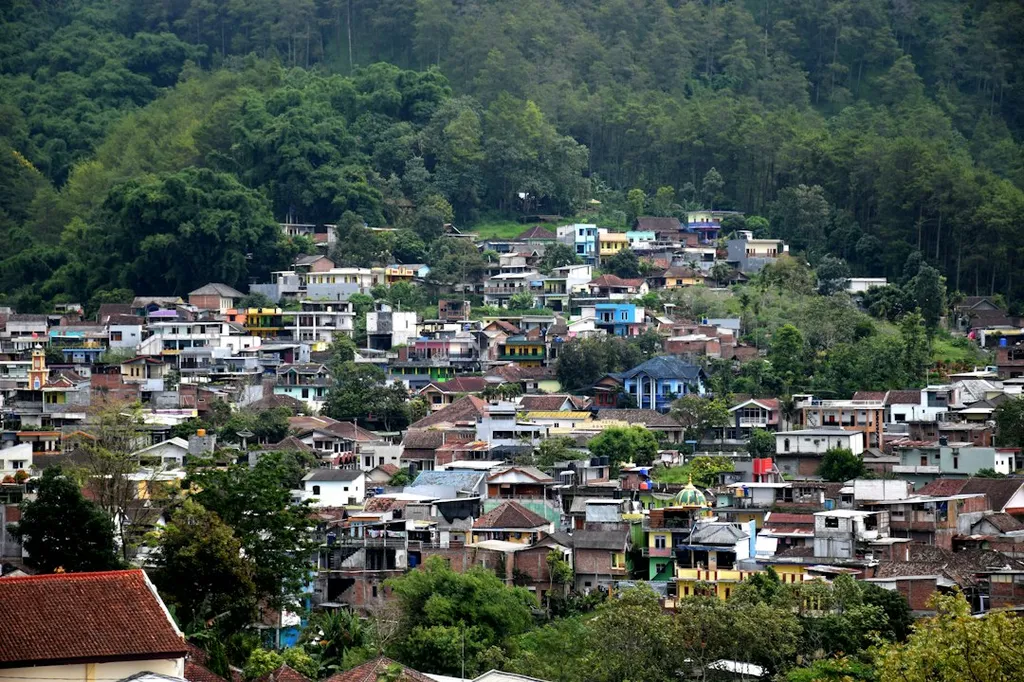
The six springs that feed Batu City’s municipal water system look pristine at first glance—crystal-clear water cascading over limestone, nestled in the cool highlands of East Java. But beneath that postcard surface, a study by Universitas Brawijaya researcher Luhur Akbar Devianto and his team has uncovered a hidden risk that could ripple through the region’s water, energy, and public-health infrastructure.
In a peer-reviewed paper published in *Envirotek* (Indonesian for “Envirotech”), Devianto and colleagues from the Department of Biosystems Engineering analyzed raw water from Ngesong, Banyuning, Gemulo, Torong Belok, Darmi, and Kasinan—all sources tapped by Perumda Air Minum Among Tirto, the local water utility. Their goal: to see whether these springs could reliably supply safe drinking water without costly treatment upgrades.
Using the Weighted Arithmetic Water Quality Index (WAWQI), a method endorsed by Indonesia’s Ministry of Health, the team found that all six springs scored in the “excellent” category for physicochemical parameters like turbidity, total dissolved solids, hardness, and pH. “The mineral balance in these springs is actually very good,” Devianto noted. “They meet most regulatory limits without needing advanced filtration or chemical dosing.”
But the microbiological picture tells a different story. Total coliform bacteria were detected in every sample, ranging from 7 to 80 colony-forming units per 100 milliliters. More concerning, *E. coli*—a direct indicator of recent fecal contamination—was found at Ngesong (20 CFU/100 mL) and Darmi (1 CFU/100 mL). That means the water, as it currently flows from the ground, is not safe to drink without disinfection.
The implications are immediate for Batu City’s 200,000 residents—and for the energy systems that support them. Municipal water treatment typically relies on chlorination, UV systems, or membrane filtration—all of which consume electricity and chemicals. If raw water quality fluctuates due to seasonal runoff or upstream human activity, utilities may need to scale up treatment capacity, increasing operational costs and carbon footprints.
“This study shows that WAWQI is a powerful screening tool,” said Devianto, “but it must be paired with real-time microbial monitoring.” For Batu City, that could mean installing online coliform sensors or strengthening source protection zones around vulnerable springs. It’s a cost-effective approach that avoids over-investment in infrastructure that may not be needed—unless fecal contamination worsens.
Indonesia’s water utilities are under growing pressure to meet SDG 6 targets while managing energy efficiency. With rising electricity costs and tighter environmental regulations, every kilowatt-hour saved in treatment translates to lower tariffs and reduced emissions. Research like this helps planners decide: Do we need to build a new treatment plant, or can we protect the source and optimize existing systems?
As urban demand grows and climate variability shifts rainfall patterns, the lessons from Batu City may resonate across Indonesia’s 17,000 islands. For now, one thing is clear: clean water starts upstream—and staying clean requires vigilance, not just clarity.