
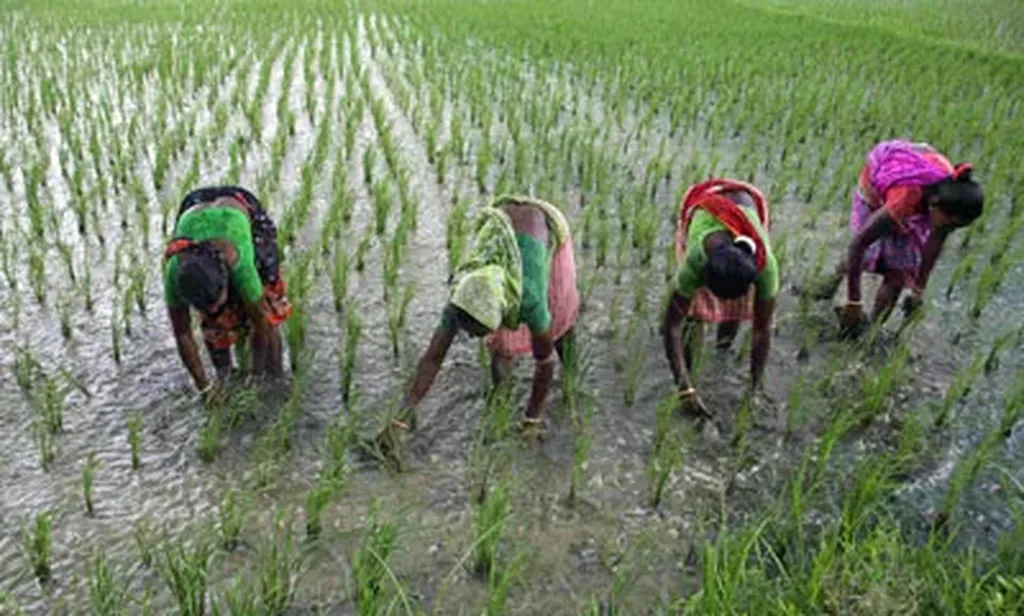
In the fields of Punjab, where smallholder farmers still rely on intuition and tradition to decide when and how much to irrigate, a new concept is emerging—one that could shift the balance between water scarcity and agricultural productivity. Sarbjit Singh, whose affiliation remains unspecified, has proposed a framework that weaves together soil sensors, weather data, and artificial intelligence to make irrigation decisions not just smarter, but explainable. His work, published in the *Journal of Asia Entrepreneurship and Sustainability* (formerly known as *Journal of Asia Entrepreneurship and Sustainability*), suggests that the next leap in precision agriculture won’t come from more sensors alone, but from systems that understand crops as living systems—not just as targets for water delivery.
Most irrigation systems today operate on simple thresholds: if the soil is dry below a certain level, turn on the water. But Singh argues this approach ignores the crop’s stage of growth, the subtle shifts in weather, and the long-term health of the soil. “Current systems are like traffic lights that only turn red or green,” he explains. “They don’t account for whether the driver is a school bus or a racing car.” His framework introduces a hybrid system—part rule-based logic, part AI—that adapts irrigation in real time based on crop growth stage, evapotranspiration forecasts, and soil moisture trends.
The commercial implications are significant, especially for energy providers. Electric pumps account for a substantial share of agricultural electricity consumption in many developing regions. By optimizing water use, Singh’s model could reduce pump runtime by up to 25%, directly cutting energy demand during peak agricultural seasons. This isn’t just about saving water—it’s about reducing the carbon footprint of farming at scale. In India, for instance, where groundwater depletion and rising electricity subsidies strain both natural and fiscal resources, such efficiency gains could ease pressure on power grids and slow aquifer decline.
What makes Singh’s proposal stand out is its focus on practicality. Many high-tech irrigation solutions remain out of reach for smallholders due to cost, complexity, or lack of local technical support. His design emphasizes affordability, scalability, and explainability—key factors for adoption in rural communities. The system isn’t meant to be a black box; it’s designed to provide farmers with clear reasons for each irrigation decision, fostering trust and local adaptation.
Looking ahead, this research points to a future where irrigation systems don’t just respond to conditions—they anticipate them. By integrating AI with agronomic knowledge, Singh’s framework could pave the way for predictive, closed-loop irrigation networks that adjust not only to today’s weather but to tomorrow’s forecast. For energy providers, this means a more predictable load profile. For farmers, it means higher yields with less water. And for the planet, it offers a scalable model for sustainable agriculture in an era of climate uncertainty.
As the *Journal of Asia Entrepreneurship and Sustainability* highlights, the intersection of technology, agriculture, and energy is where the next green revolution may well be planted—not with brute force, but with intelligent design.