
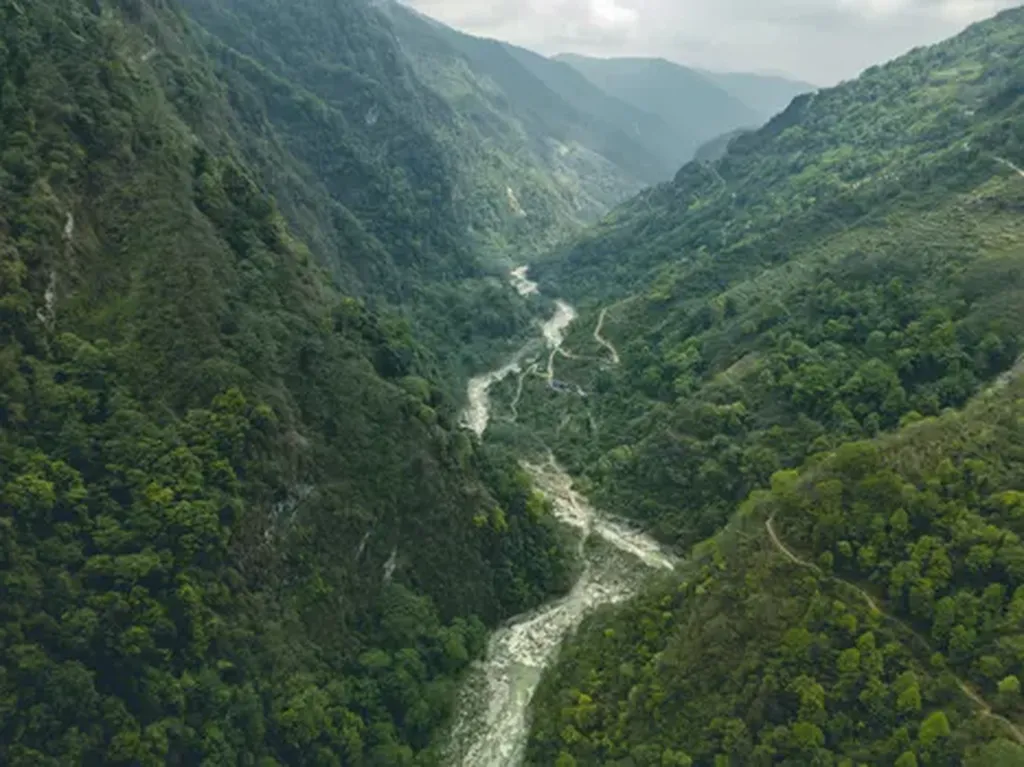
The Himalayas, often called the “Third Pole” or “Water Tower of Asia,” hold more than just snow-capped peaks—they sustain the lives of millions across the continent. Yet this fragile ecosystem is under siege. Climate change is melting glaciers at an alarming rate, biodiversity is declining, and pollution is rising. Cross-border tensions complicate cooperation among the nations that share this vital watershed. Traditional solutions have fallen short, leaving governments and communities searching for better tools.
Enter Harsh Kumar Chauhan, a botanist and conservation specialist affiliated with Kumaun University in India and the International Union for Conservation of Nature (IUCN), who believes the answer may lie in merging two of the most talked-about technologies today: artificial intelligence (AI) and blockchain. In a new perspective published in *Next Sustainability* (published as *Nirantar Tatha* in Hindi), Chauhan and his colleagues propose a bold framework—one that uses AI to gather and analyze critical environmental data and blockchain to ensure transparency and trust among nations.
“AI can process vast amounts of climate data in real time—predicting glacial melt, tracking biodiversity loss, and even forecasting disasters like floods,” says Chauhan. “But data alone isn’t enough. Without trust, cooperation fails. That’s where blockchain comes in. It creates an immutable, decentralized ledger that all parties can access, ensuring no nation manipulates or hides information.”
The implications are far-reaching, especially for the energy sector. Hydropower plants across South Asia depend on steady glacial meltwater flows. If glaciers disappear faster than predicted, energy grids could face instability. AI-driven climate models could provide early warnings, allowing energy providers to adjust generation schedules and storage strategies. Meanwhile, blockchain could facilitate cross-border agreements on water sharing—something that has long been stalled by political distrust.
But challenges remain. High deployment costs, limited digital infrastructure in remote Himalayan regions, and geopolitical sensitivities around data sovereignty could slow adoption. Chauhan emphasizes that success will require more than technology—it will need political will, financial support from developed nations, and active engagement from local communities.
“This isn’t just about saving glaciers,” says Chauhan. “It’s about securing the future of energy, food, and water for over a billion people.”
As the world races to meet climate targets, the Himalayas stand at a crossroads. The fusion of AI and blockchain, as proposed in this research, could offer a new path forward—one where data becomes a bridge, not a barrier, and where technology serves as a neutral ground for cooperation. The next step? Testing the framework in real-world conditions. If it works, the Third Pole may yet become a model for sustainable transboundary governance in the age of climate change.