
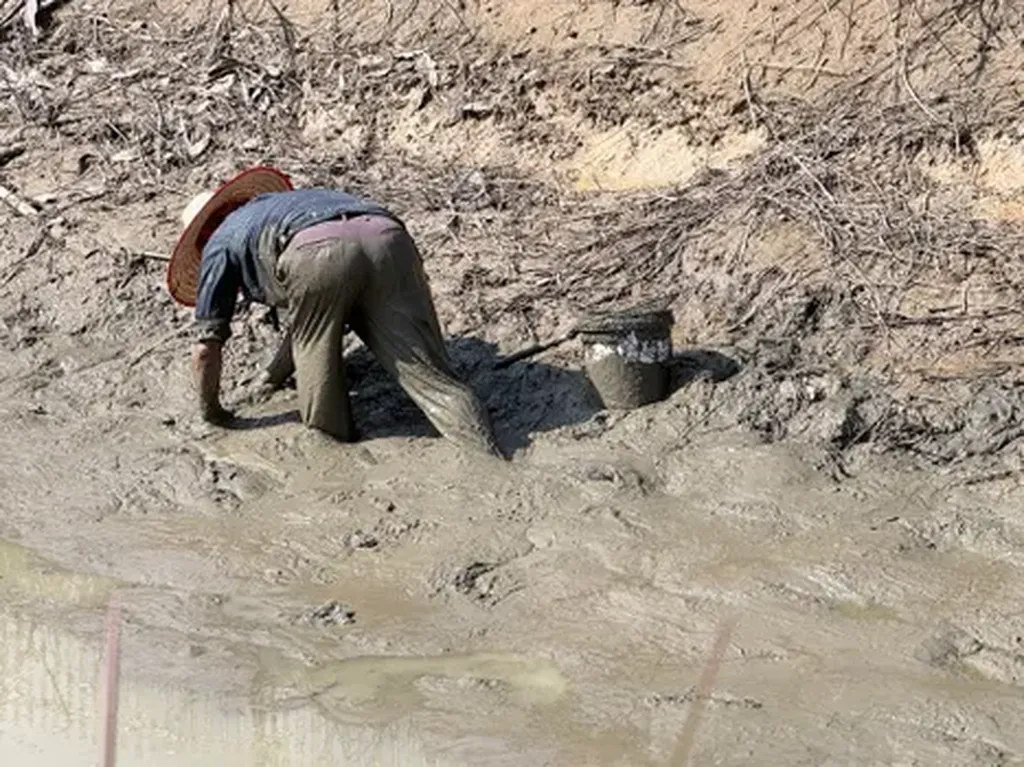
The Meighan Playa Catchment in Iran’s Arak Plain has become a case study in the unintended consequences of groundwater over-extraction—a crisis now reshaping regional water policy and energy infrastructure decisions. Over three decades, researchers led by Dr. Saviz Sadeghi, an environmental scientist at Arak University, have documented a startling transformation: where once groundwater flowed naturally toward the playa as a drainage basin, today it is being pulled relentlessly westward by thousands of wells, draining aquifers and destabilizing the land beneath farms, towns, and critical infrastructure.
Using 34 years of piezometric data from 46 monitoring wells, Sadeghi’s team mapped the annual decline in groundwater levels, revealing a stark geographic shift. “From 1986 to 2006, the western and southwestern parts of the plain experienced the most severe drops—up to 20 meters in some areas,” Sadeghi explains. “But the decline didn’t stop there. Between 2006 and 2020, the decline accelerated dramatically, reaching up to 70 meters in parts of the west, southwest, north, and northeast.”
The numbers tell a story of demand outpacing nature. Between 1971 and 2004, the total discharge from wells increased by 531.5 million cubic meters. Yet by 2009, despite more wells being drilled, total discharge had fallen by 153.9 million cubic meters over just six years—a sign that aquifers were being depleted faster than they could recharge. By 2020, many wells had gone dry, their pumps silent in areas where water once stood just meters below the surface.
What makes this research particularly significant is its challenge to a common assumption: that drought alone drives groundwater decline. “We found that rainfall patterns did not directly correlate with groundwater loss,” says Sadeghi. “The primary driver was human activity—especially the clustering of high-capacity wells in the west and southwest.” This insight reframes the crisis not as an act of nature, but as a structural imbalance in water governance and energy use.
For the energy sector, the implications are profound. Arak is a key industrial hub in central Iran, home to power plants, petrochemical facilities, and energy-intensive agriculture. As groundwater levels fall, so does the reliability of cooling systems, irrigation for biofuel crops, and municipal water supplies. Power plants sited near the playa now face higher operational risks due to subsidence and water scarcity, while energy companies investing in renewable projects in the region must factor in long-term water availability for construction and maintenance.
The study’s findings are already influencing policy. Regional water authorities have begun restricting new well permits in the worst-affected zones and promoting artificial recharge projects. But with climate projections suggesting even drier conditions ahead, the window for recovery is narrowing.
Published in *Journal of Comprehensive Watershed Management* (مدیریت جامع حوزههای آبخیز), this research underscores a growing truth across arid regions: water is not just an environmental concern—it is an economic one, especially for energy-dependent economies. As Sadeghi notes, “The groundwater we take today is energy deferred tomorrow.” In the Arak Plain, that deferred energy may soon arrive not as progress, but as crisis.