
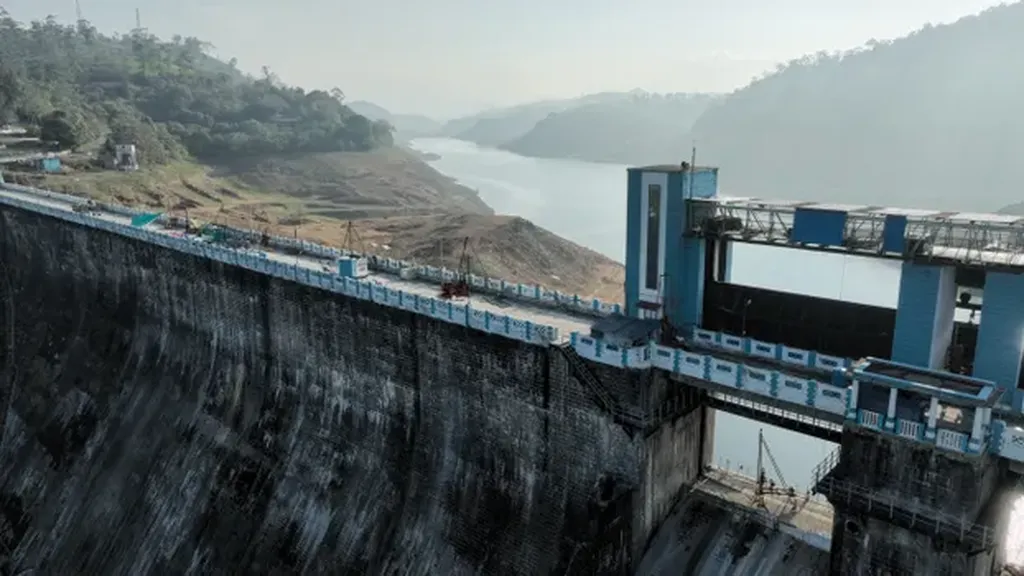
The Ilam Dam watershed in Iran is facing a quiet crisis—one that could ripple across energy, agriculture, and regional stability. A new study by Ehsan Fathi, a researcher from Yazd University’s Department of Rangeland and Watershed Management, reveals how intertwined environmental and human pressures are accelerating its degradation. The findings aren’t just academic; they could reshape how Iran—and other energy-dependent regions—plan for water security in a changing climate.
Fathi’s team used the Analytical Hierarchy Process (AHP) to weigh 12 environmental and 25 human-induced factors contributing to watershed decline. Among environmental drivers, climate change dominated with a weight of 0.550, with drought (0.708) as the most damaging sub-factor. “The link between prolonged drought and reduced water availability in the watershed is undeniable,” Fathi notes. “It’s not just about less rain—it’s about how that shifts everything from soil stability to agricultural output.”
On the human side, agriculture emerged as the most influential factor (0.566), driven by land conversion, over-extraction of water, and unsustainable livestock practices. Residential expansion (0.651) and infrastructure development are carving into natural buffers, while high population growth and migration intensify pressure on limited resources. One striking statistic: excessive water extraction for farming carries a weight of 0.395—suggesting that current agricultural practices may be undermining the very dam they rely on for irrigation.
For the energy sector, this is more than an environmental concern—it’s a risk multiplier. Dams like Ilam are lifelines for hydropower and irrigation. As watershed health declines, so does energy reliability and agricultural productivity. The study’s data-driven approach offers a blueprint for targeted interventions: stabilizing slopes, adopting drought-resistant crops, and enforcing sustainable water use in agriculture.
Published in *Journal of Integrated Watershed Management* (مدیریت جامع حوزههای آبخیز), this research underscores a critical insight: watershed degradation isn’t a distant ecological issue—it’s a near-term operational challenge for industries dependent on water. Fathi’s work challenges policymakers and energy planners to act before the next drought pushes the system past a tipping point. The question isn’t whether change is needed, but how fast it can be implemented.