
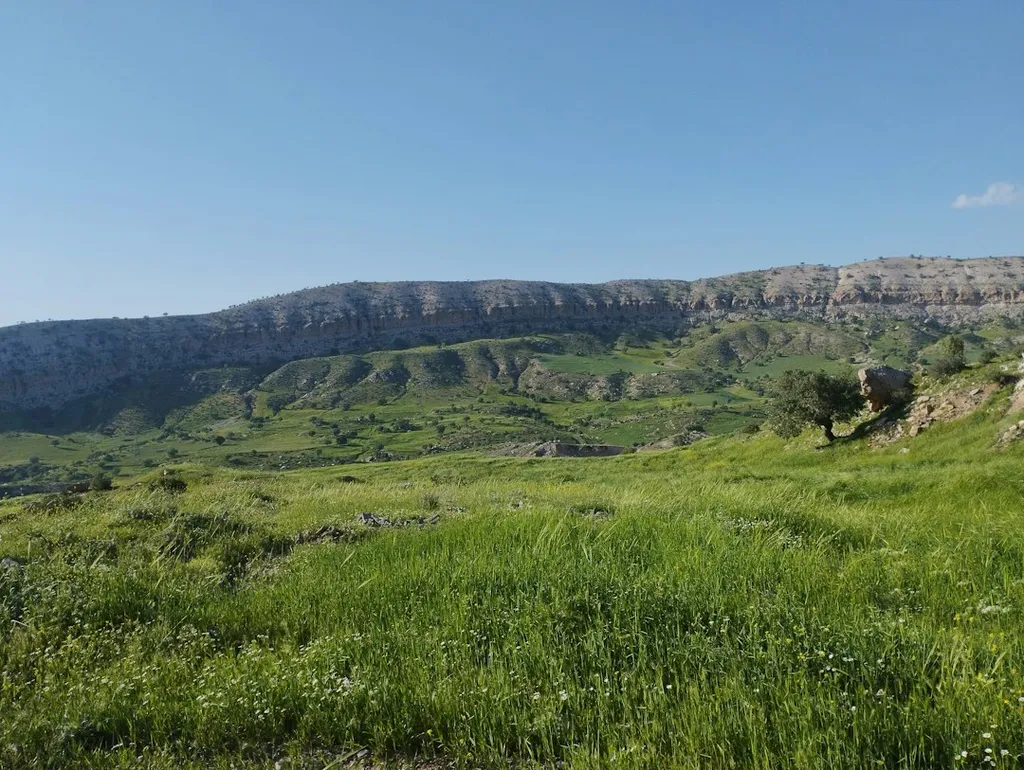
In the rugged hills of Ilam Province, where Iran’s western border meets Iraq, a quiet revolution is unfolding—not in the realm of politics or oil, but in the soil itself. Alireza Mohammadi, a researcher at Ilam University, has spent the past year tracking something far more fundamental than barrels of crude: water. Not the kind that flows in rivers or fills reservoirs, but the kind that seeps into the earth, nurturing life where it’s scarcest.
Mohammadi’s team focused on a deceptively simple innovation: crescent-shaped terraces carved into steep slopes to catch rain and snowmelt. These aren’t grand dams or sprawling irrigation networks. They’re small, strategic interventions—rows of crescent-shaped bunds arranged in a zigzag pattern, designed to slow runoff, trap sediment, and let water soak into the ground where it’s needed most. “We’re not trying to stop water,” Mohammadi says. “We’re trying to invite it to stay.”
The results, published in *Journal of Integrated Watershed Management* (known in Persian as *مدیریت جامع حوزههای آبخیز*), are striking. After five rainfall events between November 2022 and May 2023, soil moisture in the treated areas increased by up to 15% compared to untreated slopes. At a depth of just 15 centimeters—where roots breathe and microbes thrive—the crescent-shaped pits held an average of 51.7% more water than the control sites. “The difference isn’t just measurable,” Mohammadi notes. “It’s visible. You can see the soil color change. You can feel the dampness. That’s water that would have rushed away or evaporated.”
What makes this study particularly relevant today isn’t just its environmental promise, but its potential to reshape how industries operate in water-stressed regions. For energy companies—especially those in oil and gas exploration, renewable energy development, or even mining—water is both a critical resource and a persistent liability. Drilling, fracking, and land rehabilitation all demand reliable water access. Meanwhile, climate change and regulatory scrutiny are tightening the screws on freshwater use in sensitive ecosystems like the Manesht and Qalarang protected area, where Mohammadi’s research was conducted.
The crescent terraces offer a low-tech, low-cost alternative to large-scale water infrastructure. They require minimal maintenance, no external power, and can be built using local labor and materials. For energy firms working in remote or arid zones, such systems could mean the difference between securing permits and facing costly shutdowns. They could also reduce reliance on groundwater or imported water, lowering operational risks and improving sustainability profiles—factors increasingly tied to financing and public acceptance.
But the implications go beyond compliance. In regions where water scarcity fuels conflict or limits development, technologies like these could support ecological restoration while enabling responsible resource extraction. The terraces don’t just store water—they rebuild the landscape’s ability to hold it, creating a buffer against drought and erosion.
Still, challenges remain. The study found that soil moisture retention drops sharply at deeper layers (30 cm), and effectiveness varies with rainfall intensity and terrace design. “This isn’t a one-size-fits-all solution,” Mohammadi cautions. “You have to adapt the shape, spacing, and placement to the terrain and climate. But the principle holds: slow the water, spread it out, let it sink in.”
As energy companies and governments search for sustainable ways to balance development with conservation, Mohammadi’s research points to a quiet but powerful shift—one where the most effective solutions may lie not in steel and concrete, but in the careful reshaping of the land itself. The crescent terraces may be small, but their impact could ripple far beyond the hills of Ilam.