
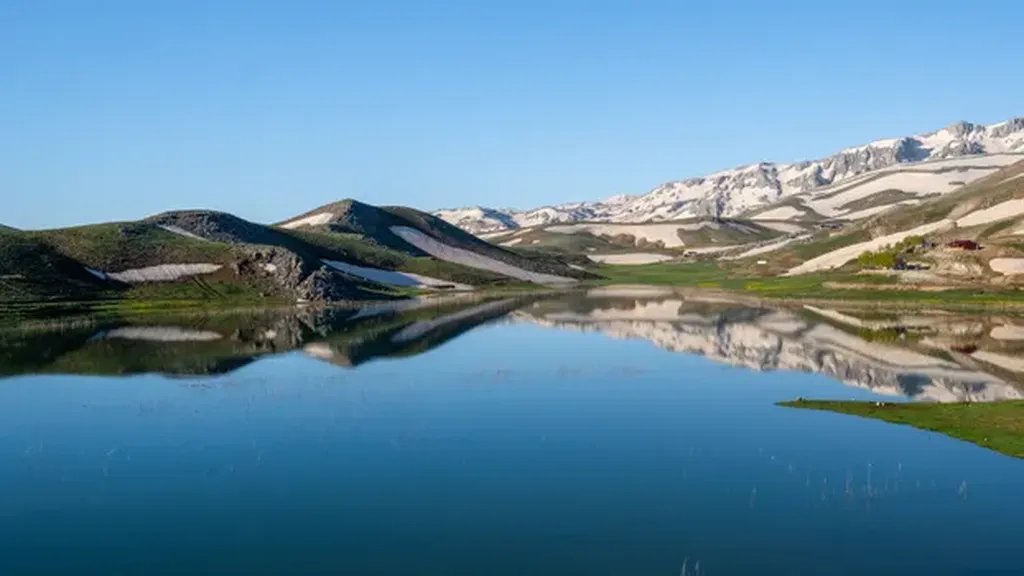
A new study from Homa Razmkhah, assistant professor in the Department of Water Engineering at Islamic Azad University’s Marvdasht Branch, reveals how climate change is reshaping rainfall and temperature patterns in Iran’s Abadeh region—a semi-arid zone in Fars Province where agriculture, industry, and mining are rapidly expanding. Using the HADCM3 global climate model and the LARS-WG5.5 statistical downscaling tool, Razmkhah and her team simulated future meteorological conditions under three greenhouse gas emission scenarios: A1B, B1, and A2.
The findings are both revealing and concerning. While the LARS-WG model accurately reproduced minimum and maximum temperatures, it struggled with precipitation, overestimating rainfall in several key months. As Razmkhah notes, “This highlights the challenge of modeling precipitation in semi-arid regions, where small shifts in timing or intensity can have outsized impacts on water availability.”
Looking ahead to 2011–2030, the study projects an increase in precipitation across all three scenarios. But by 2080–2099, the picture darkens: rainfall declines under A1B and A2 scenarios, signaling potential water stress for farms and industries reliant on consistent precipitation. Meanwhile, temperatures are rising steadily—minimum and maximum temperatures are expected to climb in every future period, with the most dramatic increases under the high-emission A2 scenario.
For the energy sector, these shifts carry significant commercial implications. Power plants—especially those using water for cooling—face heightened operational risks in a warmer, drier climate. Thermal generation efficiency drops as ambient temperatures rise, while droughts threaten hydroelectric output and groundwater supplies for industrial cooling systems. Renewable energy projects, too, may face delays or redesigns as water availability becomes less predictable.
The study, published in *Journal of Watershed Management Research* (مدیریت جامع حوزههای آبخیز), underscores the urgency of adaptive planning. With Abadeh’s population growing and its economy diversifying, water-smart infrastructure and flexible energy strategies will be critical to mitigating climate risks. As Razmkhah’s work suggests, the future of water and energy in semi-arid regions isn’t just a scientific question—it’s a business imperative.