
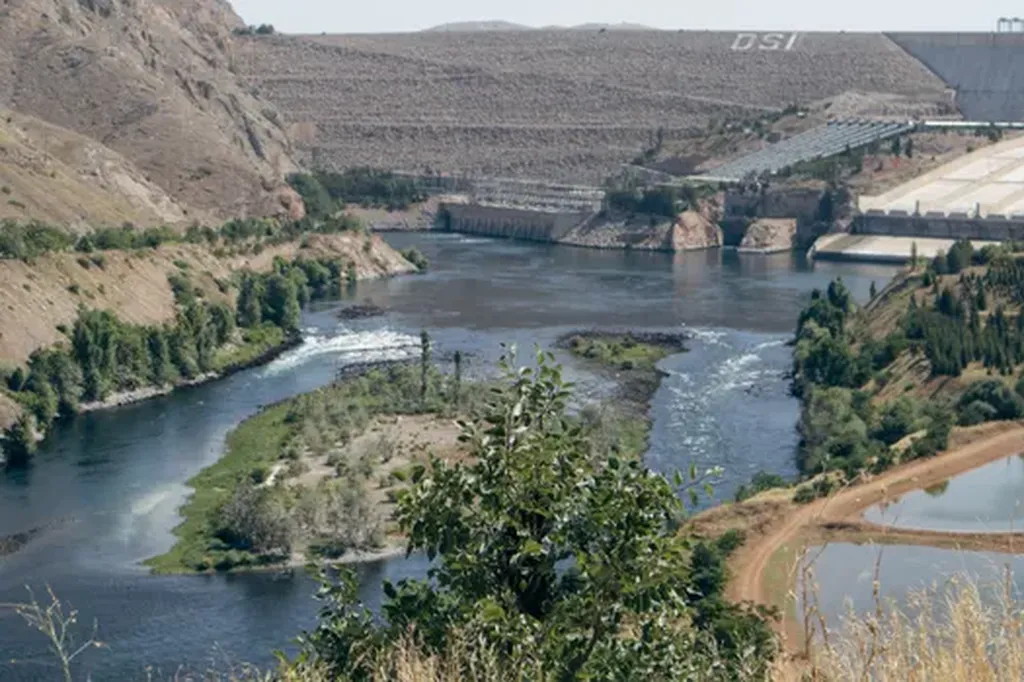
Iran’s natural landscapes are under growing pressure—not just from climate change, but from fragmented decision-making that treats watersheds as administrative puzzles rather than living systems. A new study by Hossein Mosaferi Zeyaaldine from the Sari University of Agricultural Sciences and Natural Resources proposes a process-based model for integrated watershed management that could reshape how Iran—and similar regions—balance development with ecological resilience.
The research, published in *Comprehensive Watershed Management*, argues that Iran’s watersheds face cascading risks: soil degradation, water scarcity, and social conflict, each magnified by overlapping authorities and narrow policy mandates. “Without a unified model,” Mosaferi Zeyaaldine notes, “even well-intentioned interventions can collide, leaving communities and ecosystems in the crossfire.” His team’s model introduces a six-step process—from situational analysis to adaptive management—designed to align stakeholders across natural boundaries rather than political ones.
At the heart of the model is a proposed *Strategic Watershed Management Council*, a decision-making body that would include government agencies, NGOs, universities, and local representatives. Unlike traditional top-down structures, this council would be chaired by a gubernatorial appointee, ensuring coordination without erasing local voices. “The goal isn’t just efficiency,” says Mosaferi Zeyaaldine. “It’s coherence—where every dam, drainage project, or reforestation effort reinforces the whole.”
For the energy sector, the implications are significant. Dams and hydropower projects often operate in isolation, straining watersheds already stressed by competing demands. A council-driven approach could align energy planning with soil conservation and water allocation, reducing long-term operational risks. Similarly, flood control measures—critical for protecting energy infrastructure—would benefit from integrated modeling that accounts for upstream land use.
The model’s adaptability is another draw. With Iran’s watersheds varying from arid plains to mountainous highlands, a one-size-fits-all framework would fail. Mosaferi Zeyaaldine’s cyclic process allows for iterative adjustments, turning planning from a static document into a living dialogue. Early adopters in pilot watersheds could validate the approach, offering a template for other water-stressed regions.
What makes this research stand out is its emphasis on *process*—not just outcomes. By embedding conflict resolution and participatory planning into each step, the model could reduce delays and cost overruns in large-scale water projects. For investors and policymakers alike, that’s a shift from reactive crisis management to proactive stewardship.
Published in *Comprehensive Watershed Management*, the study arrives at a pivotal moment. As Iran grapples with droughts and energy demands, the choice isn’t between development and conservation, but between fragmented efforts and systemic resilience. Mosaferi Zeyaaldine’s work suggests a third way: a model where every drop of water, every kilowatt of power, and every hectare of land is managed as part of a single, living system.