
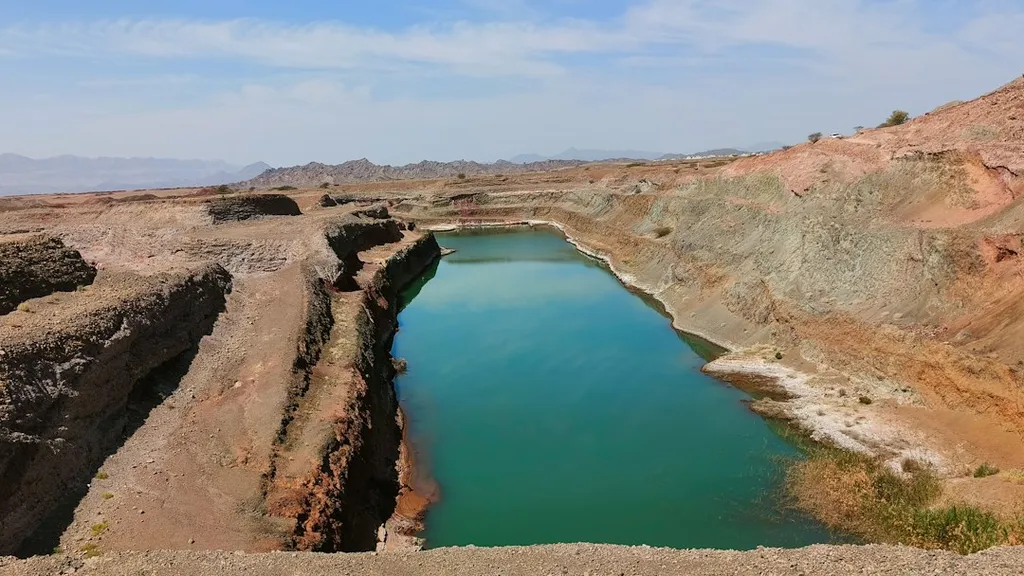
Yazd province in Iran’s central plateau is a region where water isn’t just scarce—it’s a strategic resource. For decades, groundwater has been the lifeblood of agriculture, industry, and communities in this arid landscape. But as climate pressures intensify and demand grows, the quality of that water is becoming a critical concern. A new study by Dr. Hassan Fathizad, a PhD in Combating Desertification from Yazd University’s College of Natural Resources and Desert, sheds light on how the very geology beneath our feet is shaping the water we drink—and the industries that depend on it.
“Groundwater isn’t just water in the ground,” says Dr. Fathizad. “It’s a record of the land it travels through. The rocks and sediments it passes dissolve minerals along the way, and in a place like Yazd, where water moves slowly and stays underground for long periods, that mineral load can become heavy—sometimes too heavy for safe use.”
The study, published in *Journal of Watershed Management Research* (مدیریت جامع حوزههای آبخیز), analyzed groundwater samples from 217 wells and aqueducts across Yazd province. Using advanced geological mapping and hydrochemical analysis, the team found that the water’s chemistry is closely tied to the region’s varied rock formations—limestone, marl, granite, and terrace deposits—each contributing differently to salinity and hardness.
In arid regions like Yazd, where annual rainfall is often less than 100 millimeters, groundwater recharge is limited. “When you have low recharge and high evaporation, salts don’t get flushed out—they concentrate,” explains Dr. Fathizad. “That means the water that feeds farms, factories, and homes is increasingly saline, with high levels of calcium, magnesium, chloride, and sulfate.”
The findings are stark. Not a single sample fell into the “freshwater” category. Most groundwater in the region is classified as hard or very hard, with dominant ions like calcium, magnesium, chloride, and sulfate—hallmarks of prolonged water-rock interaction. The Piper diagram, a standard tool in hydrochemistry, confirmed that the predominant water types are chloride-sulfate and calcium-magnesium, especially in low-lying plains and playas underlain by limestone and marl.
But the implications go beyond drinking water. For energy and industrial sectors—especially water-intensive industries like thermal power plants, petrochemical facilities, and mining—this data is a red flag. High salinity increases corrosion in pipelines and equipment, reduces cooling efficiency, and raises treatment costs. In agriculture, already the largest water user in the region, saline irrigation water threatens crop yields and soil health. “Using water with high sodium absorption ratios can lead to soil degradation,” says Dr. Fathizad. “It changes soil structure, reduces permeability, and in the long run, can render land unusable.”
The study also mapped water quality across Yazd’s 18 sampling zones. The best water—still not ideal, but relatively better—was found in the central and southwestern mountainous areas, where granite formations dominate. These zones, part of the Shirkoh highlands, show lower salinity due to faster flow paths and less contact with evaporite deposits. But as you move toward the plains and playas, water quality deteriorates sharply.
For industries eyeing Yazd as a potential hub for expansion, this research offers more than just data—it provides a roadmap. It suggests that future water sourcing strategies must account not just for quantity, but for geological risk. Selecting sites near granitic recharge zones could reduce treatment costs and operational risks. Meanwhile, regions with high chloride and sulfate content may require advanced desalination or blending strategies.
Dr. Fathizad emphasizes that proactive groundwater management is no longer optional. “We’re not just talking about environmental protection here. This is about economic resilience. If salinity continues to rise due to over-extraction and low recharge, the cost of treating water for industrial use could become prohibitive.”
The study’s findings also hint at a broader trend: in arid regions worldwide, groundwater quality is becoming as critical as quantity. As climate change reduces surface water availability, industries will increasingly rely on groundwater—and they’ll need to understand the geology beneath it.
For Yazd, the message is clear: the water beneath your feet is telling a story. And if you’re listening, it might just help you plan for a more sustainable future.