
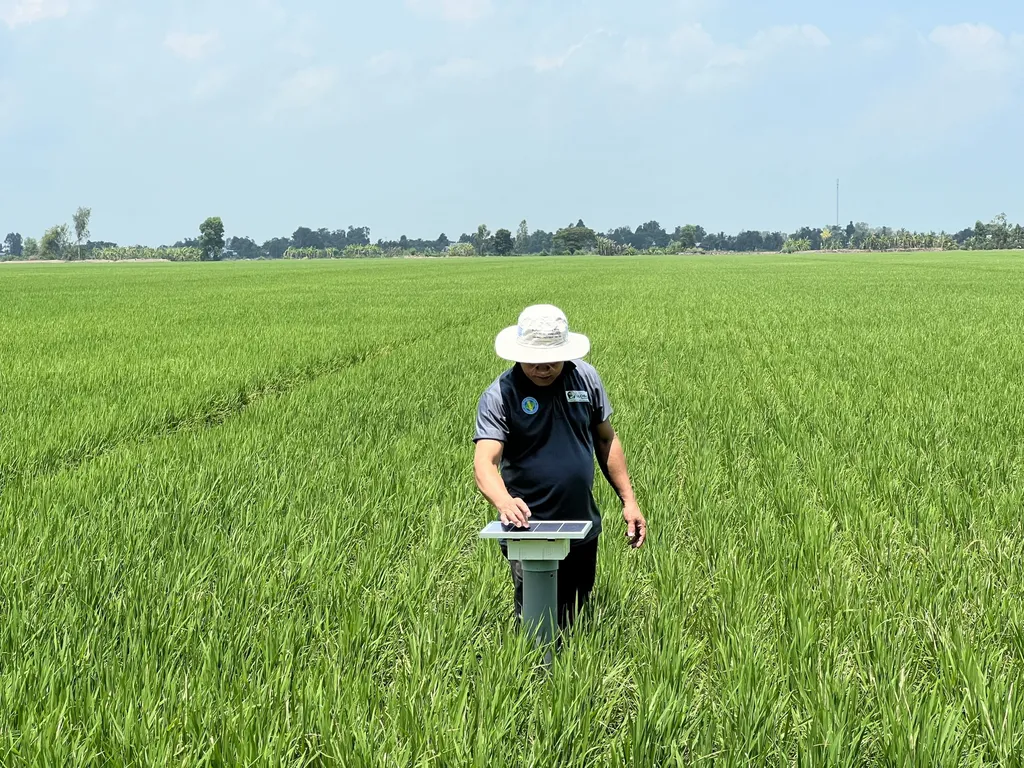
A new study by Xiaoping Tang from Guizhou University in China offers fresh insights into how water resources and renewable energy could revolutionize rice farming in Asia—the world’s most critical rice-producing region. The research, published in *Agricultural Water Management* (《农业水管理》), suggests that integrating green energy with water management could significantly boost rice yields across some of the continent’s largest economies, including China, India, and Indonesia.
The study analyzed data from 1992 to 2020, applying advanced econometric methods to assess the long-term impacts of water availability, renewable energy supply, farmland size, fertilizer use, and labor on rice production. The findings were clear: water resources and green energy emerged as key drivers of higher rice yields. “Water and renewable energy are not just environmental priorities—they are economic catalysts for sustainable agriculture,” Tang states. “Our results show that countries investing in both will see measurable gains in food security.”
For the energy sector, the implications are substantial. As Asia’s rice sector consumes vast amounts of water and energy—often through diesel pumps and grid-dependent irrigation—shifting to solar, wind, or hydropower-powered systems could reduce costs, improve reliability, and lower carbon emissions. This aligns with global trends toward decarbonization in agriculture, where energy efficiency is becoming a competitive advantage.
The research also highlights the role of cultivated land and nitrogen fertilizer, but emphasizes that without sustainable water and energy inputs, these factors alone cannot sustain long-term productivity. Tang’s team used multiple robust techniques—including Pooled Mean Group, Dynamic OLS, and Fully Modified OLS—to ensure their findings were reliable, even across diverse economies with varying agricultural policies.
What makes this study particularly compelling is its policy relevance. With Asia home to over half the world’s population, even small improvements in rice yield can have outsized effects on food security and economic stability. The authors recommend targeted investments in renewable-powered irrigation, water recycling, and energy-efficient farming technologies as part of a broader strategy to meet Sustainable Development Goal 2 (Zero Hunger).
For energy companies, this represents more than a market opportunity—it’s a chance to become integral partners in Asia’s agricultural transformation. As governments and agribusinesses seek scalable, climate-smart solutions, renewable energy providers that can deliver reliable, low-cost power to rural farming communities may gain a strategic edge in one of the world’s most important sectors.