
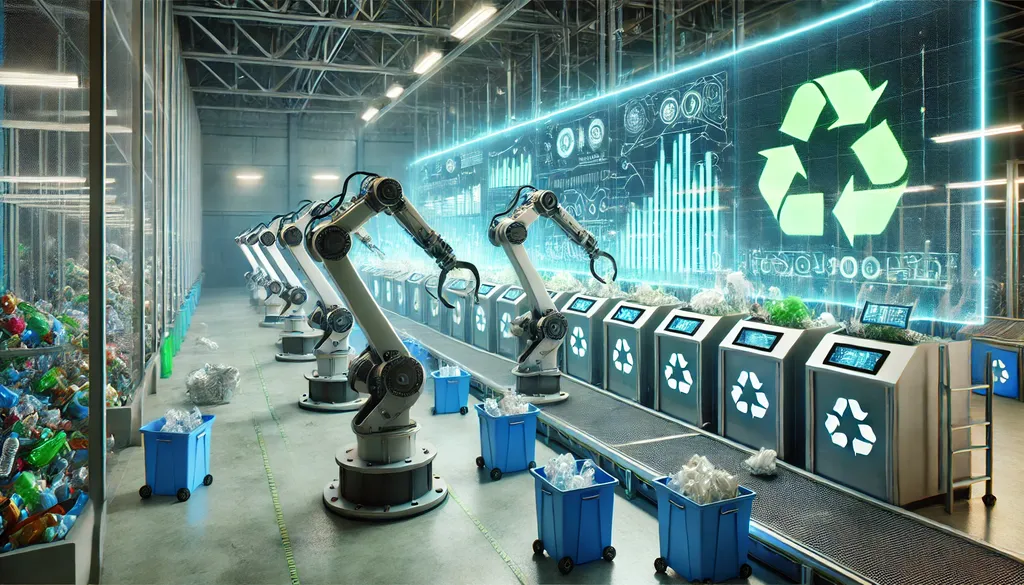
The Grand Central Recycling Facility in Plainfield Township isn’t just another industrial plant—it’s a $48 million gamble on the future of recycling, proving that automation and AI can outperform human error in sorting waste. Since opening in June 2025, the 80,000-square-foot facility has processed an average of 300 tons of mixed recyclables daily, part of Waste Management’s broader $1.4 billion investment in 39 upgraded or new recycling plants across North America between 2022 and 2026. The goal is clear: maximize recovery and minimize landfill waste, a mission that WM Supervisor Greg Macalush frames bluntly: *“If you can recycle a lot, you don’t have to throw it in the ground.”*
Inside the facility, the journey from truck to bale is a carefully orchestrated ballet of technology and human oversight. Trucks arrive laden with commingled recyclables—glass, paper, plastic, aluminum—all dumped onto conveyor belts where workers perform the first critical cull. They pick out the egregious offenders: batteries, fire extinguishers, even the occasional propane tank. It’s a reminder that contamination often starts at the curb, where wishful thinking outweighs practical sorting.
From there, the materials enter a trommel—a massive, spinning cylinder that acts like a giant laundry dryer, separating items by size through strategically placed holes. Heavier objects drop into designated channels while lighter paper and cardboard ride the current upward. The system then shifts into high gear with inclined vibrating conveyors that further stratify materials by weight and density.
The real spectacle, however, is the optical sorting stage. AI-powered sensors scan each item in milliseconds, distinguishing not just between cardboard and PET plastic, but identifying different plastic resin types—#1, #2, #5, and beyond. When the system locks onto a target, a precise blast of high-pressure air knocks it into the correct sorting lane. It’s a level of precision that human hands simply can’t match at scale, reducing reliance on manual labor while increasing speed and accuracy.
Even after this high-tech gauntlet, a second round of human inspectors scans the remnants. Anything still recoverable gets a second chance, looping back into the system. The result? Between 83% and 85% of incoming material is baled for recycling—far exceeding the national average of 77% to 80% landfill diversion. *“Some people may think it is not worth recycling because their stuff ends up in the landfill anyway,”* says WM Community and Municipal Relations Manager Adrienne Fors. *“That’s not true.”*
Yet the facility’s success still hinges on a paradox: the more efficient the technology becomes, the more dependent it is on upstream behavior. Fors points out that a quick rinse or the avoidance of non-recyclables like plastic bags could push recovery rates even higher. It’s a call to action that transcends the plant’s walls, targeting households and municipalities where contamination begins.
The Grand Central model offers a glimpse into the future of waste management—not just as a cost center, but as a critical node in a circular economy. WM’s broader $1.4 billion bet suggests confidence in this approach, but its long-term viability depends on more than just advanced machinery. It requires behavioral change, policy support, and a recognition that every contaminated bin is a missed opportunity. The facility in Plainfield Township proves that technology can do the heavy lifting, but humans must still do the thinking.