
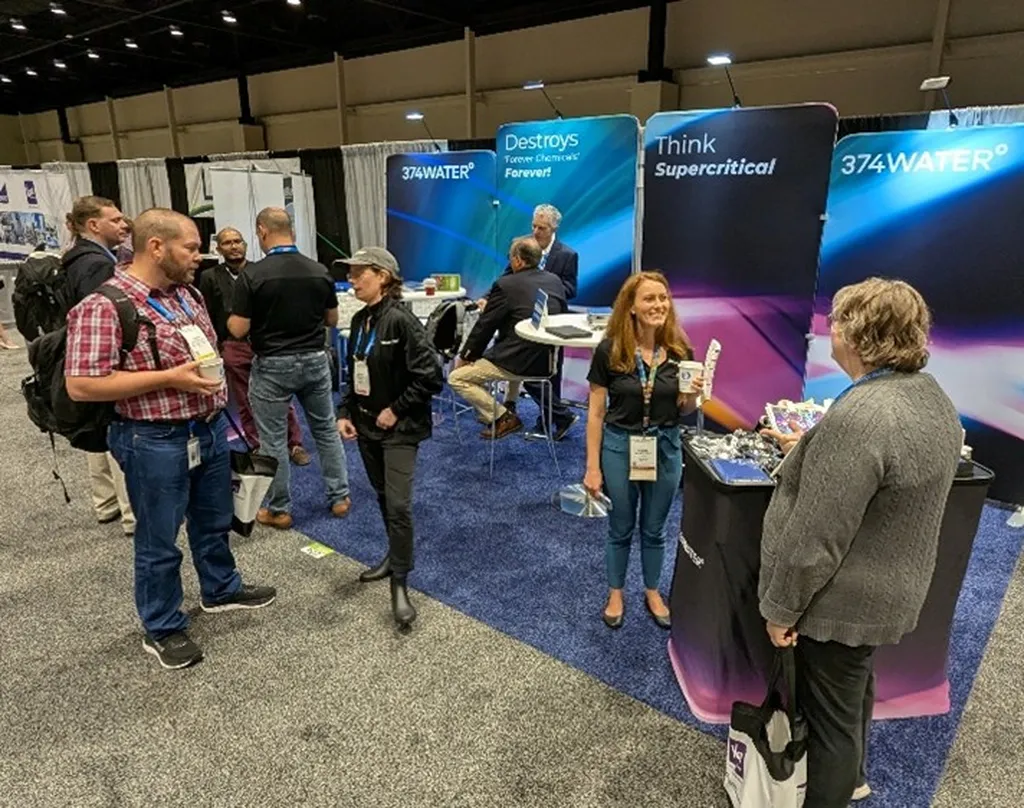
Sunny Viswanathan isn’t mincing words when he says 374Water is switching from theory to demonstration. The company’s summer conference schedule—spanning WEF Residuals in Kansas City, the New Jersey Water Environment Association’s biosolids workshop, PFAS Forum VI in Orlando, the Federation of New York Solid Waste Association’s event, JETC in Portland, Battelle’s Chlorinated Conference, and the A&WMA annual conference—is less about slide decks and more about hard data from real deployments. The message is clear: AirSCWO is already destroying PFAS in biosolids, aqueous film-forming foam (AFFF) concentrates, and contaminated soil-washing effluents, not just filtering or concentrating them for later disposal.
What’s different this time is the cadence of the conversation. At Battelle, the company will present two platform sessions on consecutive days—one on the destruction of 6PPD-Q contaminated wastes, the other on treating 1,4-dioxane and PFAS in soil-washing streams—while at PFAS Forum VI it will detail how supercritical water oxidation handled stockpiled AFFF. These aren’t pilot-scale curiosities; they’re operating results under variable conditions, a point Viswanathan underscores when he says the goal is to show value to wastewater utilities, remediation professionals, and defense contractors who need to close compliance gaps, not just kick them down the road.
The commercial signals are starting to align. With the U.S. Army ERDC demonstration already logged and the Defense Innovation Unit–ESTCP initiative underway, AirSCWO’s performance metrics are entering the procurement lexicon of federal buyers. Municipal utilities watching biosolids land-application restrictions tighten in states like New Jersey now have a data set they can cite when arguing for capital upgrades. The company’s booth appearances at WEF Residuals and JETC are designed to translate those field results into procurement conversations, positioning AirSCWO as a non-incineration pathway that yields dischargeable water and mineral effluent instead of secondary waste streams.
Yet the scale-up narrative still hinges on more than performance curves. The conference circuit doubles as a hiring fair and channel partner forum. Utility managers at WEF Residuals who see the Orlando deployment data firsthand will later compare notes with their procurement colleagues at Battelle, creating an informal peer-review loop that can accelerate specifications. Meanwhile, the defense sector’s presence at JETC ensures that remediation budgets follow technology readiness levels, not just compliance deadlines.
For 374Water, the summer isn’t just about slide decks—it’s about proving that the technology can run at the throughput its backers expect. The company’s forward-looking statements underscore the gap between demonstration and deployment, but the conference schedule is where that gap narrows. If municipalities and federal agencies begin writing AirSCWO into their next five-year capital plans, the conversations in Kansas City and Orlando will have shaped more than a few line items.