
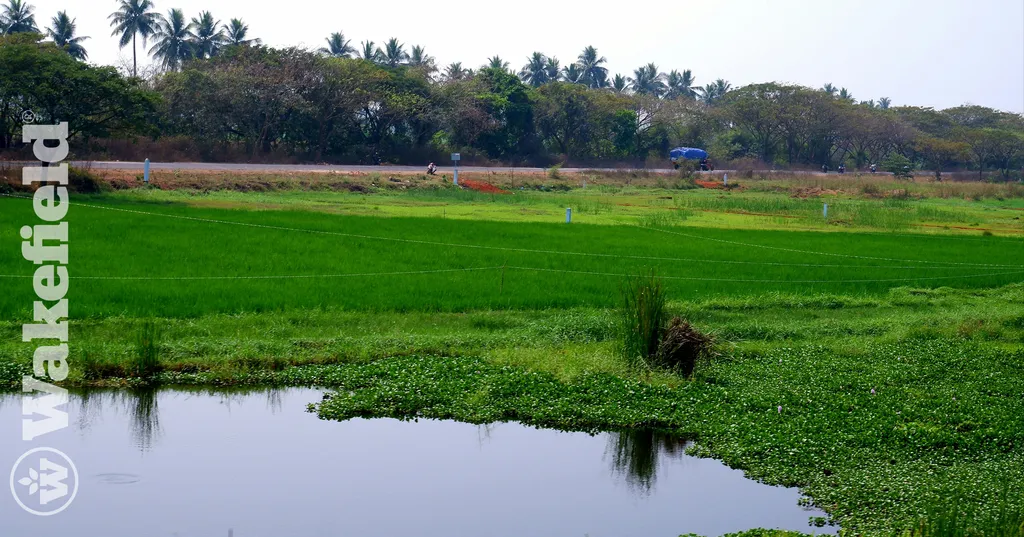
In the rolling hills of Nagaland, where monsoon rains are as unpredictable as they are vital, a quiet revolution is taking root. Prabhakar Sharma, a researcher at Nagaland University’s Department of Agricultural Engineering and Technology, has uncovered a potential game-changer for farmers battling the dual threats of water scarcity and climate change. His work on biochar—a carbon-rich by-product of pyrolyzed biomass—suggests that this humble material could be the key to unlocking more resilient agricultural practices in some of the world’s most vulnerable regions.
Biochar isn’t new; it’s been used for centuries as a soil amendment, but Sharma’s research zeroes in on its untapped potential for water conservation. When incorporated into soil, biochar acts like a sponge, soaking up moisture and holding it where plant roots can access it. “Biochar doesn’t just retain water,” Sharma explains. “It fundamentally alters the soil structure, improving infiltration rates and reducing runoff. For farmers in semi-arid regions, this could mean less reliance on irrigation and more predictable harvests.”
The implications stretch far beyond the farm gate. For the energy sector, biochar represents a dual opportunity: it’s a by-product of biomass pyrolysis, a process often used in renewable energy production. Traditionally, biochar was seen as a waste product, but Sharma’s findings suggest it could be repurposed as a high-value agricultural input. This shift could create new revenue streams for biomass energy producers, turning a liability into an asset.
Yet the path forward isn’t without challenges. Sharma emphasizes that biochar’s effectiveness depends on a host of factors, from the type of biomass used to the soil conditions it’s applied to. “We’re still in the early stages of understanding how to optimize biochar for different environments,” he notes. “But the potential is undeniable.” His research calls for an integrated approach, where biochar is part of a broader strategy for soil and water management. Policymakers, he argues, should prioritize developing systematic guidelines for its use, while fostering interdisciplinary collaborations to bridge the gap between research and practice.
For industries tied to water and energy, Sharma’s work offers a glimpse into a future where sustainability and profitability go hand in hand. As climate pressures mount, innovations like biochar could redefine how we manage resources, turning agricultural waste into a cornerstone of resilience. Published in *Discover Soil* (*Dhara Mati* in Hindi), Sharma’s study is a call to action—not just for farmers, but for energy producers, policymakers, and researchers alike. The question now is whether the industry is ready to seize the opportunity.