
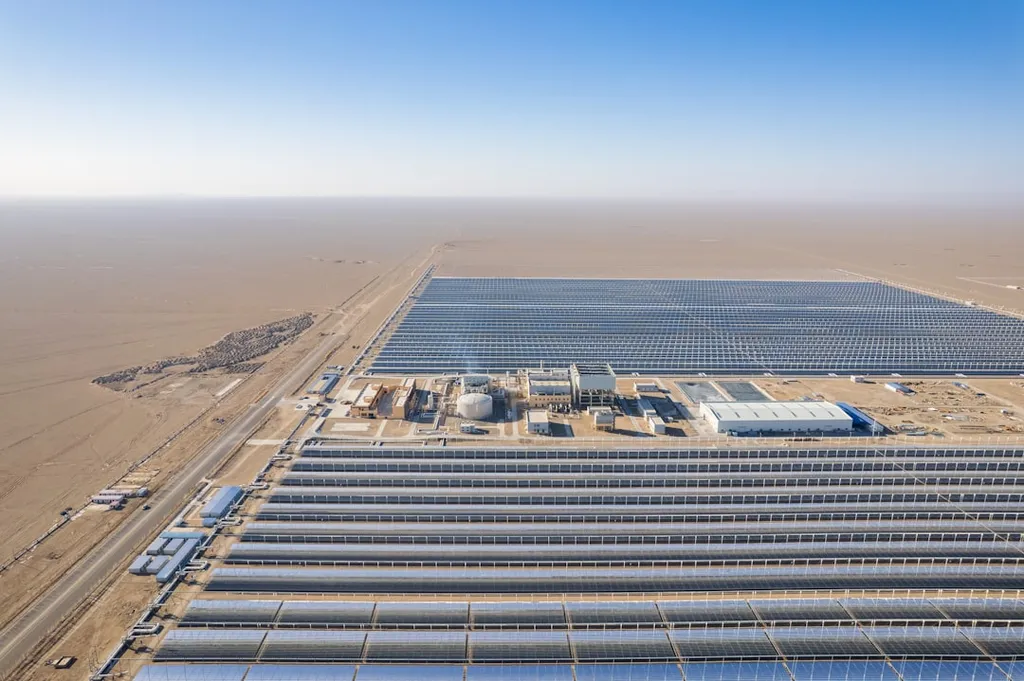
In the arid expanses of Northwest China, where wind turbines stand like sentinels against a dust-laden horizon, a quiet revolution is underway—not just in energy production, but in how we think about water. For large-scale electrolysis hydrogen plants, water isn’t just a byproduct; it’s the lifeblood of the operation. Yet, in regions where every drop counts, the sustainability of these green hydrogen factories hinges on reimagining water use from the ground up.
Yin Aiming, a researcher at the North China Electric Power Research Institute and the Datang Science and Technology Research Institute, has spent years dissecting this challenge. His work, published in *Gongye shui chuli* (*Industrial Water Treatment*), doesn’t just highlight the problem—it maps a path forward. “Water is often the forgotten variable in the hydrogen equation,” Yin notes. “But in electrolysis plants, it’s central to both production and cooling. Without smart management, even the greenest hydrogen project risks becoming unsustainable in water-stressed areas.”
The stakes are high. China’s push to scale up hydrogen production—particularly through renewable-powered electrolysis—is a cornerstone of its energy transition. Yet, in provinces like Gansu or Xinjiang, where solar and wind resources are abundant but water is scarce, the clash between ambition and environmental reality is stark. Traditional electrolysis methods demand vast amounts of high-purity water, while cooling systems guzzle even more. The result? Projects face regulatory hurdles, community pushback, or crippling operational costs—threats that could derail the sector’s growth.
Yin’s research zeroes in on four critical water systems in these plants: the raw water supply, circulating cooling loops, chilled water networks, and wastewater treatment. His team’s case study of a Northwest China hydrogen facility reveals a stark truth: up to 30% of water intake can be lost to evaporation or inefficiencies in poorly optimized systems. But the study also offers a blueprint for change. By integrating advanced water treatment—like reverse osmosis and electro-deionization—with closed-loop cooling designs and zero-liquid discharge (ZLD) wastewater systems, plants can slash freshwater needs by over 80%.
The commercial implications are profound. For energy developers, this isn’t just about compliance; it’s about competitiveness. “Projects that can demonstrate water neutrality will have a clear edge in securing permits, financing, and offtake agreements,” Yin argues. “Investors are increasingly factoring in water risk, and in regions like Northwest China, that risk is existential.” His team’s proposed “hydrogen-water co-production” model—where wastewater is treated on-site for reuse or even mineral recovery—could turn a cost center into a revenue stream.
What’s next? Yin envisions a future where electrolysis plants are net producers of water, not consumers. “The technology exists,” he says. “The question is scale.” Pilot projects are already testing hybrid systems that combine hydrogen production with brine desalination or even algae-based wastewater polishing. If successful, these innovations could redefine green hydrogen economics, making it viable in water-scarce regions without sacrificing sustainability.
For the energy sector, the message is clear: the next phase of hydrogen’s growth won’t be powered by water alone—it will be shaped by how wisely we manage it. And in the deserts where the wind blows strongest, that lesson might just be the most valuable fuel of all.