
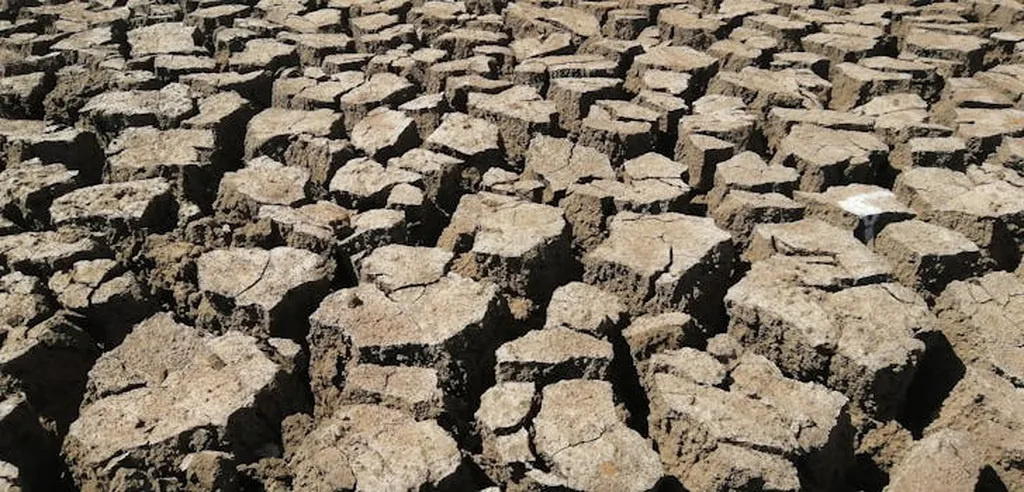
The Didessa watershed in southwestern Ethiopia, a region where subsistence farming has long sustained local communities, is now at the heart of a growing environmental crisis. A recent study led by Deresa Abetu Gadisa, affiliated with the State Key Laboratory of Plant Diversity and Speciality Crops in Wuhan, the University of Chinese Academy of Sciences, and the Ethiopian Biodiversity Institute, reveals a stark increase in soil erosion and sediment export over the past few decades. Using advanced modeling techniques and multitemporal satellite imagery, the research quantifies a 163% rise in mean annual soil loss and a 363% surge in sediment export between 1987 and 2023.
Gadisa’s findings underscore a troubling trend: the Didessa watershed, once a relatively stable agricultural landscape, is now shedding soil at an unsustainable rate. “The acceleration of erosion is not just an environmental issue—it’s an economic one,” Gadisa notes. “Farmers are losing fertile topsoil, water reservoirs are filling with sediment, and the long-term productivity of the land is at risk.” The study identifies four severe erosion hotspots within the watershed, where steep slopes and intense rainfall exacerbate the problem. Meanwhile, the financial burden of rehabilitating degraded soils is estimated at around USD 24 million—a figure that could rise if left unaddressed.
For industries reliant on stable water supplies and sustainable land use, such as hydropower and agriculture, the implications are significant. Sediment buildup in rivers and reservoirs can reduce the efficiency of hydroelectric dams, increase maintenance costs, and shorten the lifespan of critical infrastructure. The Didessa watershed, which feeds into the Blue Nile system, is a vital water source for Ethiopia’s energy and agricultural sectors. As erosion intensifies, the risk to these industries grows, potentially disrupting power generation and water availability for irrigation.
The study, published in *Environmental and Sustainability Indicators* (translated from *环境与可持续指标*), suggests that targeted interventions—such as reforestation, terracing, and climate-resilient farming—could mitigate the damage. Yet, the scale of the challenge demands coordinated action. Gadisa’s research serves as a wake-up call for policymakers, investors, and industry leaders to prioritize sustainable land management before the costs escalate further.
What remains unclear is how quickly these measures can be implemented at scale. For now, the Didessa watershed stands as a cautionary tale—one that highlights the urgent need for balancing agricultural productivity with environmental stewardship in regions where both are critical to economic stability.