
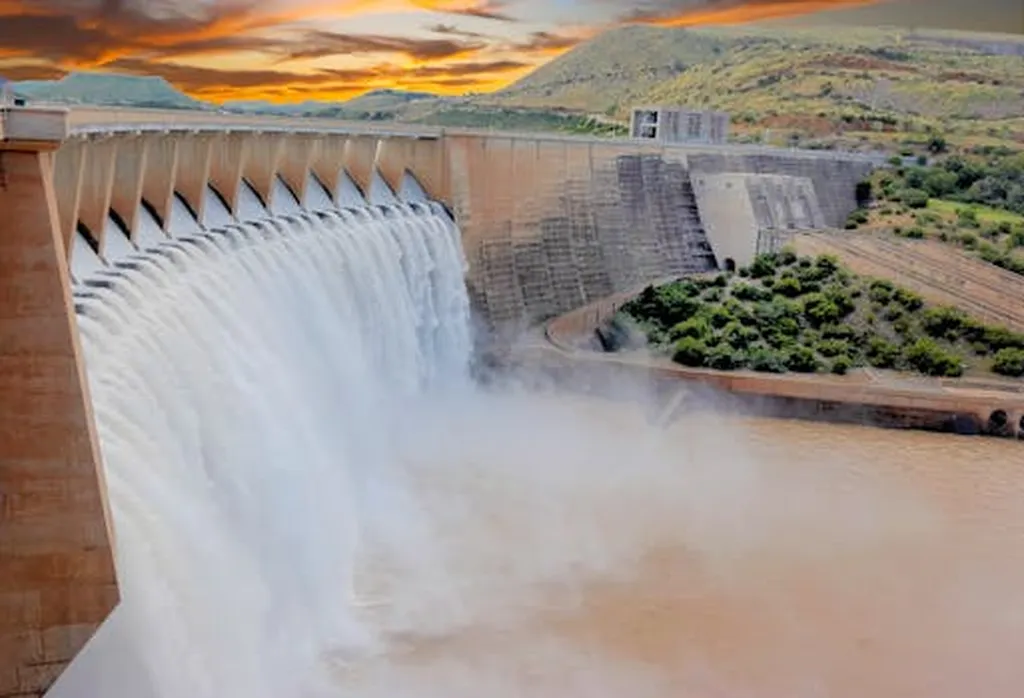
The Tarbela Reservoir, Pakistan’s largest freshwater body and a linchpin of the Indus Basin’s hydropower system, is facing an unseen crisis—one that could quietly strangle its operational lifespan unless addressed. New research led by Hassan Raza of Pohang University of Science and Technology (POSTECH) in South Korea reveals that sediment accumulation is accelerating at an alarming rate, threatening to slash the reservoir’s storage capacity to less than 20% of its original design by the 2040s.
Using a novel multi-model AI framework, Raza and his team have projected future sediment loads that far exceed current estimates. By combining the Revised Universal Soil Loss Equation (RUSLE) with advanced AI models trained on 30 years of intermittent data—including streamflow, temperature, and precipitation—they’ve uncovered a stark reality: under a business-as-usual scenario, the reservoir could see annual sediment loads surge to over 200 million metric tons. That’s up from the current ~170 million tons observed in reservoir deposits, and nearly double the 124 million tons projected under a stabilized emissions pathway.
“What we’re seeing isn’t just incremental change,” Raza notes. “It’s a nonlinear shift in sediment dynamics driven by climate variability and upstream land degradation. The reservoir isn’t just filling up—it’s aging prematurely.”
For the energy sector, the implications are profound. Tarbela, with a design capacity of 11.6 billion cubic meters, supplies over 30% of Pakistan’s hydropower. As sediment accumulates, it reduces water storage, diminishes turbine efficiency, and shortens the asset’s operational window. The study suggests that by the 2040s, the reservoir’s usable storage could fall below 20% of capacity—effectively turning a 40-year-old infrastructure into a liability decades ahead of schedule.
The research also underscores a critical gap in traditional modeling. Standard Sediment Rating Curve (SRC) methods, long used for sediment estimation, were found to underperform compared to AI-driven approaches. The AI models, trained on sparse but valuable historical data, offered superior accuracy—highlighting how machine learning can fill data gaps in hydrological monitoring.
“This isn’t just about science,” says Raza. “It’s about energy security. When a reservoir loses storage, power generation drops, irrigation falters, and communities downstream face shortages. We’re talking about a domino effect that ripples through the economy.”
The findings, published in the Journal of Hydrology: Regional Studies (known in Korean as *Hydrology and Regional Studies*), point to an urgent need for sediment management strategies—dredging, watershed conservation, or adaptive operational rules—that go beyond current practices. With climate change intensifying erosion in the Upper Indus Basin, the window for proactive intervention is closing fast.
For policymakers and energy planners, the message is clear: ignoring sediment dynamics isn’t an option. The Tarbela Reservoir’s future may well be written in the silt of the mountains upstream—and the choices made today will determine whether it remains a powerhouse or becomes a cautionary tale.