In the heart of Thailand’s Sa Kaeo Province, a quiet revolution is reshaping how smallholder farmers grow high-value vegetables—without wasting water or risking crop losses. Wannaporn Thepbandit, a researcher at Srinakharinwirot University’s Department of Innovative Agriculture, and her team have developed *DSmart Farming*, a cloud-based smart irrigation system that’s turning community greenhouses into precision-controlled farms. Their findings, published in *AgriEngineering* (known in Thai as *วารสารวิศวกรรมเกษตร*), aren’t just technical—they’re a game-changer for water-scarce regions where every drop and every disease outbreak counts.
The system, deployed across five organic greenhouses growing cherry tomatoes, broccoli, cabbage, Chinese kale, and kale, integrates low-cost sensors with IoT technology to automate irrigation based on real-time soil moisture, air temperature, and humidity. Each greenhouse uses a LoRa32-based control unit connected to a central cloud platform with a MariaDB database. The result? A level of control most smallholder farmers have never had.
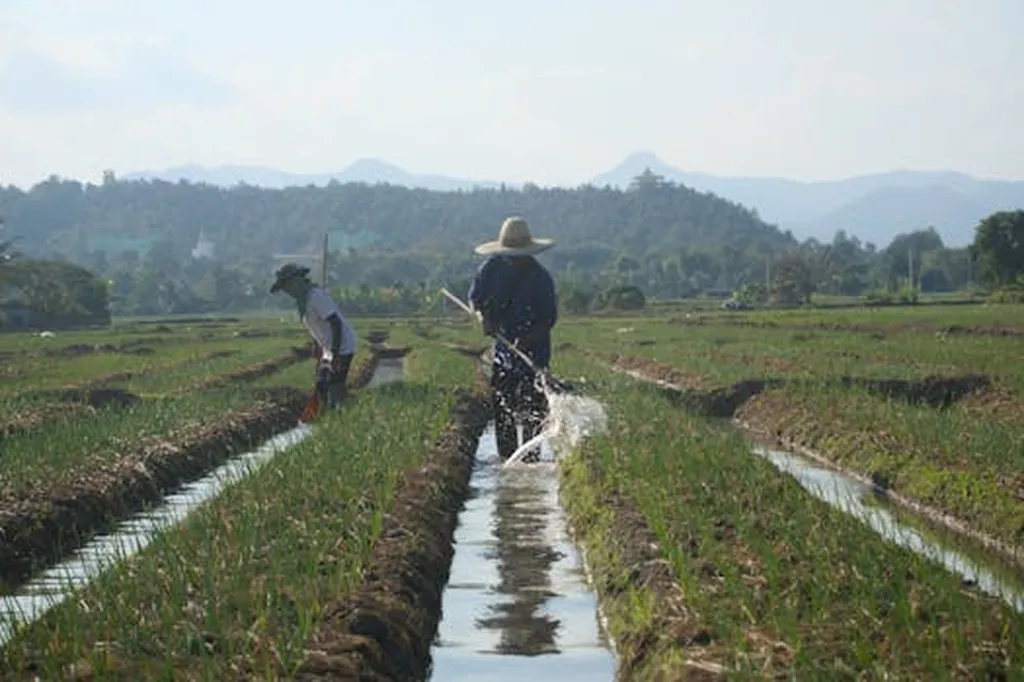
“Traditionally, farmers irrigate based on experience or fixed schedules, which often leads to overwatering or stress,” Thepbandit explains. “But with DSmart Farming, we’re not guessing—we’re responding to what the plants actually need.” The system maintained root-zone moisture between 50–60%, while conventional greenhouses saw temperature spikes up to 45°C during the day. That difference wasn’t just academic—it translated into tangible gains.
Across two growing seasons, smart irrigation boosted yields by 20–29% while cutting water use by 41–60%. For farmers, that means more produce from less input. Income rose by 20–56%, depending on the crop. Even more striking, bacterial soft rot—caused by *Pectobacterium carotovorum*—only appeared in conventionally irrigated greenhouses. No soft rot was detected where the smart system was used.
For the energy sector, this isn’t just about agriculture—it’s about efficiency. Automated, data-driven irrigation reduces the need for manual labor, minimizes energy waste from over-pumping, and supports sustainable water management in regions facing scarcity. And since the system uses low-cost sensors and LoRa connectivity, it’s scalable for smallholder systems across Southeast Asia.
The implications ripple outward. If smart irrigation can reduce water use by over half while increasing profits, it could ease pressure on local aquifers and lower electricity demand from water pumping—critical in areas where energy grids are already strained. It also opens doors for carbon footprint reduction in agriculture, a sector often criticized for high resource intensity.
Looking ahead, Thepbandit’s work suggests that the future of farming isn’t just about growing more—it’s about growing smarter. By combining IoT, cloud computing, and organic principles, smallholder farmers can compete on quality and sustainability, not just scale. And in a world where water is the new oil, that’s not just smart farming—it’s essential infrastructure.