
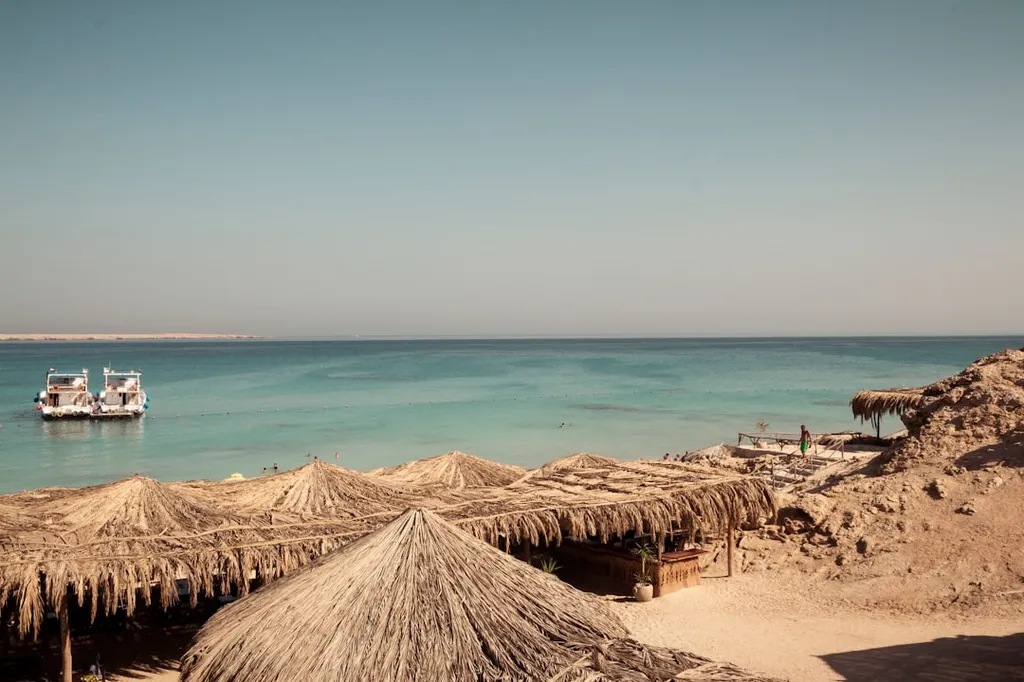
The Red Sea coast of Egypt is a land of stark contrasts—golden deserts meet turquoise waters, and beneath the surface lies a hidden challenge: groundwater that is increasingly vital yet often unsuitable for drinking. A new study by Hanaa Megahed, a researcher at the National Authority for Remote Sensing and Space Sciences (NARSS) in Cairo, sheds light on this pressing issue, offering both warnings and opportunities for communities and industries that depend on this finite resource.
Megahed’s research focuses on the Safaga–El-Quseir region, a stretch of arid coastline where groundwater is the lifeblood for local communities and burgeoning development projects. But not all groundwater is created equal. Her team analyzed 33 samples from two key aquifers—the Quaternary and Nubian—collecting data on parameters like total dissolved solids (TDS), electrical conductivity (EC), and pH. The results were revealing: many samples exceeded safety limits for drinking water, with high levels of TDS and hardness making the water undrinkable without treatment. “The groundwater in this region is naturally mineralized due to the arid climate and geological conditions,” Megahed explains. “While it’s not safe to drink straight from the well, it may still hold value for other uses.”
That value, she argues, lies in irrigation. The study found that while the water’s high sodium content makes it unsuitable for direct consumption, its suitability for agriculture varies across the region. Using Geographic Information System (GIS) modeling, Megahed and her team mapped out zones where groundwater could be safely used for irrigation, identifying the southwest as the most viable area and the northeast as the least. “GIS allows us to visualize these variations in a way that’s actionable,” she says. “Farmers and developers can use this data to make informed decisions about where to drill wells or invest in irrigation systems.”
For the energy sector, which is expanding along Egypt’s Red Sea coast with desalination plants, resorts, and industrial projects, this research is more than academic. Groundwater quality directly impacts operational costs and sustainability. Desalination, for instance, is energy-intensive, and knowing where groundwater is least contaminated could reduce the need for costly treatment. Conversely, areas with higher mineralization might require pre-treatment or alternative water sources, adding to project expenses.
The study also highlights a broader trend: as climate change intensifies aridity and groundwater depletion, tools like GIS modeling will become indispensable for managing water resources. Megahed’s work suggests that integrating hydrochemical assessments with spatial analysis can help policymakers and industries anticipate challenges before they arise. “This isn’t just about Egypt,” she notes. “Arid regions worldwide face similar issues, and our approach can be adapted to other contexts.”
Published in the Assiut University Journal of Multidisciplinary Scientific Research (or *Majallah al-Jami’ah al-Asyutiyyah lil-Abhath al-‘Ilmiyyah al-Mutakathirah* in Arabic), the study underscores the need for proactive water management in regions where every drop counts. For industries eyeing the Red Sea’s potential, the message is clear: understanding groundwater isn’t just about compliance—it’s about survival.