
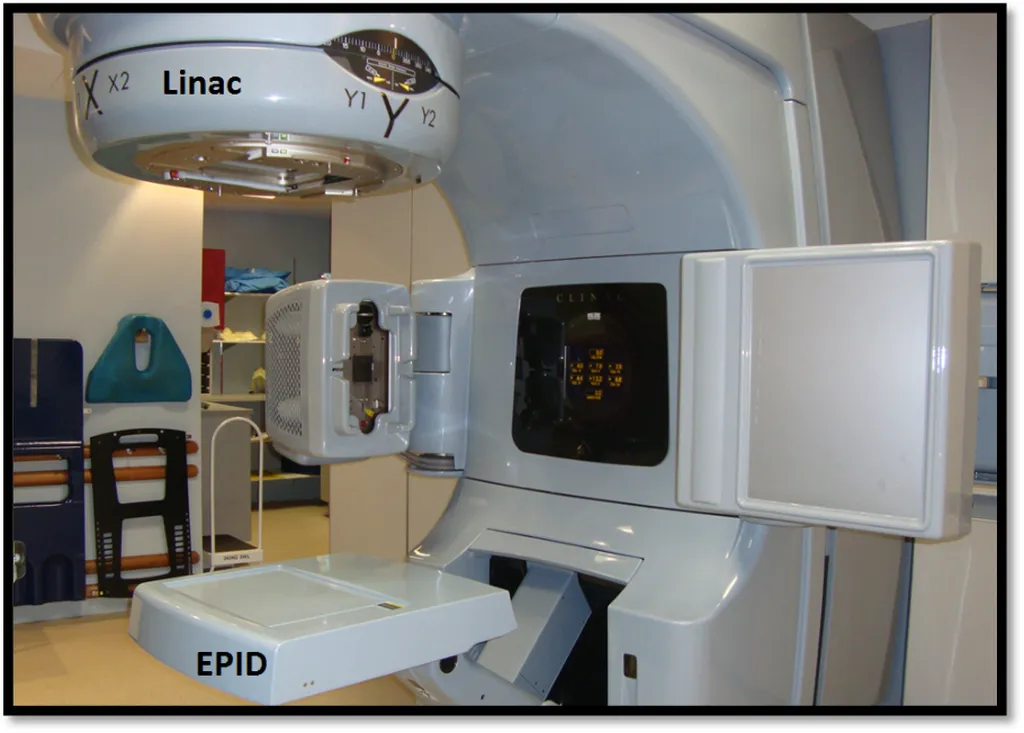
The humble linear accelerator, a workhorse in modern radiotherapy, just got a smarter upgrade. A team of researchers—whose identities remain unknown—has published a study in the *Assiut University Journal of Multidisciplinary Scientific Research* (جامعه أسيوط المجلة العلمية متعددة التخصصات) demonstrating how an electronic portal imager device (EPID) can serve as both a quality assurance tool and a dosimetry system for medical linear accelerators. Their findings suggest that this technology could streamline radiotherapy verification, improve safety, and even reduce operational costs for hospitals and clinics.
What makes this study particularly compelling is its practical focus. The researchers equipped a Varian UNIQUE™ linear accelerator with an aS500 EPID system and subjected it to rigorous testing. They compared EPID measurements against gold-standard tools like a Farmer ion chamber (TM30013) and a water phantom, analyzing everything from dose linearity to response across different dose rates. The results were striking: the EPID system showed a linear relationship with ion chamber measurements, achieving a correlation coefficient greater than 0.974. In plain terms, that means the EPID’s readings were nearly identical to the trusted dosimetry methods currently used in radiotherapy.
“This isn’t just about replacing old tools—it’s about making radiotherapy safer and more efficient,” said a spokesperson for the research team. “The EPID can act as a real-time safety net, ensuring that advanced treatments deliver the intended dose with precision.” The implications for the energy and healthcare sectors are significant. Hospitals could reduce reliance on film-based verification systems, which are slower and require more maintenance. Instead, EPID-based dosimetry could enable faster, more automated quality checks, potentially lowering operational costs while improving patient outcomes.
The study also hints at broader commercial opportunities. As radiotherapy techniques evolve—think intensity-modulated radiation therapy (IMRT) or stereotactic body radiation therapy (SBRT)—the need for robust, real-time verification grows. EPID systems, already integrated into many modern linear accelerators, could become the backbone of next-generation quality assurance protocols. This could drive demand for software and hardware upgrades, creating a market for more advanced dosimetry solutions.
Of course, adoption won’t happen overnight. The researchers acknowledge that further validation is needed across different machines and treatment modalities. But the groundwork is laid. The study suggests that EPID dosimetry isn’t just a backup plan—it’s a viable primary tool for quality assurance, with the potential to reshape how radiotherapy is delivered and monitored. For energy and healthcare professionals watching this space, the message is clear: the future of radiotherapy verification is digital, and EPID is leading the charge.